Appliance Disposal Singapore: What Actually Happens to Your Old Fridge, Washer or Aircon
By Junk Value Team
Your new Samsung fridge is arriving Tuesday. The delivery guys will haul it up, slot it into the kitchen, and leave. But the old one — the dented two-door unit that's been humming in the corner for twelve years — is still standing there, defrosted and dripping onto the kitchen tiles, and nobody's coming back for it.
This is the moment most Singapore homeowners hit a wall. The retailer's "free removal" didn't materialise. The town council wants it dismantled before they'll touch it. And you're not sure whether a fridge even counts as e-waste or just regular bulky junk.
In our 10+ years of clearing appliances from HDB flats, condos, and landed homes across Singapore, we've handled every version of this problem. This page walks through the full picture: what counts as e-waste, what prep you need to do before collection day, and what actually happens to the metal, compressor, and refrigerant once the appliance leaves your home.
What Counts as E-Waste in Singapore?
Any appliance with a plug or a battery falls under the broad umbrella of e-waste. For households, the items that come up most often are refrigerators, washing machines, dryers, air-conditioning units, televisions, monitors, desktop computers, laptops, and printers.
Singapore regulates e-waste to keep heavy metals, refrigerants, and circuit boards out of general landfill. The practical implication for you: these items shouldn't go into a regular bin or be left at the void deck for general waste collection.
We've written a detailed breakdown of how Singapore's e-waste framework affects households, including what qualifies and what doesn't. If you've ever tried using the public collection bins at malls or community centres, you'll also want to read about the limitations of those drop-off points — they're designed for small electronics, not a 90 kg side-by-side fridge.
Will the Shop Take My Old Appliance When They Deliver the New One?
Sometimes. But less often than people expect, and almost never without conditions.
Large retailers like Courts, Harvey Norman, and Best Denki occasionally offer removal of an old appliance when delivering a replacement — usually for fridges and washers, and usually only if you buy a specific model or hit a minimum spend. The catch: the offer typically covers one-for-one replacement of the same category. Buy a new fridge, they'll take the old fridge. Buy a new washer, they'll take the old washer. They won't take the old microwave, the broken air purifier sitting in the storeroom, or the CRT television your parents left behind.
Even when the retailer does offer removal, the delivery crew may refuse on the day if the old unit is in a hard-to-reach spot — tucked behind a kitchen island, wedged into a bomb shelter, or sitting on a high floor in a walk-up block. We've had customers call us the same afternoon because the delivery team took one look at the narrow HDB corridor and said no.
The other gap: timing. Retailer removal happens on their delivery schedule, not yours. If you need the old appliance out before the new one arrives — say, because your contractor is tiling the kitchen floor this week — you're arranging that separately.
How Do You Dispose of a Fridge?
Fridges are the single heaviest household appliance most people own. A standard two-door unit runs 60–80 kg. A side-by-side or French-door model can push past 100 kg. That weight, combined with the refrigerant sealed inside the compressor, makes fridges one of the trickiest items to move and dispose of responsibly.
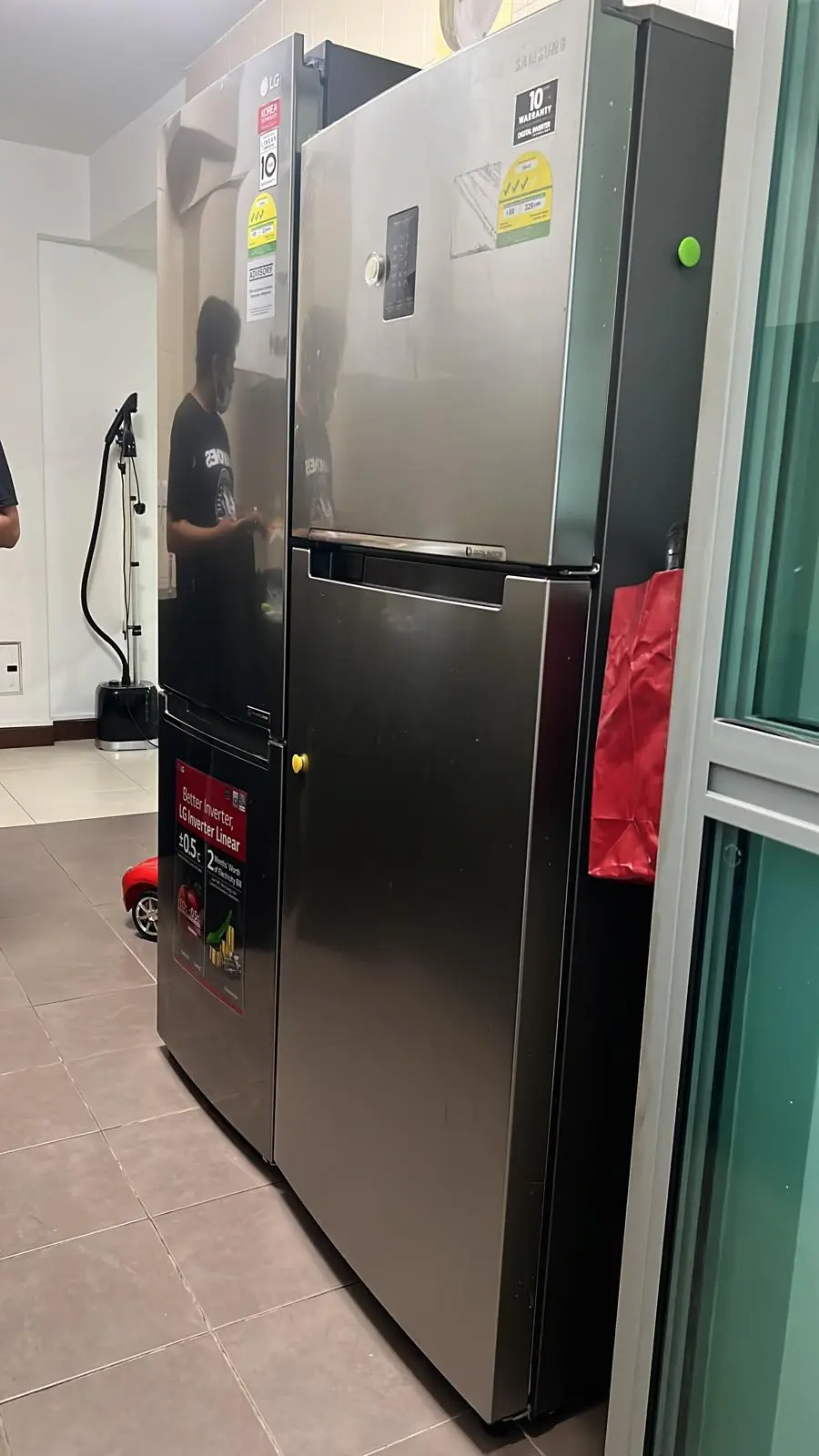
What you should do before we arrive:
- Defrost the unit at least 24 hours ahead. Unplug it, leave the doors open, and put towels underneath. A fridge that's still frosted inside will drip through the lift, down the corridor, and into the lorry. Nobody wants that trail.
- Empty it completely. We've shown up to fridges still packed with condiments, frozen meat, and mystery Tupperware. Food waste is something we don't handle — clear it out yourself.
- Pull it away from the wall if you can. Even 30 cm of clearance behind the unit makes it faster for the crew to get a grip and tilt it onto the trolley.
You don't need to disconnect the water line if it's a fridge with an ice maker — our crew handles that. But if the fridge is built into cabinetry with a custom panel, let us know at the quoting stage so we can assess whether partial disassembly is needed.
For a deeper look at fridge-specific logistics, including how we handle double-door units in narrow HDB kitchens, read our fridge disposal service page or the full preparation guide.
In HDB flats, the main challenge is the passenger lift. Older blocks have lifts that barely fit a two-door fridge standing upright. We sometimes need to tilt the unit at an angle, which requires two crew members inside the lift and a third holding the landing. No service lift exists in HDB blocks, so everything goes through the same lift your neighbours use — we time it to minimise disruption.
For condos, the building's MCST may require you to book the service lift and arrange lift padding ahead of the collection. That's on you to coordinate with your management office before the day. Rules differ from building to building.
What About a Washing Machine or Dryer?
Washing machines are lighter than fridges — typically 30–50 kg for a front-loader, less for a top-loader — but they come with a different prep requirement: water.
Before we arrive:
- Turn off the water supply tap behind or beside the machine. It's usually a small quarter-turn valve on the wall.
- Disconnect the inlet hose. Have a towel ready; residual water will spill.
- Run a short drain cycle or manually drain the machine. Front-loaders hold water in the drum and the filter trap. Open the small access panel at the bottom front, place a shallow tray underneath, and unscrew the drain filter slowly. Expect half a litre to a litre of grey water.
- Pull the drain hose out of the standpipe. More residual water here — tip it into a bucket.
If you skip these steps, the machine will leak through the entire removal process. We've carried washers down HDB stairwells that left a water trail on every landing because the owner assumed "it was already drained." It wasn't.
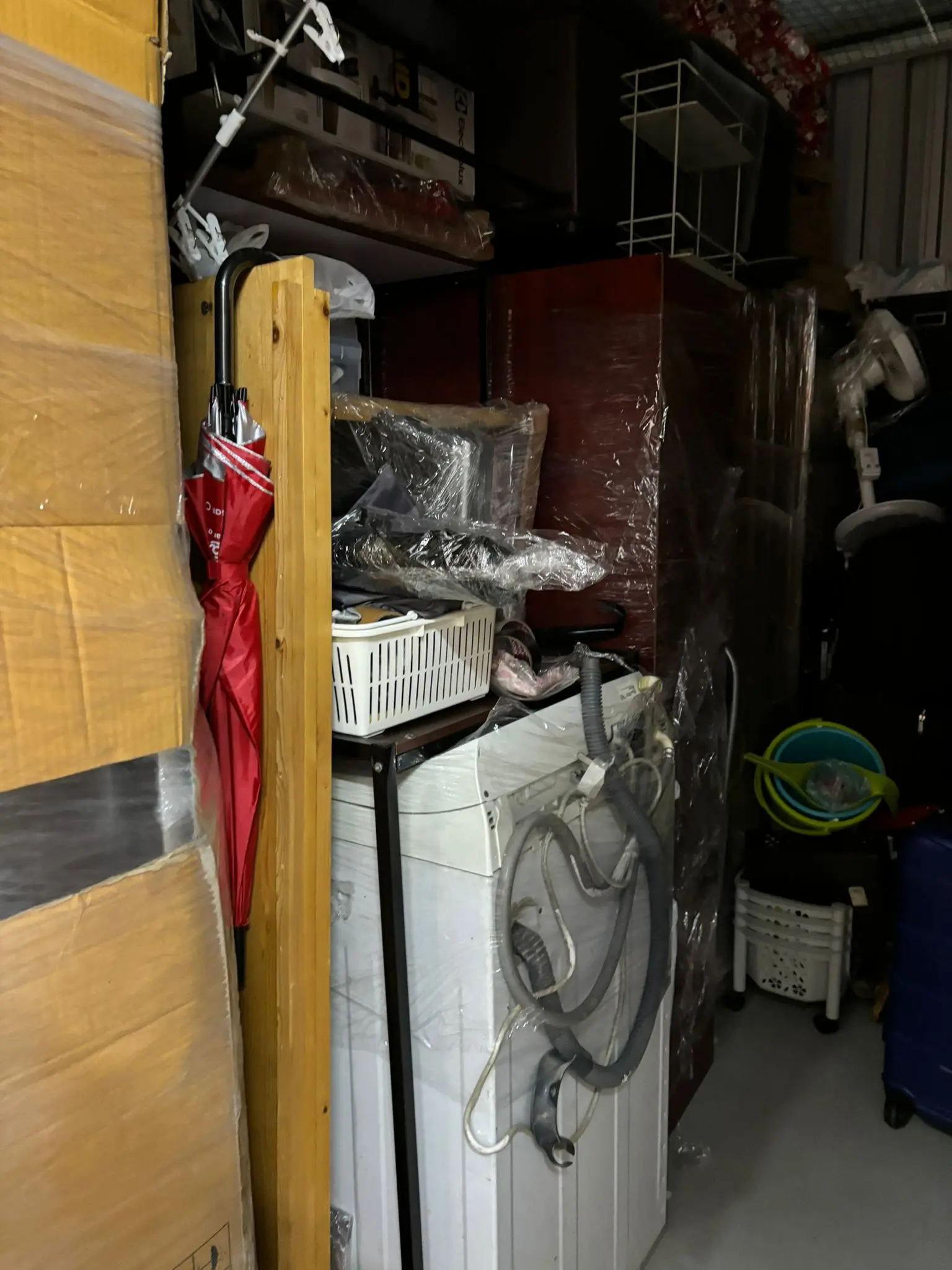
Dryers are simpler — no water connection, just unplug and clear the lint trap. Washer-dryer combos follow the washing machine prep steps above.
Our washing machine disposal page covers the logistics in more detail, and the full guide to washing machine disposal in Singapore answers the most common questions we get about stacked units, integrated laundry setups, and what happens when the water tap is seized shut.
Can You Remove an Aircon Unit?
Aircon disposal is the one category where we need to be upfront about scope. An air-conditioning system has multiple components: the indoor fan coil unit mounted on your wall, the outdoor compressor unit (usually on a bracket outside the window or on the building's condenser ledge), and the copper piping and trunking connecting them.
Indoor unit: We remove and dispose of the wall-mounted fan coil. Before we arrive, you'll need to have the unit powered off at the isolator switch, not just the remote.
Outdoor compressor: We don't take these down. Whether it sits on a ledge you reach through the kitchen or yard window or on external brackets, removing it is work at height that needs safety equipment, so it's a job for an aircon servicing contractor. Ask them to take it down when they disconnect the system.
Copper piping and trunking: We remove and dispose of these as part of the job. The piping still contains refrigerant, which needs to be handled through proper recycling channels — not vented into the air.
What about the refrigerant? The gas inside the system (R410A or R32 in newer units, R22 in older ones) must be recovered, not released. We route units with intact refrigerant systems to intermediaries equipped for gas recovery before the metal is recycled.
For the full breakdown of what to expect, including multi-split systems and ceiling cassette units, read our aircon disposal guide.
What About TVs, Monitors and Computers?
These are the most common e-waste items we collect alongside large appliances. Often it's all part of the same job — a family replacing their kitchen appliances during a renovation will also want the old CRT TV from the bedroom and the desktop PC from the study cleared out at the same time.
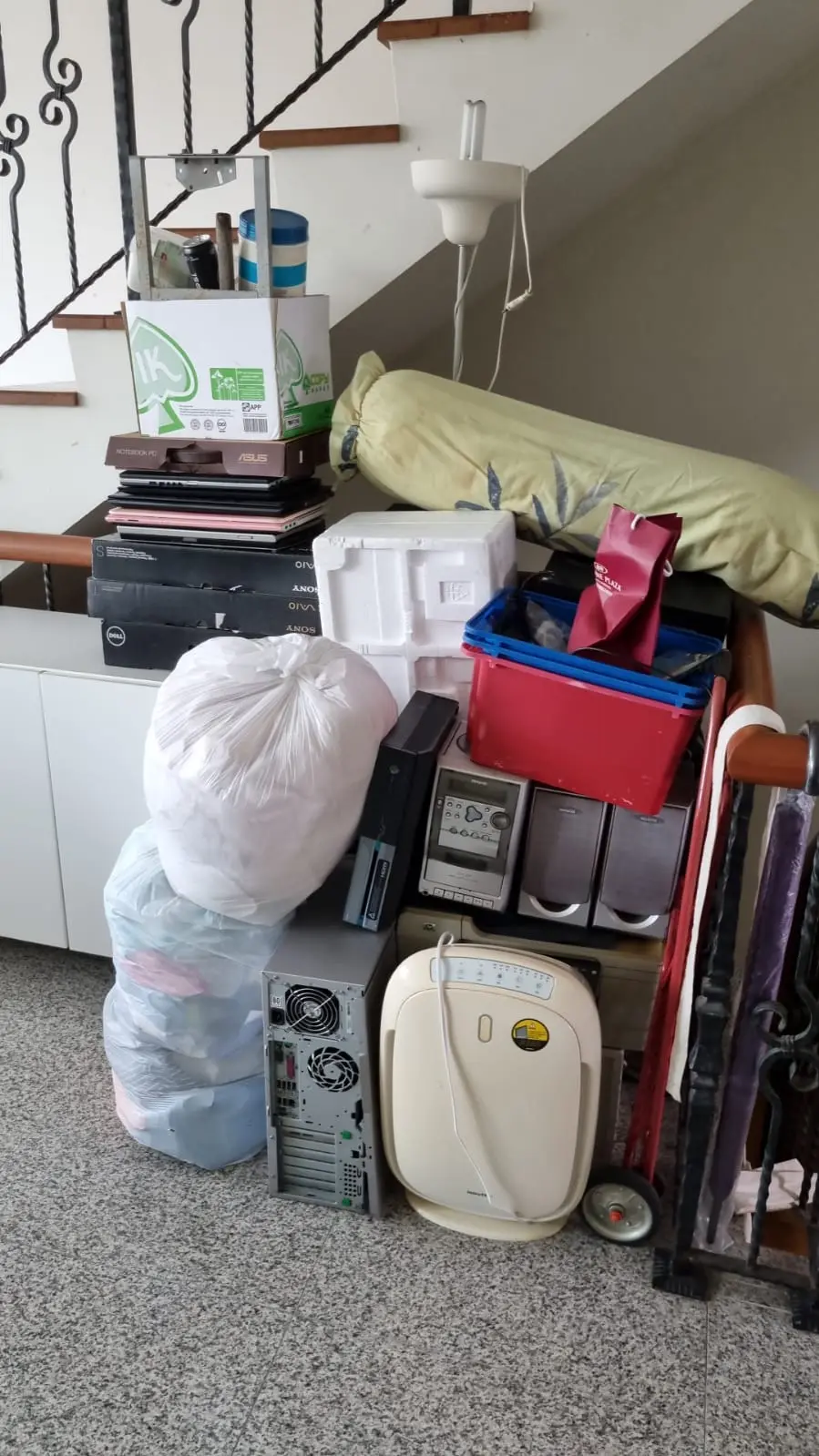
TVs and monitors are straightforward from a prep standpoint. Unplug them, detach the wall mount if you can (or let us know it's wall-mounted so we bring the right tools). CRT televisions are deceptively heavy — a 32-inch CRT can weigh over 40 kg — and contain lead in the glass. Flat panels are lighter but fragile; cracked screens release trace amounts of mercury in some older LCD models. Either way, these shouldn't end up in general waste.
We cover TV and monitor removal in detail on our TV and monitor disposal page, and the guide to old TV disposal options in Singapore explains why the void deck is not the answer.
Desktop computers and laptops raise a different concern: data. We'll get to that in the next section. From a physical standpoint, desktops are easy to move — unplug all cables, and the tower is ready. Our computer disposal page covers what we take (towers, monitors, keyboards, mice, UPS units, cables) and what we don't.
Printers and scanners often get forgotten until moving day. Inkjet printers are light but messy — remove the ink cartridges yourself unless you want black ink on your corridor floor. Laser printers with toner drums are heavier and the toner powder is a fine dust hazard if the drum cracks. Our printer and scanner disposal guide walks through prep for both types.
What Happens to the Data on an Old Computer?
If you're disposing of a desktop, laptop, or external hard drive, assume the data is still on it. Deleting files or emptying the recycle bin does not erase data — it just removes the index entry. Anyone with basic recovery software can pull your documents, photos, passwords, and financial records off a "wiped" drive.
We strongly recommend you handle data destruction yourself before the machine leaves your home. The most reliable method for a spinning hard drive is physical destruction: remove the drive from the machine and drill through the platters. For SSDs, use a manufacturer's secure-erase tool or encrypt the entire drive before wiping.
If you're not comfortable doing this yourself, our guide to data security during computer disposal covers the options in detail, including what to do with NAS drives and old phones.
We do not offer certified data destruction as a service. What we do is route old computers through responsible recycling channels where drives are processed — but if your data is sensitive, don't rely on downstream handling. Destroy it before we arrive.
Where Does the Metal Actually Go?
Customers sometimes ask what happens after the lorry drives away. The honest answer: it depends on the item.
Appliances with recoverable metal — fridges, washers, aircon compressors — go to intermediaries who do further sorting and processing. Steel casings get separated from copper wiring, aluminium heat exchangers, and plastic components. The metals enter scrap recycling streams. Refrigerants are recovered from sealed systems. Circuit boards from electronics go through specialised processing to extract trace metals.
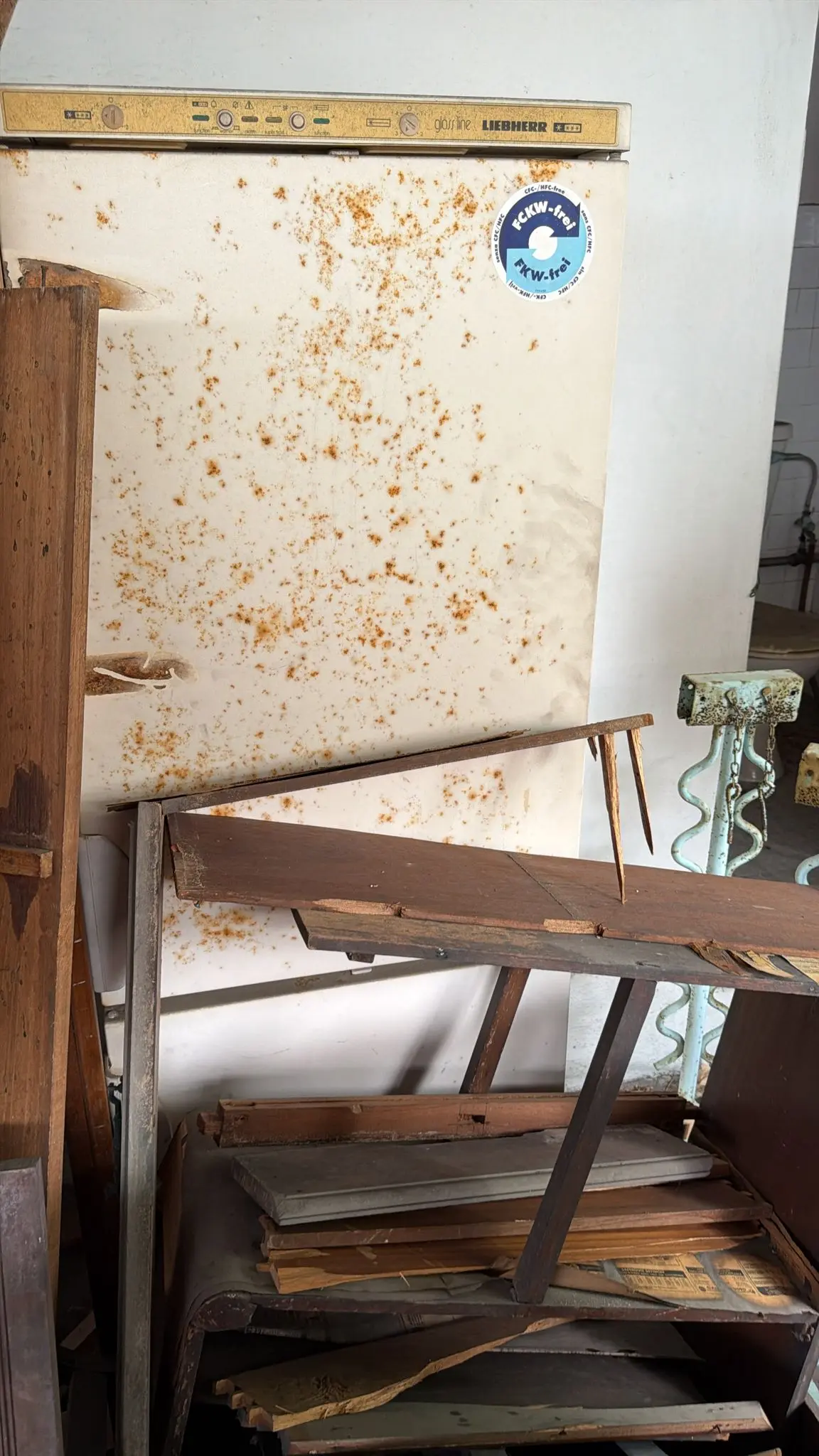
Residual waste — the plastic trim, insulation foam, broken glass — eventually reaches incineration facilities, with ash going to Semakau Landfill. We don't claim a specific recycling percentage because the rate varies by item type and condition. A stainless-steel washer drum has near-total metal recovery. A plastic-heavy microwave, less so.
Where items are still functional, we route them into second-hand channels where possible. A working fridge that's simply being replaced because the owner upgraded doesn't need to be scrapped. But we want to be clear: we do not pay for items collected. This is a disposal service, not a buyback programme. If an appliance has reuse value, that value offsets disposal costs — it doesn't generate a payment to you.
Appliance Disposal FAQs
Do you collect just one appliance, or do I need a minimum number of items? We collect single items. One fridge, one washer, one aircon fan coil — whatever you need removed. There's no minimum item count. Send us photos on WhatsApp and we'll quote based on what we see.
Can you collect on the same day I contact you? Same-day collection is sometimes possible depending on our schedule, but we can't guarantee it. Most jobs are booked with 24–48 hours' notice. Urgent requests are subject to availability, and additional charges may apply. Don't leave it to the last minute if your contractor is arriving tomorrow morning.
Do you buy old appliances or offer trade-in value? No. We do not pay for items we collect, and we don't operate a trade-in or buyback scheme. This is a disposal service. Where an appliance still works, we route it into reuse channels — but no cash, credit, or compensation goes back to the customer.
Are there extra charges for walk-up buildings or after-hours collection? Yes. Surcharges apply for buildings without lift access (walk-up blocks, stairs, ramp use), as well as for after-hours jobs, Sundays, and public holidays. These are confirmed at the quoting stage so there are no surprises on collection day.
Do I need to be home during the collection? Someone needs to be present to let the crew in and confirm what's being removed. If you can't be there, a trusted person with access to the unit works fine — we just need someone on-site who can point us to the right items and lock up after.
Related Guides
- NEA E-Waste Disposal Guide for Singapore Households
- Fridge Disposal in Singapore: What to Know Before You Book
- How to Dispose of an Old Washing Machine in Singapore
Ready to get that old appliance out of your home? Send us a few photos on WhatsApp — we'll come back with a quote, usually within the hour.