How to Prepare Your Old Fridge for Disposal in Singapore
By Junk Value Team
Your new fridge is arriving Tuesday. The delivery crew will haul it up, slot it in, and leave. But the old one? That's still your problem.
Most readers eventually want one pickup that covers everything. That's what e-waste pickup is for: photo quote, source-sort, licensed routing.
In our 10+ years of clearing Singaporean homes, we've lost count of how many times we've arrived at a Bedok flat to find a fridge still humming, still full of chilli sauce bottles and half-frozen fish, with a puddle forming underneath. The homeowner looks at us. We look at the fridge. Nobody's happy.
Here's the thing: a properly prepared fridge takes 15 minutes to move out. An unprepared one? That's a wet, heavy, door-swinging hazard that risks damaging your corridor walls and your neighbour's patience.
This guide covers exactly what you need to do before the crew shows up.
Why Preparation Matters More Than You Think
A standard two-door fridge weighs between 60 and 90 kg. Add ice buildup, residual water in the drip tray, and loose shelves rattling around inside, and you've got a recipe for:
- Water damage to your flooring and shared corridor
- Scratched walls from doors swinging open mid-carry
- Slower removal — which means more time blocking the lift and annoying your neighbours
- Potential surcharges if the job takes significantly longer than quoted
We've seen all of this. Repeatedly. The good news: 30 minutes of prep the day before eliminates every one of these problems.
Your Fridge Disposal Preparation Checklist
Step 1: Switch Off 24–48 Hours Before Removal
This is the single most important step. Switch off the fridge and leave both doors open at least 24 hours before your scheduled pickup. For older models — especially those vintage units common in Bedok's older HDB blocks — 48 hours is safer.
Why so long? Ice buildup in the freezer compartment needs time to melt naturally. Don't hack at it with a knife (we've seen the gouges). Place old towels on the floor in front of the fridge and a shallow tray underneath to catch meltwater.
Pro tip from the field: If your fridge has been running for 10+ years without a defrost, expect more water than you'd think. We once cleared a 1990s Mitsubishi unit from a Bedok North flat that released nearly two litres of trapped ice-melt. Towels weren't enough — the owner needed a mop.
Step 2: Empty Everything (Yes, Everything)
This sounds obvious. It isn't.
Remove all food, condiments, ice trays, and that mysterious container at the back you've been avoiding. Then remove:
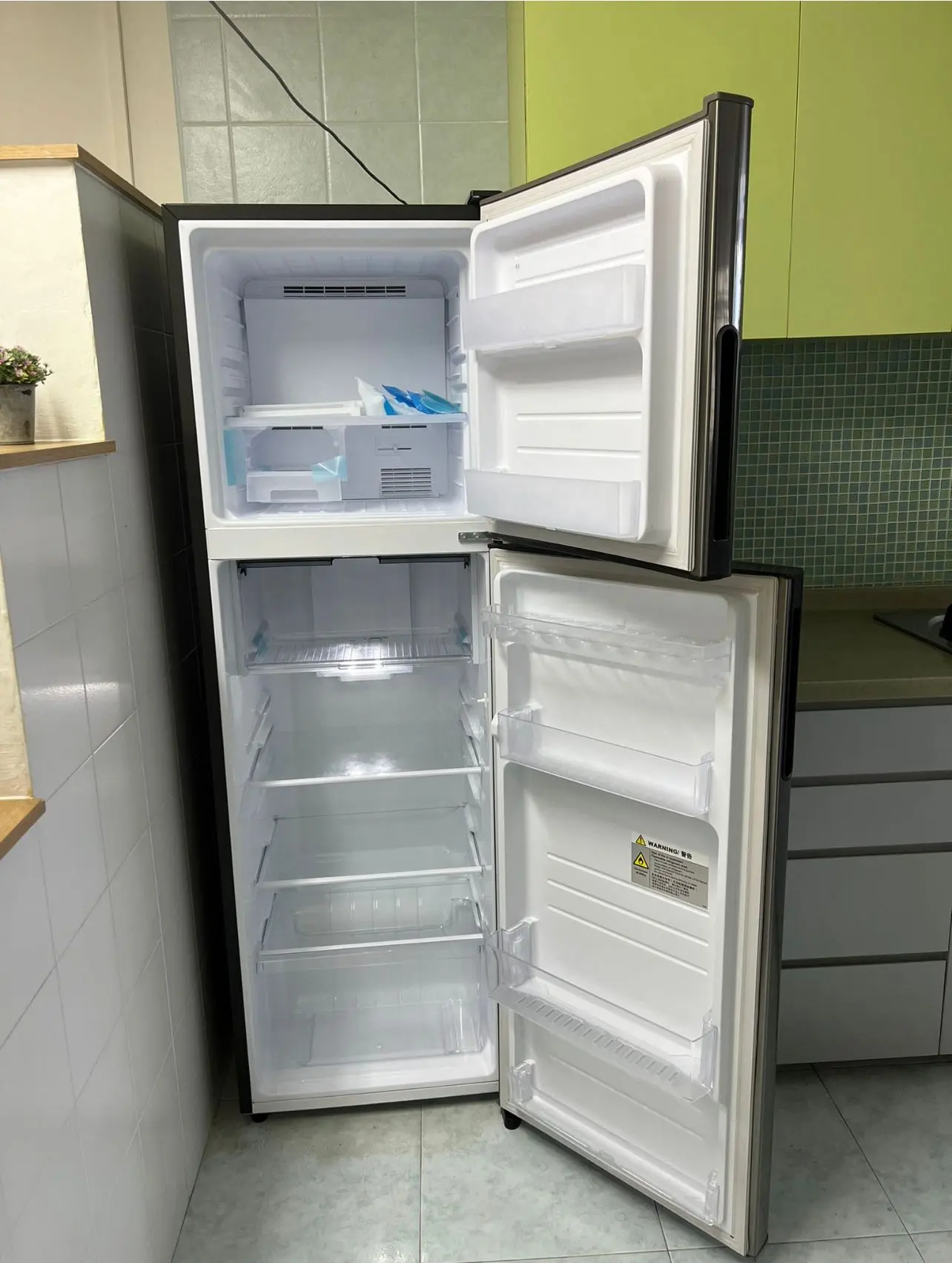
- All shelves and drawers — these reduce internal weight and prevent them from sliding out during transport
- The drip tray (usually at the bottom rear) — empty and wipe it
- Any magnets, stickers, or items on top of the fridge
Stack the shelves and drawers separately. If they're in decent condition, we can route them with the fridge. If you'd rather bin them yourself, that's fine too.
Step 3: Tape the Doors Shut
Use strong packing tape or duct tape to secure both the fridge and freezer doors. Wrap the tape around the entire unit at least twice — once near the top, once near the bottom.
A fridge door swinging open in a narrow HDB corridor is a genuine hazard. We're talking about a 10–15 kg door on a hinge, at shin or knee height for anyone walking behind the crew. Tape it. Seriously.
Step 4: Disconnect and Secure the Power Cord
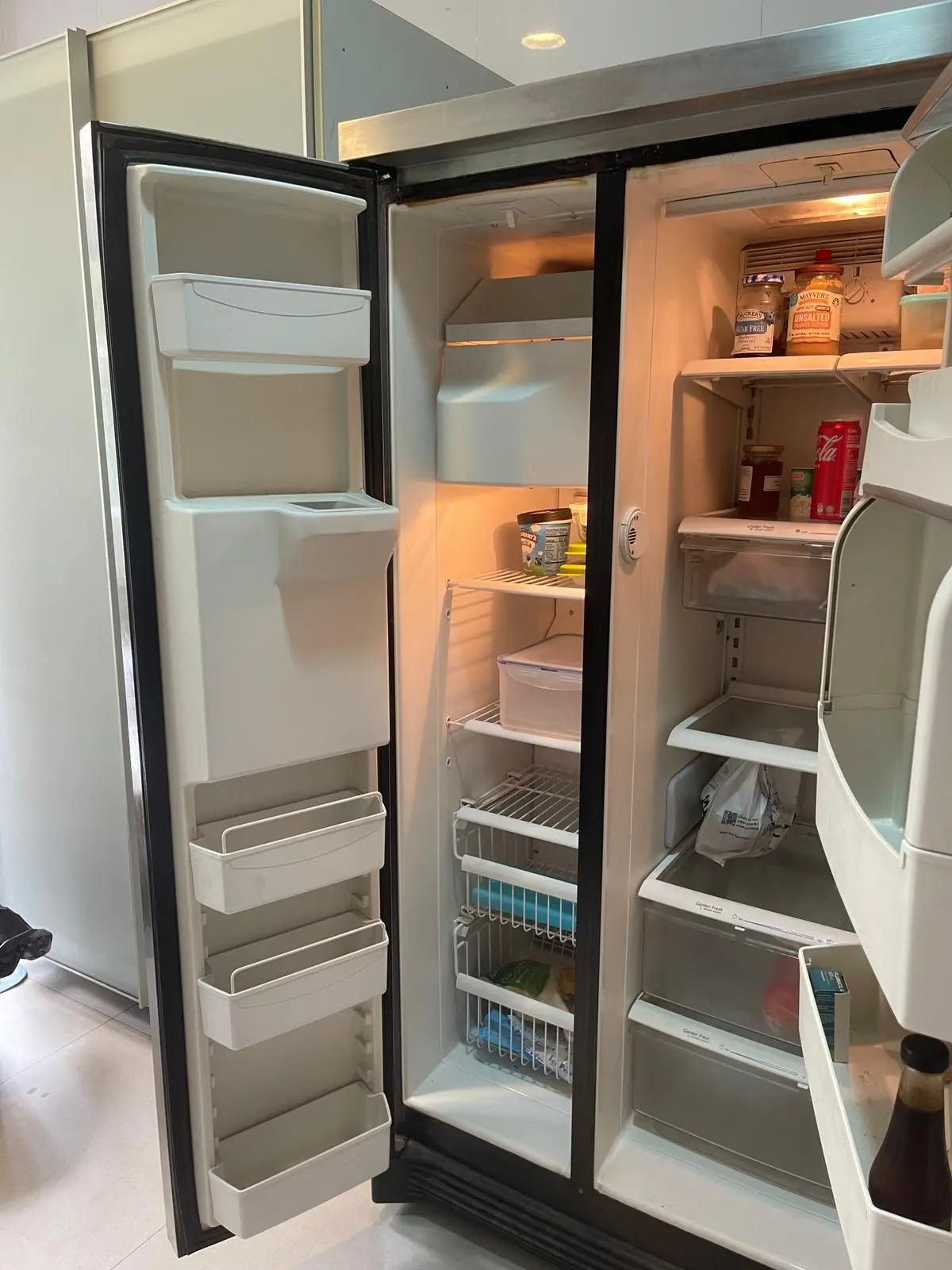
Unplug the fridge and coil the power cord neatly. Tape it to the back of the unit so it doesn't trail on the floor or catch on doorframes. If your fridge has a water line (for ice makers or water dispensers), shut off the valve and disconnect the line. Have a towel ready — residual water will drip.
Step 5: Clear the Path
This is where most homeowners underestimate the job. Walk the route from your kitchen to your front door. Then from your front door to the lift.
Remove or shift:
- Shoe racks in the entryway
- Potted plants along the corridor
- Door stoppers or mats that could catch wheels
- Any furniture narrowing the hallway
For Bedok's older HDB blocks — particularly the point blocks along Bedok Reservoir Road and the slab blocks near Bedok Central — corridors tend to be tighter than newer BTO designs. Measure your doorframes if you're unsure. Most standard fridges clear a standard HDB door with a few centimetres to spare, but side-by-side models can be tight.
HDB vs Condo: What's Different?
HDB flats: No service lift exists. Your fridge goes out through the standard passenger lift — the same one your neighbours use. Timing matters. Avoid peak hours (7–9am, 5–7pm) if you can. The crew will manage the lift logistics, but a clear corridor and a working lift make the difference between a 10-minute exit and a 30-minute ordeal.
If you're in a walk-up block (no lift), surcharges may apply — confirmed at quote stage.
Condos: Rules differ per building. Your MCST may require advance booking of the service lift, and some mandate lift padding for bulky item moves. That padding is provided by your building management — you'll need to arrange it directly with them ahead of the pickup. Give yourself a few days' lead time for this; some management offices are slow to respond.
Common Mistakes We See (After 10+ Years)
-
Defrosting the night before instead of 24–48 hours before. The fridge looks dry on the outside. Inside the insulation panels? Still holding water. It drips in the lift. It drips in the corridor. Your town council won't be pleased.
-
Leaving the fridge plugged in "to keep things cold until the last minute." We get it. But a running compressor means a hot condenser coil at the back. That's uncomfortable for the crew carrying it and can scuff walls with heat marks.
-
Forgetting about the gap behind the fridge. Ten years of dust, fallen receipts, and possibly a dead cockroach or two. Give it a quick sweep before we arrive — partly for hygiene, partly so nothing falls out during the move and ends up in the shared corridor.
-
Not informing the household. We've arrived at flats where one family member booked the disposal and another family member is still storing breast milk in the freezer. Communicate.
Mini-FAQ
Q: Do I need to be home during the removal? Someone needs to be present to grant access and confirm the items being removed. It doesn't have to be the person who booked — any adult household member works.
Q: Can you take the fridge and other bulky items in the same trip? Absolutely. If you're replacing multiple appliances or clearing out furniture at the same time, send photos of everything via WhatsApp and we'll quote for the lot. One trip, one crew, everything gone.
Q: What happens to the old fridge after you take it? We route appliances through responsible recycling channels. Refrigerant gases are handled by licensed intermediaries who recover them properly. Metal components get recycled. We don't dump and we don't landfill what can be diverted. If you'd like us to get the old fridge collected once it's prepped, that's exactly the job we handle day in, day out.
Ready to Get Rid of That Old Fridge?
Prep it. Tape it. Clear the path. We'll handle the rest.
WhatsApp us at 9888 1292 with a photo of your fridge and your address — we'll get back to you with a free quote. Typically 24–48 hours' notice is all we need to schedule the pickup.
It's fast. It's clean. It's done.