Fridge Disposal Singapore
The Hardest Bulky Item in Your Home
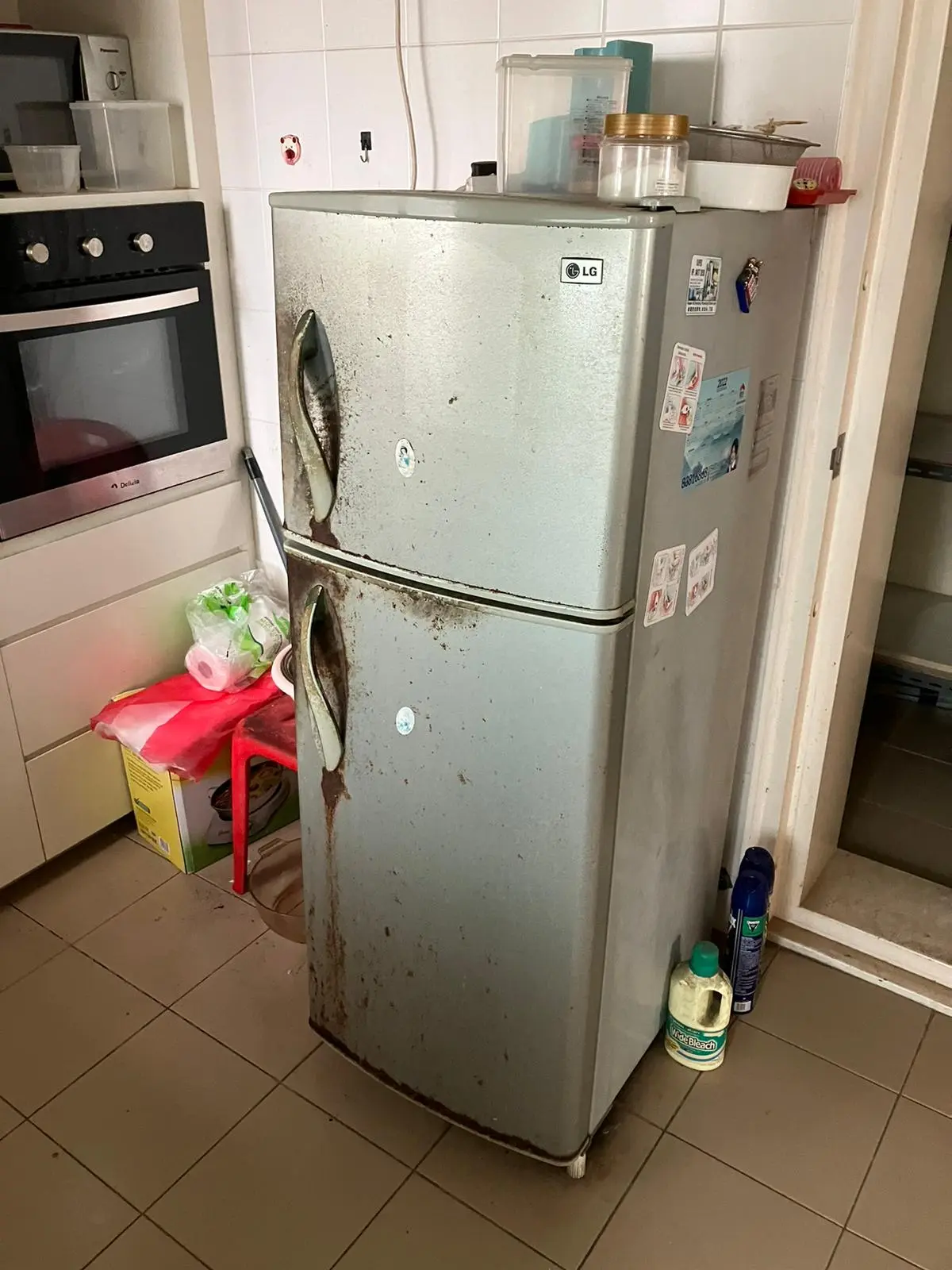
A fridge isn't like a sofa you can tip sideways and wrestle through a doorway. It's 70–100kg of compressor, refrigerant lines, and sheet metal that must stay upright during transport. Tilt it past 45 degrees and you risk compressor oil flooding the cooling circuit — which means even if someone wanted to reuse it, they can't.
In our 10+ years of clearing Singaporean homes, fridges consistently rank as the single most difficult item for residents to self-dispose. The weight is obvious. Less obvious: the standard HDB kitchen doorway is 700mm wide. A typical two-door fridge with handles? 680–720mm. That's millimetre-level clearance, and one wrong angle gouges your door frame or cracks the floor tile at the threshold.
Then there's the refrigerant gas sealed inside the compressor system. R-134a or R-600a isn't something you want venting into your kitchen. You shouldn't attempt to disconnect or puncture any gas line yourself.
What We Actually Do on Collection Day
Our crew arrives with a heavy-duty appliance trolley and moving straps. For most HDB 3- to 5-room flats, the sequence looks like this:
We pull the fridge away from the wall, disconnect the power cord (already unplugged by you — more on that below), and remove shelving, crisper drawers, and door bins in-situ. This shaves 5–8kg off the unit and, more importantly, prevents loose glass shelves from sliding out mid-move.
The fridge goes onto the trolley upright. Our crew navigates it through the kitchen doorway, down the corridor, and into the passenger lift. No HDB flat has a service lift — we work with the same lift every resident uses, which means timing the move to avoid peak hours and angling the unit carefully inside a lift car that's typically 1.4m deep.
For walk-up blocks without a lift, stairwell carry is an option. Surcharges apply for stair work — confirmed at quote stage so there are no surprises.
Before We Arrive: Three Things to Do
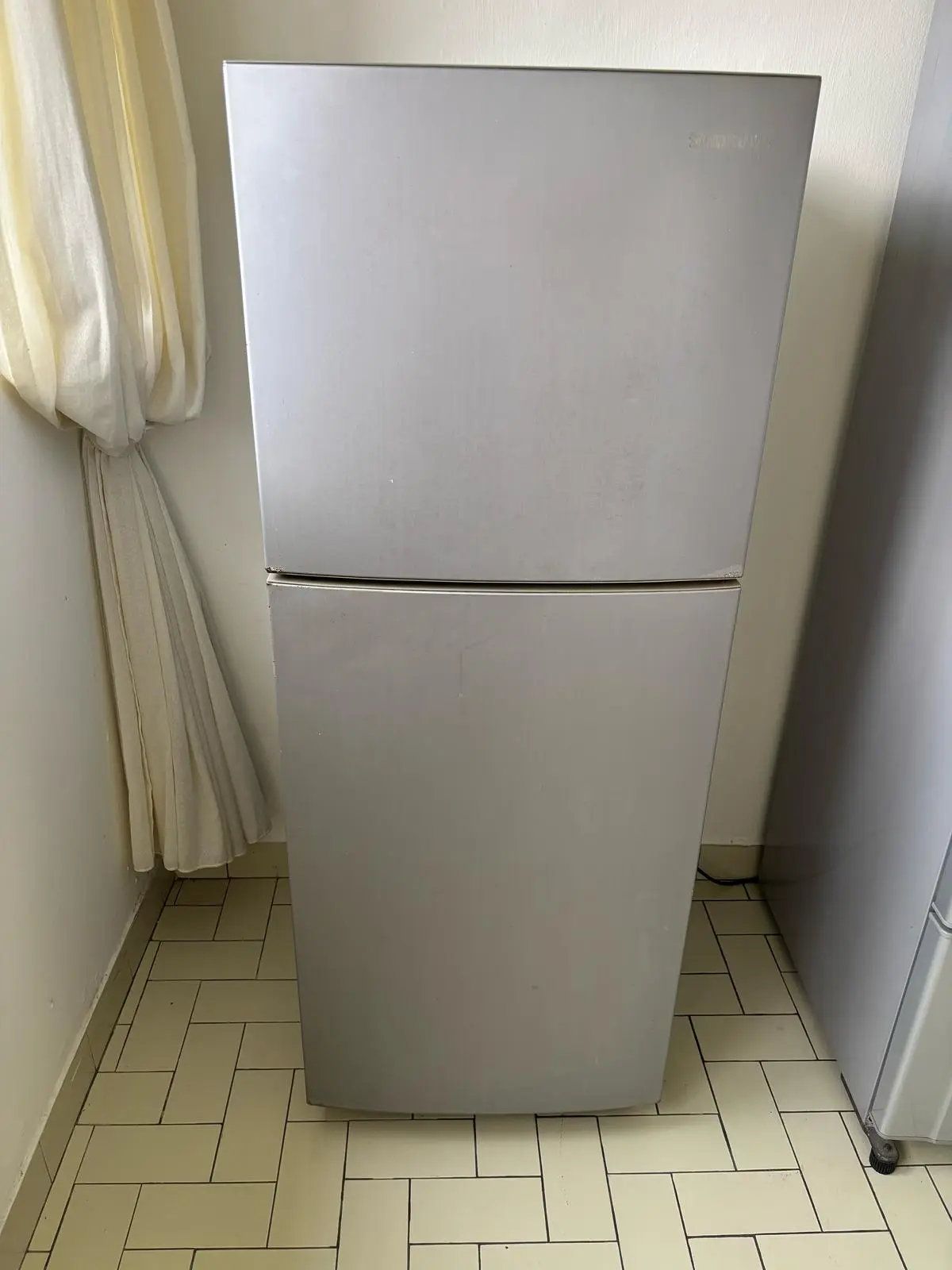
Defrost at least 24 hours ahead. Unplug the fridge and leave the doors open. Place towels or a shallow tray underneath to catch meltwater. A fridge that's still icing over leaks across your floor, your corridor, and the lift — and the water makes the unit heavier and slippery to handle.
Keep it upright. Don't lay the fridge on its back or side to "make it easier." Compressor oil displacement can permanently damage the unit and complicates safe handling of the refrigerant system downstream.
Don't touch the gas line. The sealed refrigerant circuit at the back of the fridge is not a DIY disconnect. Leave it intact. Our downstream routing partners have the equipment to recover refrigerant gases safely.
What Happens After Pickup
We route old fridges through licensed e-waste intermediaries who are equipped to extract and contain refrigerant gases (R-134a, R-600a, or older R-12 in vintage units) before the metal shell goes to recycling. Recoverable metals — steel casing, copper tubing, aluminium evaporator coils — get separated and fed back into material streams.
We don't claim NEA-licensed status ourselves. What we do is ensure your fridge reaches a facility that handles refrigerant recovery properly, rather than ending up illegally dumped at a void deck or roadside.
The Town Council Alternative
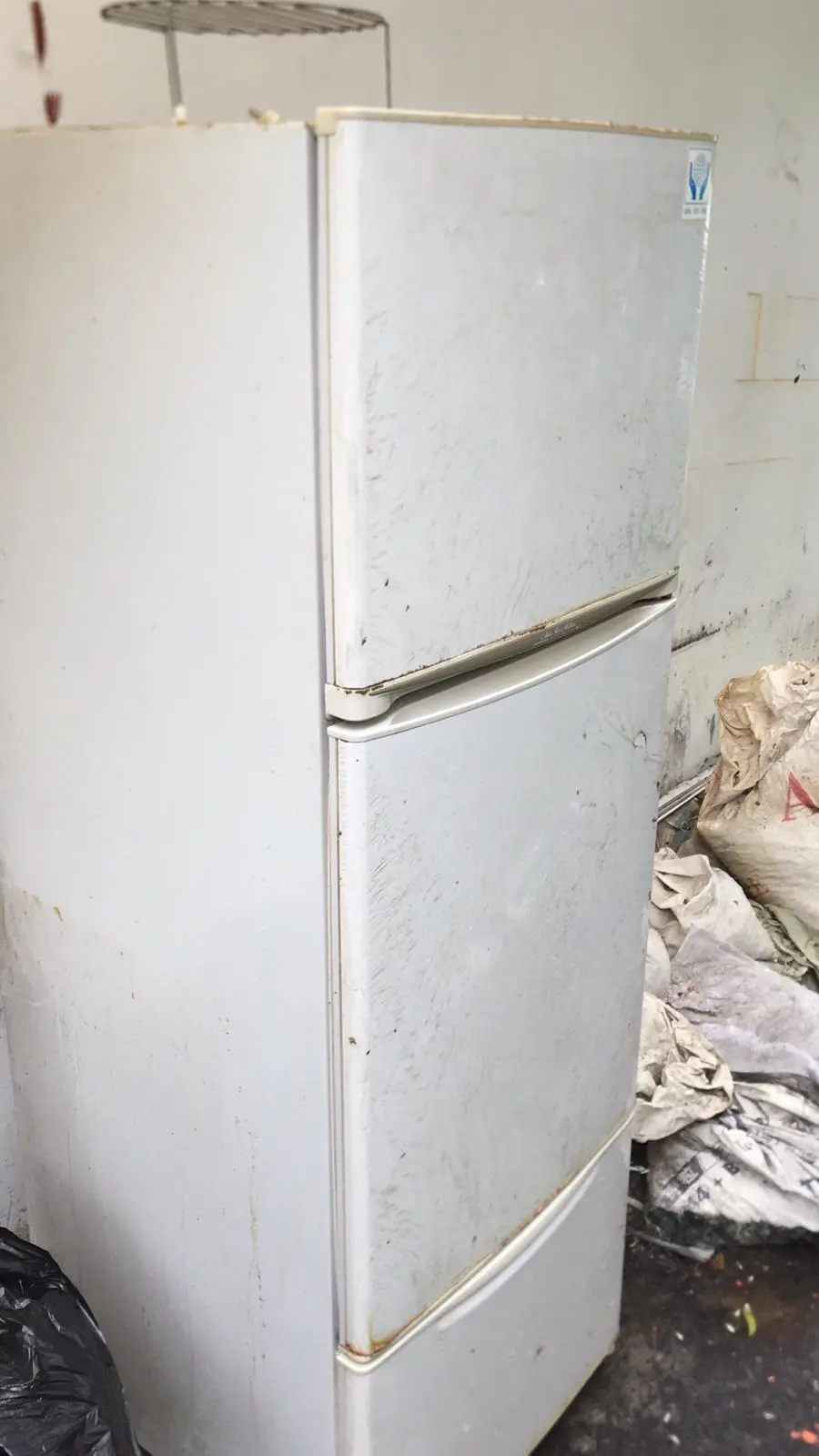
Your town council does offer scheduled bulky-item collection. The catch: you need to move the fridge to the designated ground-floor collection point yourself, on the specific day they've scheduled for your block. For a 90kg appliance in a 12th-floor flat with no service lift, that's not a one-person job. It's barely a two-person job without proper equipment.
Town councils also require items to be dismantled where possible before collection. A fridge isn't easily dismantled — and attempting it risks puncturing the refrigerant lines.
We handle the full chain: removal from your kitchen, transport to ground level, loading, and proper disposal routing. No waiting for a scheduled collection day.
Quick Answers
How much does fridge disposal cost? Every job is quoted individually based on the unit size, floor level, lift access, and timing. Send us a photo on WhatsApp and we'll respond with a quote — no obligation, no call-out fee for the quote itself.
Do you take chest freezers and built-in fridges? Yes to both. Chest freezers are bulky but lighter than upright units. Built-in fridges require disconnection from cabinetry — we handle the extraction on-site. If the fridge is integrated behind a cabinet panel, let us know in advance so we bring the right tools.
Can you collect same-day? Same-day pickups are subject to availability and may incur additional charges. We can't guarantee a fixed time window, but urgent requests are accommodated where our schedule allows. Best to WhatsApp us early in the day.
Get Your Fridge Out Today
Send a photo of the fridge and your address on WhatsApp. We'll quote you within the day — no prices on the website, no guesswork, just a straight number based on what we see.
Related Services
Looking for a broader overview of how we handle electronics and appliances? Read our e-waste disposal guide for the full picture. If you're replacing your washing machine at the same time, our washing machine disposal service covers the logistics of disconnecting water lines and handling drum-weight units.