Aircon Disposal in Singapore: What Clementi Homeowners Need to Know Before Removing Old Units
By Junk Value Team
You've finally committed to replacing that wheezy, 12-year-old split system. The new unit is ordered. The installer has a date booked. Then comes the question nobody warned you about:
If you'd rather route the whole pile responsibly without the trip to a public collection bin, e-waste routing flow sorts and routes it through licensed recyclers — clear quote first.
Who's taking the old one away?
In our 10+ years clearing Singaporean homes — including dozens of jobs across Clementi's HDB blocks and condos — we've watched homeowners get blindsided by this gap. The aircon installer removes your old indoor unit, stacks it in your corridor, and drives off. The outdoor compressor? Still bolted to your bracket three storeys up. The copper refrigerant lines? Dangling from the wall like forgotten veins.
It's not a small problem. And it's not a one-piece problem either.
Why Aircon Disposal Is More Complex Than Other Appliances
A washing machine is heavy but self-contained. Unplug, dolly out, done. An air conditioning system — particularly the split-system units installed in 90% of Singapore homes — is fundamentally different.
Here's what you're actually dealing with:
- Indoor fan coil unit — wall-mounted, connected by copper piping and drainage hose running through a wall sleeve
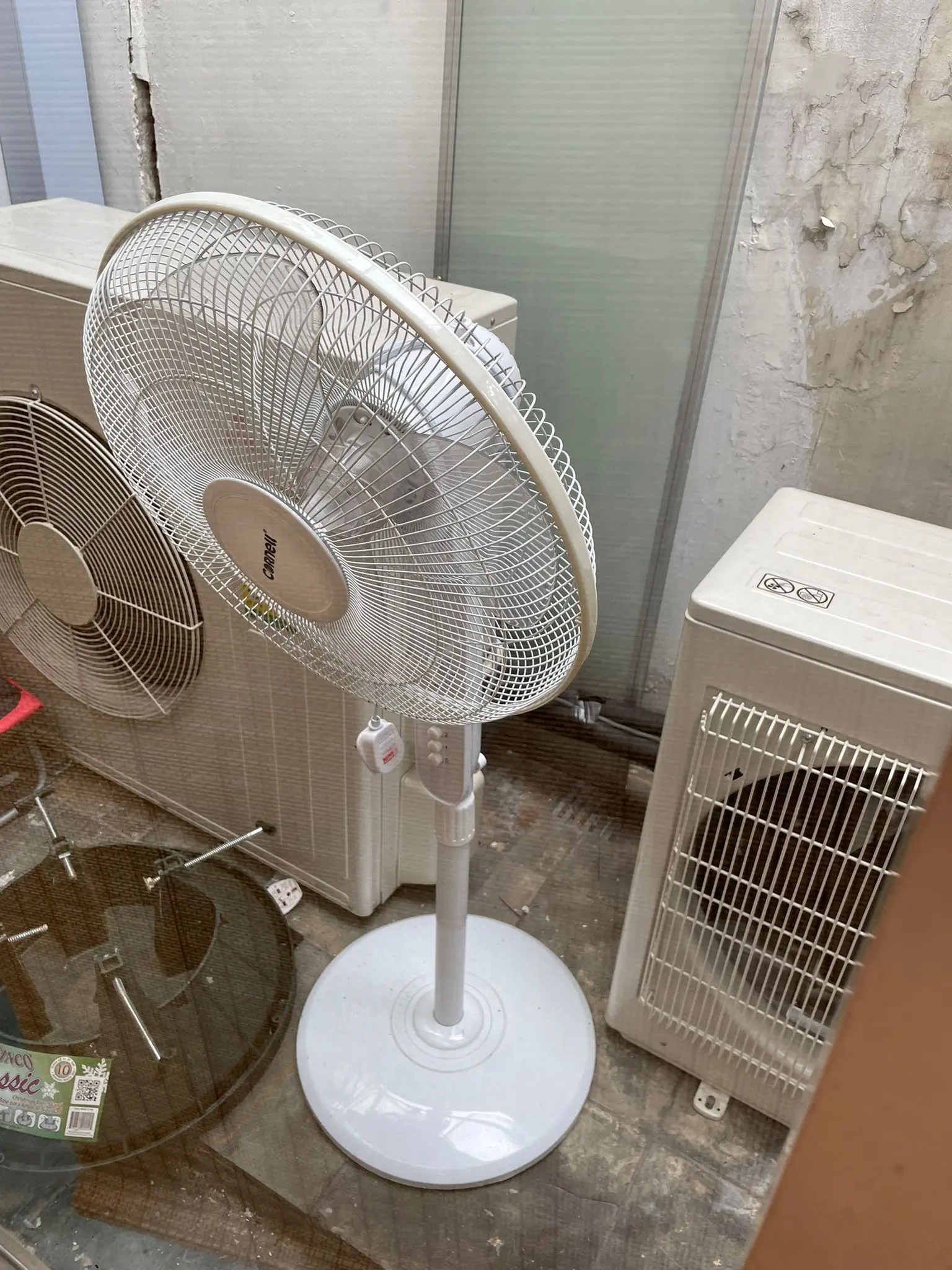
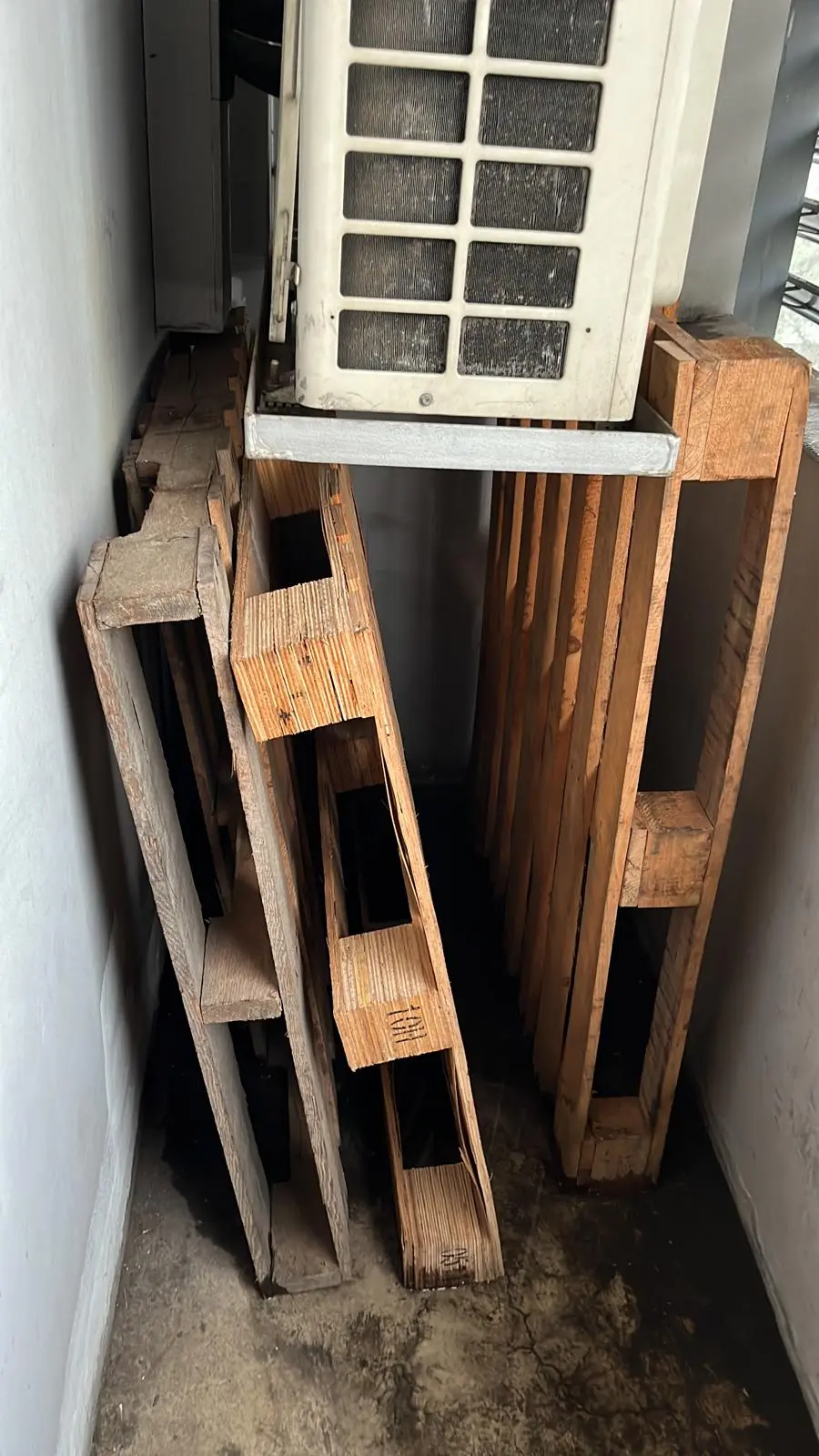
- Outdoor condenser unit — bolted to an external bracket or placed on a ledge, often at height or in a tight aircon ledge accessible only from outside
- Refrigerant lines — copper tubing carrying R410A or R32 refrigerant gas that connects both units through the wall
- Electrical wiring and drainage — routed through trunking or concealed within walls
You can't just yank the indoor unit off the wall and call it done. The refrigerant needs to be recovered into the outdoor unit (a process called "pumping down") before disconnection. Venting refrigerant into the atmosphere isn't just irresponsible — it's the kind of thing that makes the entire disposal chain harder to handle responsibly downstream.
Will Your Aircon Installer Handle Removal?
Short answer: maybe. Long answer: it depends on what you bought and from whom.
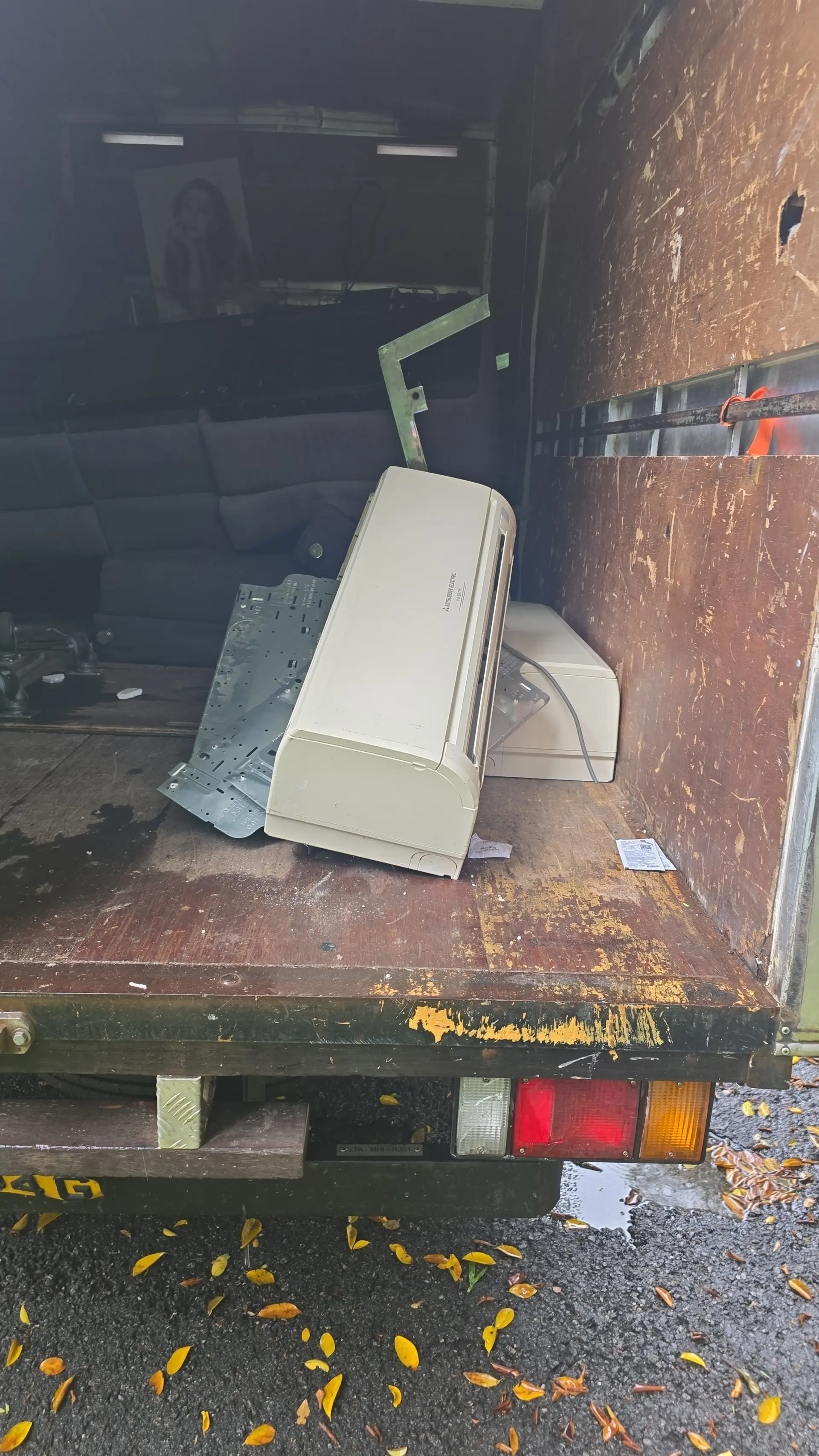
Scenario 1: You bought a new system from the same company. Most installers will remove the old indoor unit as part of the installation package. Some will handle the outdoor unit too. But "removal" often means disconnection and leaving it in your flat — not disposal. Ask explicitly: "Will you take it away, or just detach it?"
Scenario 2: You're replacing with a different brand or contractor. The new installer has zero obligation to touch your old system. They'll install the new one and leave the old hardware for you to sort out.
Scenario 3: You're removing without replacing — maybe you're renovating, or switching to a ceiling cassette system that uses different mounting points. Now you've got a full decommissioning job with no installer in the picture at all.
In our experience clearing homes in Clementi — from the older blocks along Commonwealth Avenue West to the newer developments near Clementi Woods — the most common situation is Scenario 1 where the installer detaches but doesn't dispose. You're left with a fan coil unit on your living room floor and a compressor still hanging outside.
The Refrigerant Question
We get asked this a lot: "Do I need to worry about the gas?"
Here's the honest answer. If your aircon installer properly pumps down the system before disconnecting the lines — recovering the refrigerant back into the outdoor compressor — then the units are safe to handle as regular bulky items. The copper lines can be cut and removed.
If the system was disconnected without pump-down (which happens more often than you'd think with DIY removals or rushed jobs), there may be residual refrigerant in the lines. This doesn't make the units explosive or immediately dangerous, but it does mean the disposal needs to go through proper recycling channels equipped to handle refrigerant recovery.
We route old aircon units through responsible recycling channels where metals are recovered and any remaining refrigerant is handled appropriately. The copper piping alone has recycling value. The compressor contains recoverable materials. Nothing needs to end up in a landfill. If you're also retiring an old fridge, washer, or other white goods at the same time, our appliance removal service takes those off your hands in the same trip.
HDB vs Condo: Different Logistics, Same Headache
HDB Flats (Clementi Blocks)
The outdoor unit is typically on a shared aircon ledge accessible from your kitchen window or utility area. Removing it means leaning out — or accessing from below via a ladder on the ground floor, which isn't always feasible for upper storeys.
Getting bulky items out of an HDB flat means navigating standard passenger lifts and common corridors. A split-system outdoor unit isn't enormous, but it's awkward — roughly 80cm wide, 30kg or more for a standard 3-ticker system. The indoor unit is lighter but wall-mounted at height, requiring careful detachment to avoid damaging the wall behind it.
Your town council — in Clementi's case, the South West CDC area — does collect bulky items, but only if they're already dismantled and brought to the designated collection point. They won't unbolt a compressor from your aircon ledge. They won't detach copper piping from your wall. That's the gap we fill.
Condos
Condo outdoor units are often on dedicated aircon ledges accessible only from the unit's service yard or utility balcony. Some newer condos place them on rooftop plant rooms or centralised ledges — which means MCST access rules apply.
Important: if your condo requires booking of the service lift for bulky item removal, or has specific disposal timing rules, that's between you and your building management. Rules differ per building, and the owner or tenant must request permission ahead of the pickup. We can't liaise with your MCST on your behalf — but once you've got the green light, we handle everything from disconnection point to truck.
Common Mistakes We've Seen Over 10+ Years
1. Assuming the installer "took care of it." We've arrived at Clementi flats where the homeowner genuinely believed the old system was gone — only to find the outdoor unit still bolted to the ledge, hidden behind the new one. Always confirm with your installer what's included.
2. Cutting refrigerant lines without pump-down. DIY-inclined homeowners sometimes hacksaw through the copper lines to "free" the indoor unit. If the system wasn't pumped down first, you'll hear a hiss of escaping gas. It's not catastrophic, but it's wasteful and makes the remaining hardware harder to recycle cleanly.
3. Forgetting the bracket. The metal mounting bracket for the outdoor unit stays bolted to your wall unless someone removes it. If you're renovating, that bracket needs to come off — and it's often rusted in place after a decade of exposure.
4. Leaving window units for town council collection without dismantling. Window aircon units are simpler (single piece, no refrigerant lines to worry about), but they're still heavy. Town councils require items to be dismantled — a window unit wedged into its frame doesn't qualify for collection as-is.
5. Timing the removal wrong. If you're doing a full renovation, get the old aircon out before the hacking starts. Once your contractor begins demolition work, access paths get cluttered with debris, and your old compressor becomes one more obstacle in an already chaotic space.
Frequently Asked Questions
Can I dispose of just the indoor unit and keep the outdoor unit for the new system?
Technically possible if the new system is compatible — but in practice, almost never. Different brands, different refrigerant types (R22 vs R410A vs R32), different pipe sizing. Your installer will confirm, but expect to replace both.
What about window aircon units — are those easier to dispose of?
Much easier. No refrigerant lines, no separate outdoor unit. It's a single box. The challenge is weight (some older window units are 30-40kg) and the fact that they're wedged tightly into the window frame with brackets and seals. Once extracted, it's a straightforward bulky item removal.
Do I need to do anything before your team arrives?
If your installer has already disconnected and pumped down the system, we can remove the units as-is. If the system is still connected and operational, let us know when you send photos for the quote — we'll advise on next steps. The key thing: send us photos of both the indoor and outdoor unit locations, including how the outdoor unit is accessed.
Ready to Clear Your Old Aircon?
Snap a few photos — indoor unit, outdoor unit, and the access path (corridor, lift lobby, aircon ledge). WhatsApp them to us at 9888 1292 and we'll get back to you with a no-obligation quote.
Fast. Clean. Done.
Surcharges may apply for after-hours, Sundays, public holidays, or walk-up access — confirmed at quote stage.