Washing Machine Disposal in Singapore: The Full Guide for Homeowners
By Junk Value Team
Your New Washing Machine Is Coming Tomorrow. What Happens to the Old One?
You've just paid for a shiny new front-loader. The retailer confirmed delivery for Saturday morning. Then you ask the question every Singapore homeowner eventually asks: "Will you take the old one away?"
If you'd like a planned, budget-aware option rather than a same-day scramble, commercial team is built for that — small offices and planned pickups get a clear quote first.
Sometimes yes. Sometimes no. Sometimes "yes, but only if it's already disconnected and at the door." And sometimes the delivery crew takes one look at your narrow HDB corridor in Ang Mo Kio, shakes their head, and leaves you with two washing machines in a flat built for one.
In our 10+ years clearing appliances from Singaporean homes, we've seen this exact scenario play out hundreds of times. Here's what you actually need to know about getting rid of your old washer — properly, legally, and without throwing your back out.
Why You Can't Just Leave It at the Void Deck
A washing machine isn't a cardboard box. It's 60 to 90 kilograms of steel drum, concrete counterweight, motor, and electronic components. Your town council — whether that's Ang Mo Kio Town Council or any other — won't collect it whole. Their bulky-item pickup requires you to dismantle items first. Try dismantling a washing machine with a screwdriver and good intentions. It doesn't end well.
Beyond logistics, there's the environmental reality. Washing machines contain metals (steel, copper, aluminium), electronic circuit boards, and in some models, residual water that's been sitting in the drum and hoses for years. These materials need proper routing through recycling channels — not a spot next to the rubbish chute.
Step One: Disconnecting Your Washing Machine Safely
Before anyone moves the unit, it needs to be disconnected. This sounds obvious until you're standing behind a washer wedged between your kitchen counter and the wall, staring at corroded hose fittings.
Water supply: Turn off the tap connected to the inlet hose. Unscrew the hose from the tap — have a towel ready, because residual water will drip. Then disconnect the hose from the back of the machine.
Drainage: Pull the drain hose out of the floor trap or standpipe. Tilt the machine slightly forward to let trapped water drain into a basin. Skipping this step means water sloshing across your floor during removal.
Power: Unplug from the wall socket. If your unit is hardwired (rare in residential, but we've seen it in older Ang Mo Kio flats from the 1980s), you'll need an electrician to disconnect it safely.
Pro tip from the field: Run an empty spin cycle the night before disposal day. It purges most residual water from the drum and pump, making the unit lighter and less likely to leak during transport.
Will the Retailer Take Your Old Machine?
It depends. Some major appliance retailers offer removal of the old unit as part of delivery — but the terms vary wildly:
- Some charge an additional fee for removal
- Some only take the old unit if it's the same appliance type they're delivering
- Some require the old unit to be disconnected and moved to the front door before their delivery team arrives
- Some flatly refuse if the unit is on a different floor from where they're delivering
We've had customers in Ang Mo Kio call us the morning after delivery because the retailer's team declined to take the old washer. The delivery crew isn't a disposal crew. Their job is to bring the new one in, not wrestle an 80kg rusted top-loader through a narrow HDB corridor.
The Weight Problem Nobody Warns You About
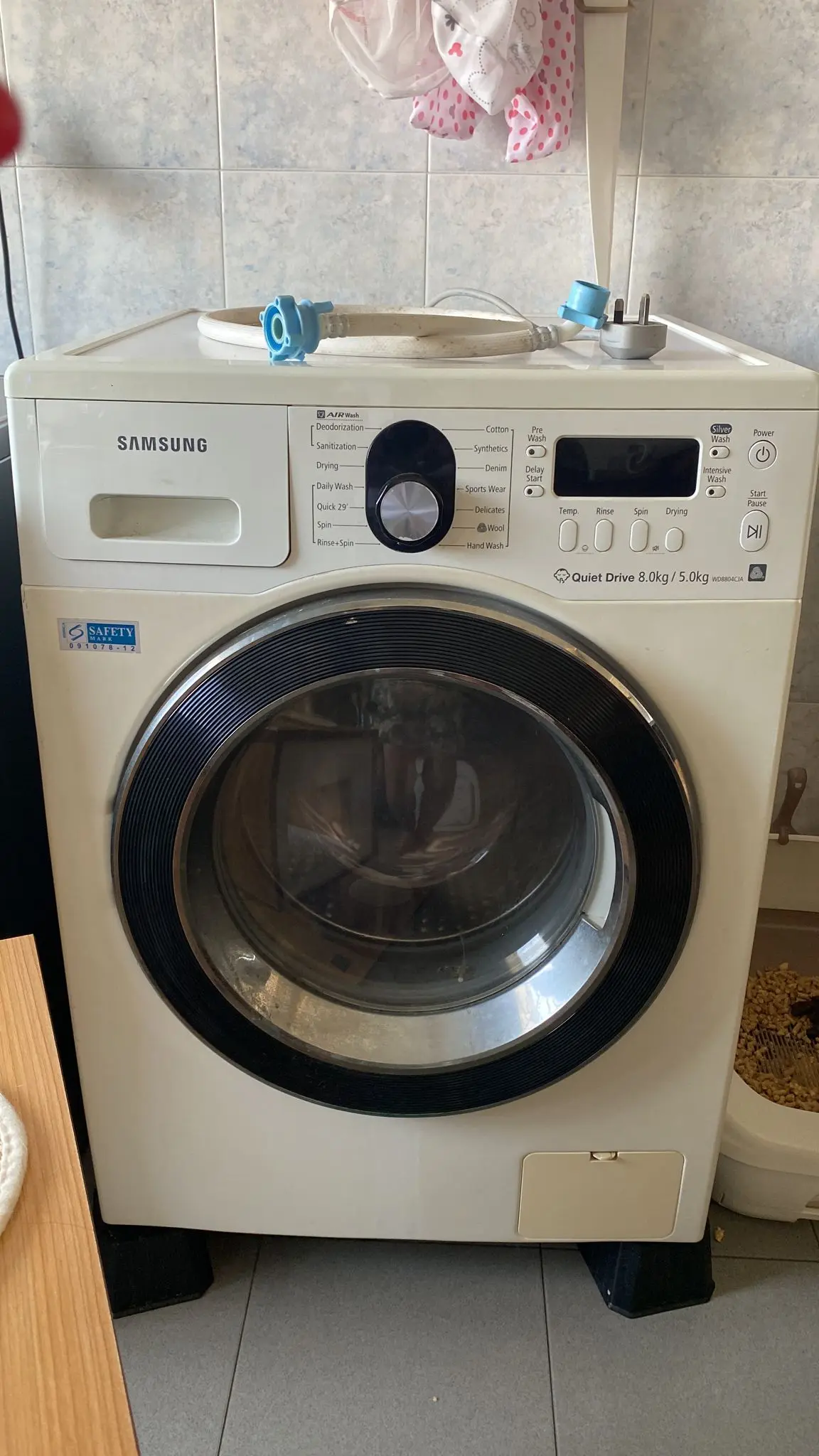
A standard top-loader weighs 50 to 65 kg. A front-loader with a concrete counterweight? 70 to 90 kg. That's heavier than most adults.
In HDB flats — especially older blocks in estates like Ang Mo Kio — you're dealing with:
- Narrow corridors that don't allow two people to walk side by side while carrying something
- Standard passenger lifts with limited floor space (no service lift in HDB blocks)
- Uneven thresholds between the kitchen and the common corridor
- Gate clearance — some older HDB gates don't open wide enough for a front-loader to pass through without tilting
We typically deploy two crew members minimum for a single washing machine removal. The unit gets tilted onto a trolley, secured, and manoeuvred through the flat with protective measures for your flooring. It's not a one-person job, and it's definitely not a "just slide it out" situation.
HDB vs Condo: Different Buildings, Different Realities
HDB (Ang Mo Kio and elsewhere): No service lift. The washing machine goes through your front door, down the common corridor, and into the passenger lift. If the lift is out of service — and we've encountered this more than once during upgrading programmes — stairs become the only option. Surcharges apply for stair carry, and rightfully so. It's brutal physical work.
Condo: Most condos have a service lift, which makes the physical transport easier. However, the owner or tenant must arrange access and any required approvals with their MCST or building management ahead of the pickup. Rules differ per building — some require advance booking of the service lift, others restrict disposal activities to certain hours. That's between you and your management office.
What Happens After We Collect It
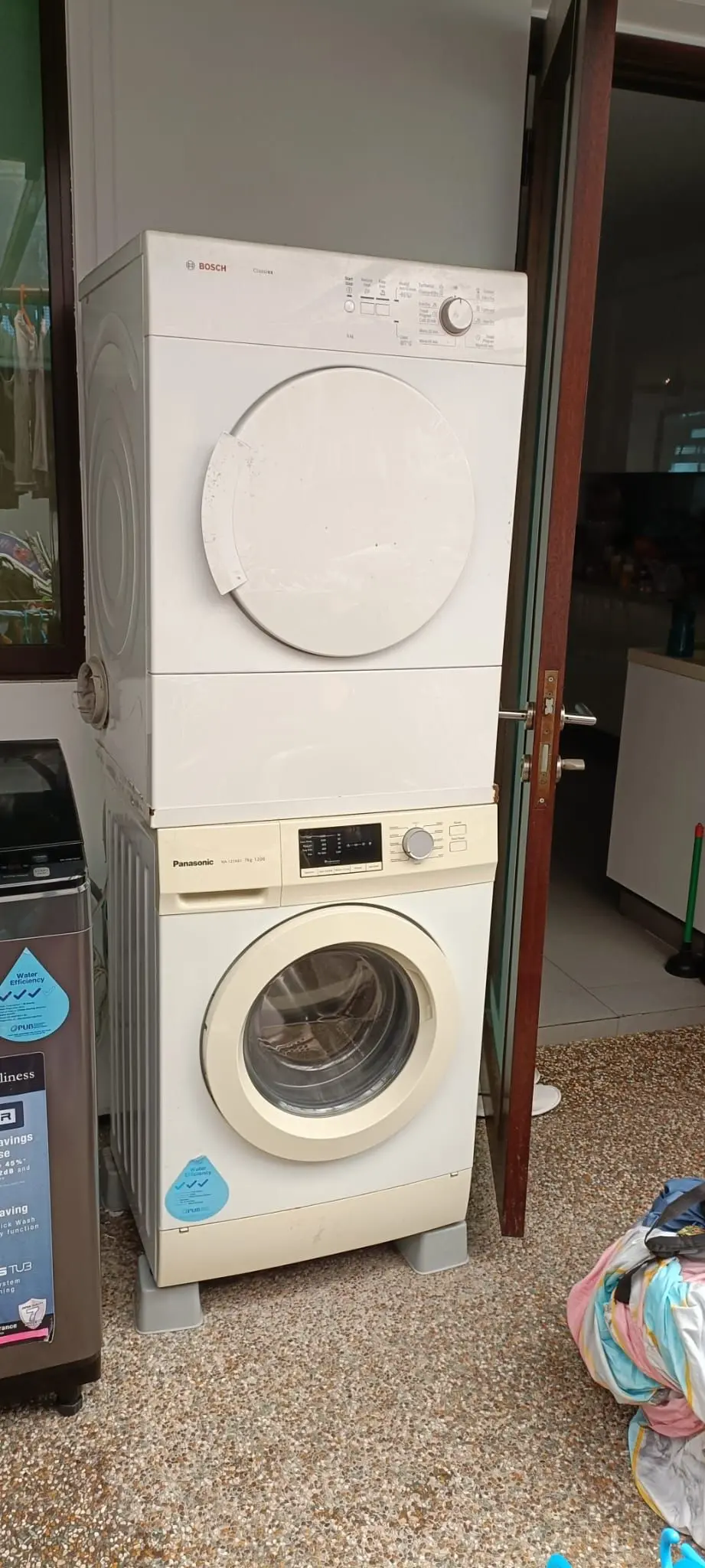
Your old washing machine doesn't end up in a landfill as a single lump of metal and plastic. We route appliances through responsible recycling channels where the materials get separated:
- Steel and iron from the drum and frame get recycled as scrap metal
- Copper wiring from the motor is extracted and recycled
- Electronic components go through proper e-waste processing via licensed intermediaries
- Plastic panels are sorted by resin type for recycling where viable
This matters. Singapore's Semakau Landfill has finite capacity. Every washing machine that gets properly broken down and recycled is tonnage diverted from that single remaining landfill.
Common Mistakes We See After 10+ Years
Leaving it too late. Your new washer arrives at 9am. You call us at 8:45am asking for same-day removal. Urgent jobs are subject to availability and may incur additional charges. Give us at least 24 to 48 hours notice.
Not draining the machine. A waterlogged washer is heavier, messier, and risks water damage to your flooring and your neighbours' ceiling below.
Assuming the old unit has trade-in value. We don't pay for items collected — this is a disposal service, not a buyback programme. Your 12-year-old washer with a seized bearing has no resale value. What it does have is recyclable material, and we make sure that gets routed properly.
Forgetting about the hoses. The inlet and drain hoses are still yours to deal with. We take the machine. If you want the hoses gone too, let us know during the quote — it's not a problem, but don't assume.
Mini-FAQ
Q: Can I just put my old washing machine next to the bin centre? No. Illegal dumping of bulky items can result in fines. Your town council requires dismantling before collection, and even then, pickup is on their schedule — not yours.
Q: Do you disconnect the washing machine for me? Our core service is removal and disposal. Disconnection is straightforward for most setups — turn off the tap, unscrew hoses, unplug. If you're unsure, a plumber can handle it in 15 minutes. Let us know your situation when you send photos for the quote and we'll advise.
Q: Is there a surcharge for weekend or after-hours removal? Surcharges may apply for after-hours, Sundays, and public holidays — confirmed at quote stage. Weekday and Saturday pickups during regular hours are standard.
Ready to Get Rid of That Old Washer?
Rather than wrestle 80kg of steel through a narrow corridor yourself, let us haul the old washing machine away and route the metal and motor through proper recycling.
Send us a photo of the washing machine, its location in your flat, and your preferred date. We'll reply with a clear quote — no hidden costs, no surprises.
WhatsApp us at 9888 1292 for a free quote.
Fast. Clean. Done.