E-Waste Collection Points in Singapore: What Fits, What Doesn't, and What to Do Next
By Junk Value Team
You've seen them. The bright green or blue e-waste bins tucked near the entrance of your neighbourhood mall, or sitting in the lobby of a community centre. You've probably walked past one with a dead laptop in your hand, paused, and thought: does this actually go in here?
If you'd like a planned, budget-aware option rather than a same-day scramble, commercial clearance service is built for that — small offices and planned pickups get a clear quote first.
Or worse — you've got a 55-inch TV leaning against your living room wall and you already know that bin isn't going to help.
Let's break down what Singapore's public e-waste collection infrastructure actually handles, where the gaps are, and what your options look like when the bins fall short.
Where Are the E-Waste Bins Located?
Singapore's network of public e-waste collection points is spread across:
- Shopping malls — typically near customer service counters or basement entrances
- Community centres / clubs (CCs) — often in the lobby or carpark area
- Selected supermarkets and electronics retailers — near exits or recycling corners
- Some residential estates — ground-floor common areas in newer developments
The coverage is decent if you live near a major mall or an active CC. But here's the thing most residents discover the hard way: not every location has the same bin type, and not every bin accepts the same items.
What Goes Into an E-Waste Bin — and What Doesn't
The bins are designed for small consumer electronics. Think:
- Mobile phones, tablets, e-readers
- Laptops and their chargers
- Power banks and portable batteries (contained within devices)
- Small household electronics — hair dryers, electric toothbrushes, shavers
- Cables, adapters, earphones
- Computer peripherals — mice, keyboards, webcams
What the bins will NOT accept:
- Large appliances — fridges, washing machines, air-con units
- Televisions of any size — CRT or flat-screen
- Printers, desktop towers, monitors
- Anything that doesn't physically fit the bin opening (typically 30–40cm wide)
- Loose batteries not housed in a device
- Items with visible damage that could leak chemicals — swollen batteries, cracked screens oozing liquid
The size constraint is the biggest practical limitation. If your item doesn't slide through the slot or drop-in opening, it's not going in. Simple as that.
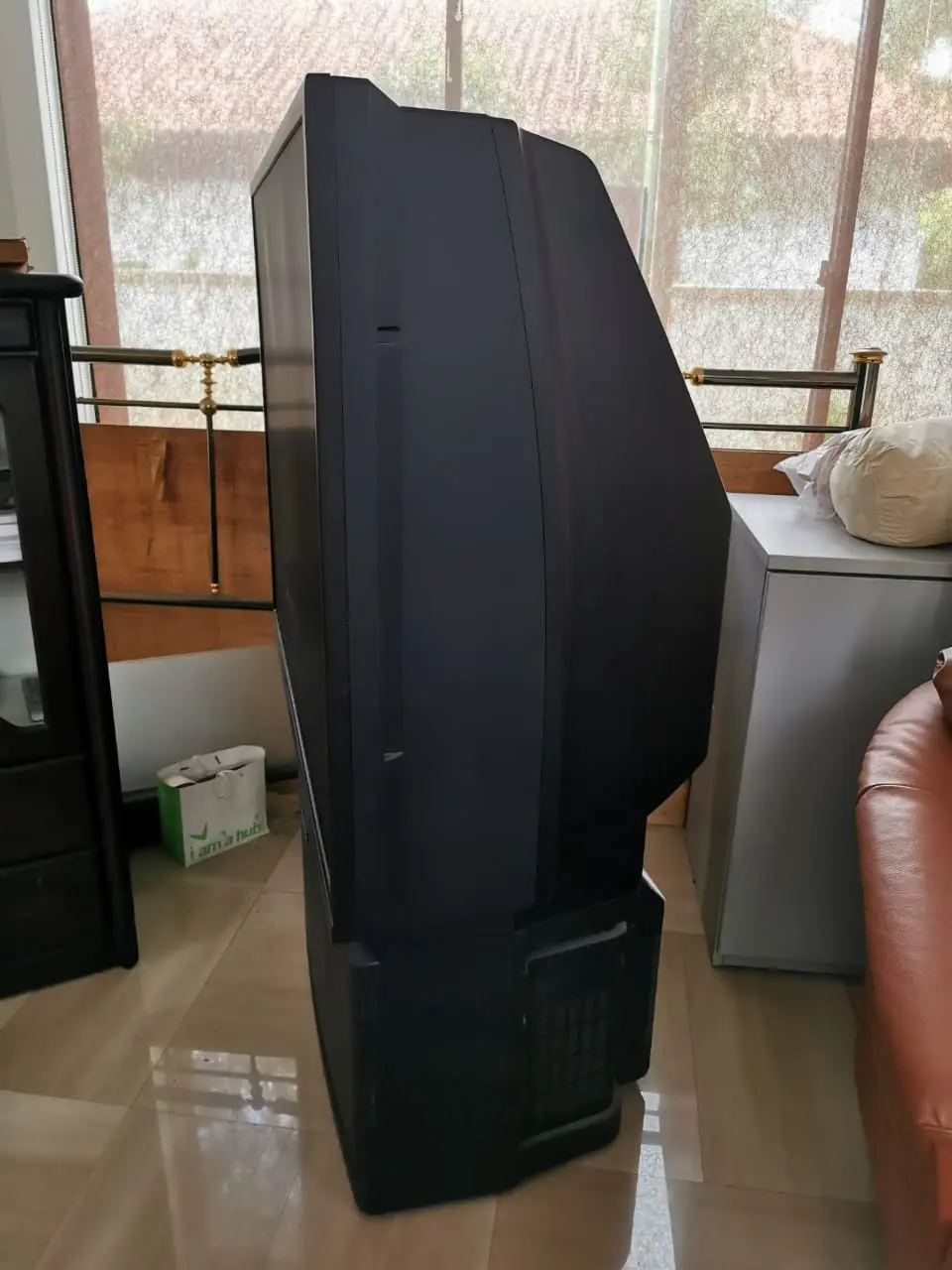
That old CRT TV? Not a chance. It won't fit in any public bin, and even if it could, the weight alone (some vintage sets hit 30–40kg) makes self-transport a project in itself.
The Real Problem: Bulk and Oversized E-Waste
In our 10+ years of clearing Singaporean homes, here's what we've noticed: the items people most want gone are exactly the ones the public bins can't handle.
A household upgrading their entertainment setup doesn't need to dispose of a phone charger. They need to get rid of:
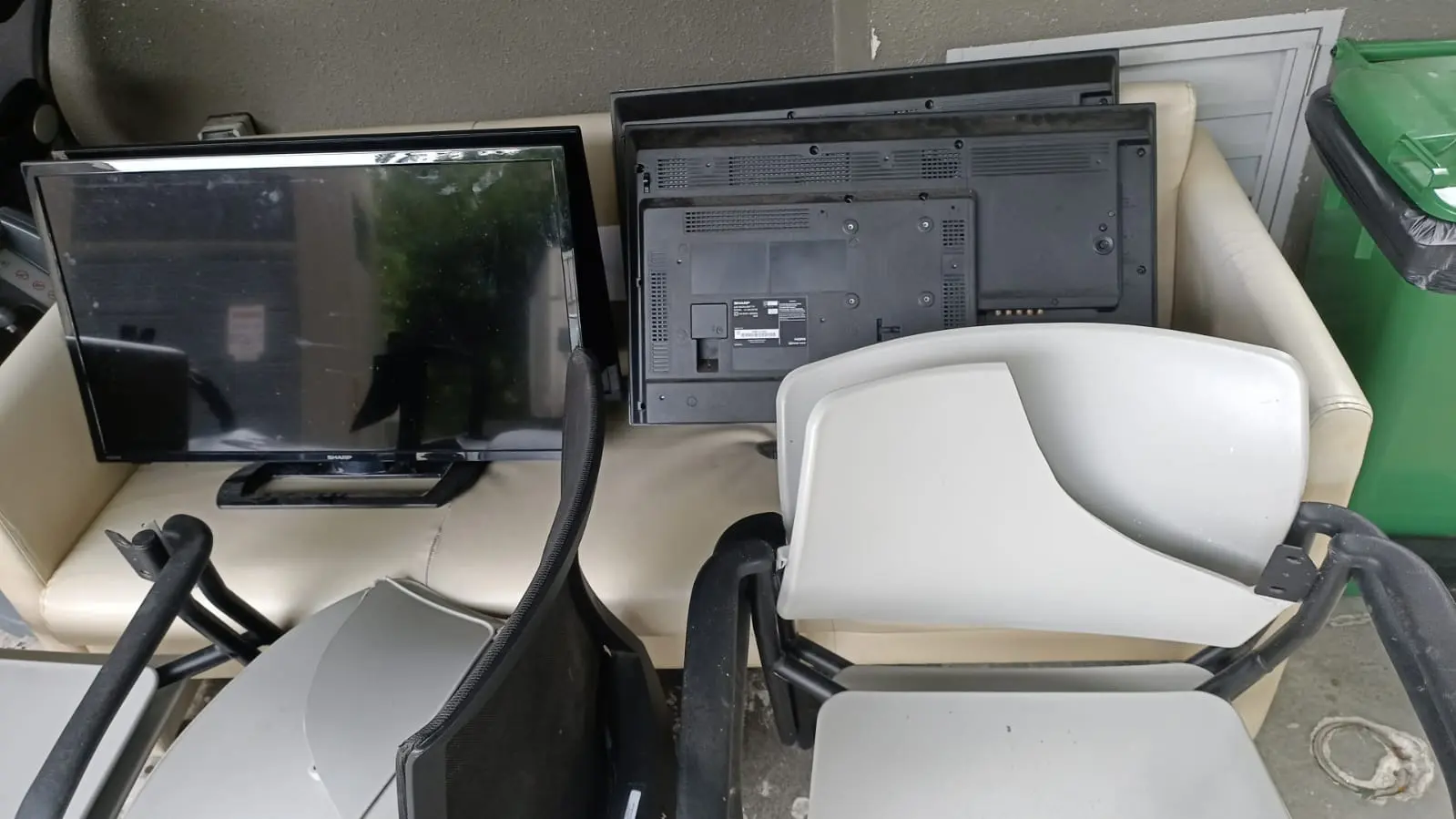
- A 50-inch flat-screen that's been replaced
- An old desktop setup — tower, monitor, keyboard, the works
- Three printers from a home office that nobody uses anymore
- A broken washing machine that's been sitting in the yard for six months
These items require a different disposal route entirely. The bins aren't built for them. They never were.
HDB vs Condo: Getting Large E-Waste Out of Your Home
HDB flats
The challenge is manoeuvring bulky electronics through standard corridors and passenger lifts. There's no dedicated service lift in HDB blocks — you're working with the same lift every resident uses. A 65-inch TV box barely clears most HDB lift doors. A CRT set from the 90s? Heavy, awkward, and one wrong angle means it's stuck.
We've carried old projection TVs down narrow HDB stairwells when the lift dimensions simply wouldn't cooperate. It's not glamorous work, but it's what the job requires.
Condos and commercial properties
Condos typically have service lifts with more clearance, but access rules differ per building. If you're disposing of large electronics, your MCST may require advance booking of the service lift, and some buildings restrict disposal-related moves to specific hours.
Important: the owner or tenant must request permission and approval from their building management ahead of the pickup. Rules vary — some MCSTs want 48 hours' notice, others need a written form. Check with your management office first.
Common Mistakes We See
1. Leaving e-waste at the bin when it doesn't fit. We've heard from customers who tried to leave a monitor beside the bin, hoping someone would collect it. That's illegal dumping. It won't get picked up through the proper channel, and you risk a fine.
2. Assuming town council bulky-item collection covers electronics. Town councils handle bulky items — but they require you to dismantle items first, and their scheduled collection doesn't always align with your timeline. For e-waste specifically, the routing needs to go through proper recycling channels, not general waste.
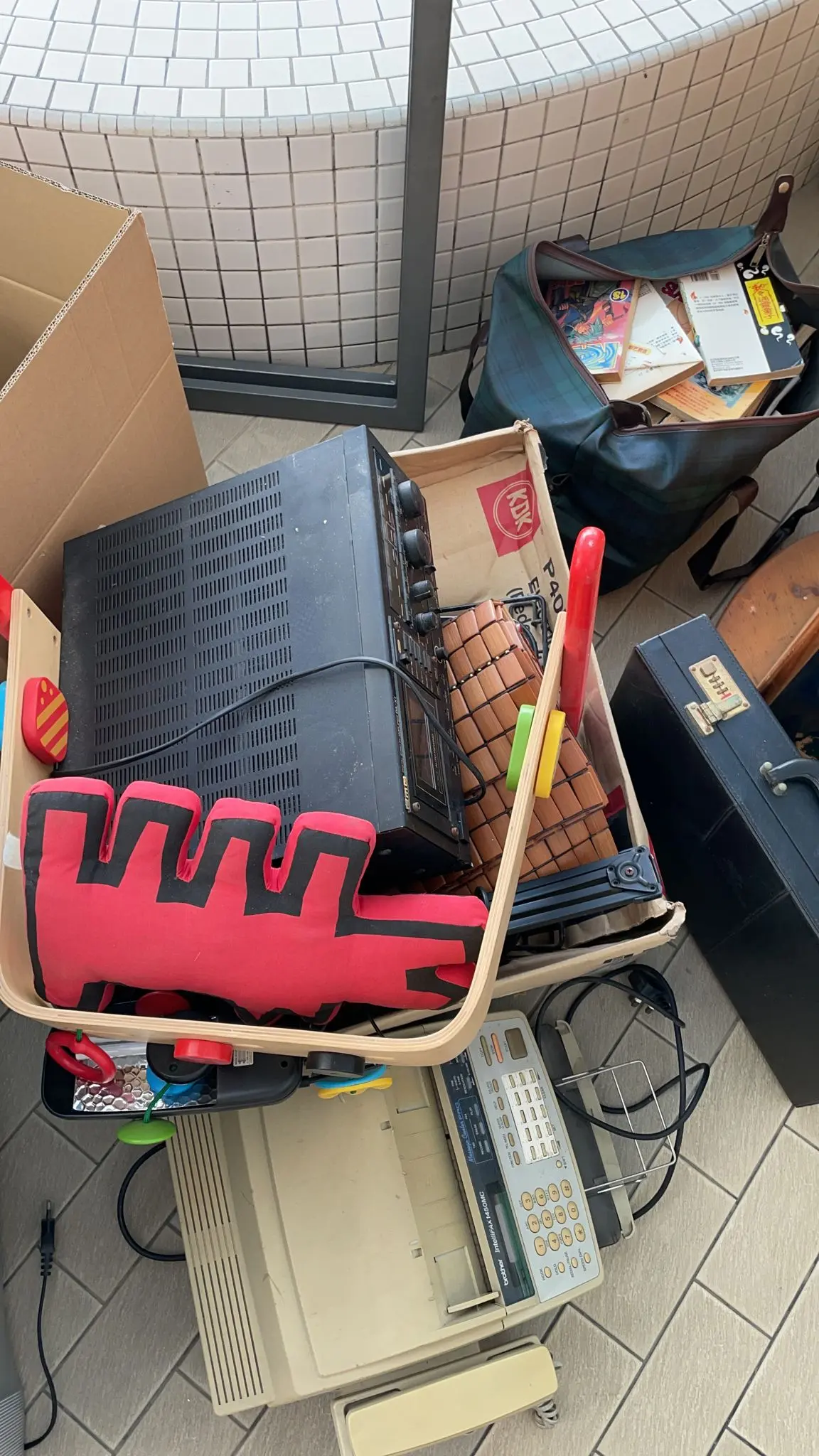
3. Mixing e-waste with renovation debris. If you're clearing a flat pre-renovation and tossing old electronics into the same pile as broken tiles and drywall, the recycling chain breaks. Electronics contain recoverable materials — metals, circuit boards, plastics — that need separate processing.
4. Waiting too long. That dead printer in the storeroom isn't getting lighter. The longer you wait, the more it becomes part of a larger clearance job when you eventually move or renovate.
When Professional Pickup Makes Sense
The public bins handle the small stuff well. But when you're dealing with:
- Multiple large electronics (office clearance, post-renovation tech dump)
- Items too heavy or awkward for one person to carry downstairs
- Tight timelines — moving out next week, contractors coming Monday
- A mix of e-waste and other bulky items that need clearing together
That's when a single pickup handles everything. We route e-waste through proper recycling channels — responsible disposal through licensed intermediaries who do the sorting and processing. Reusable items get routed into second-hand channels where possible. Nothing ends up where it shouldn't.
Mini-FAQ
Q: Can I put a laptop with a swollen battery into the e-waste bin? No. Swollen or visibly damaged batteries are a fire risk. These need specialist handling. Contact us and we'll route it through the appropriate channel.
Q: Is there a weight limit for the public e-waste bins? The practical limit is whatever fits through the opening — typically items under 2–3kg and smaller than roughly 30–40cm in any dimension. There's no posted weight limit because the slot size is the real constraint.
Q: What if I only have one old TV to dispose of? One item is fine. Send us a photo on WhatsApp, we'll give you a quote, and we'll collect it at a time that works for you. No need to wrestle it into your car or down the corridor alone.
Ready to Clear Your E-Waste the Easy Way?
Skip the bin-size guessing game. Send us a photo of what needs to go — TVs, monitors, old desktops, appliances, whatever won't fit in those little green bins.
WhatsApp us at 9888 1292 for a free quote. Snap a photo, tell us your block or condo, and we'll handle the rest.
It's fast. It's responsible. It's done.