Washing Machine Disposal Singapore
A 60 kg Dead Weight You Don't Want to Wrestle Alone
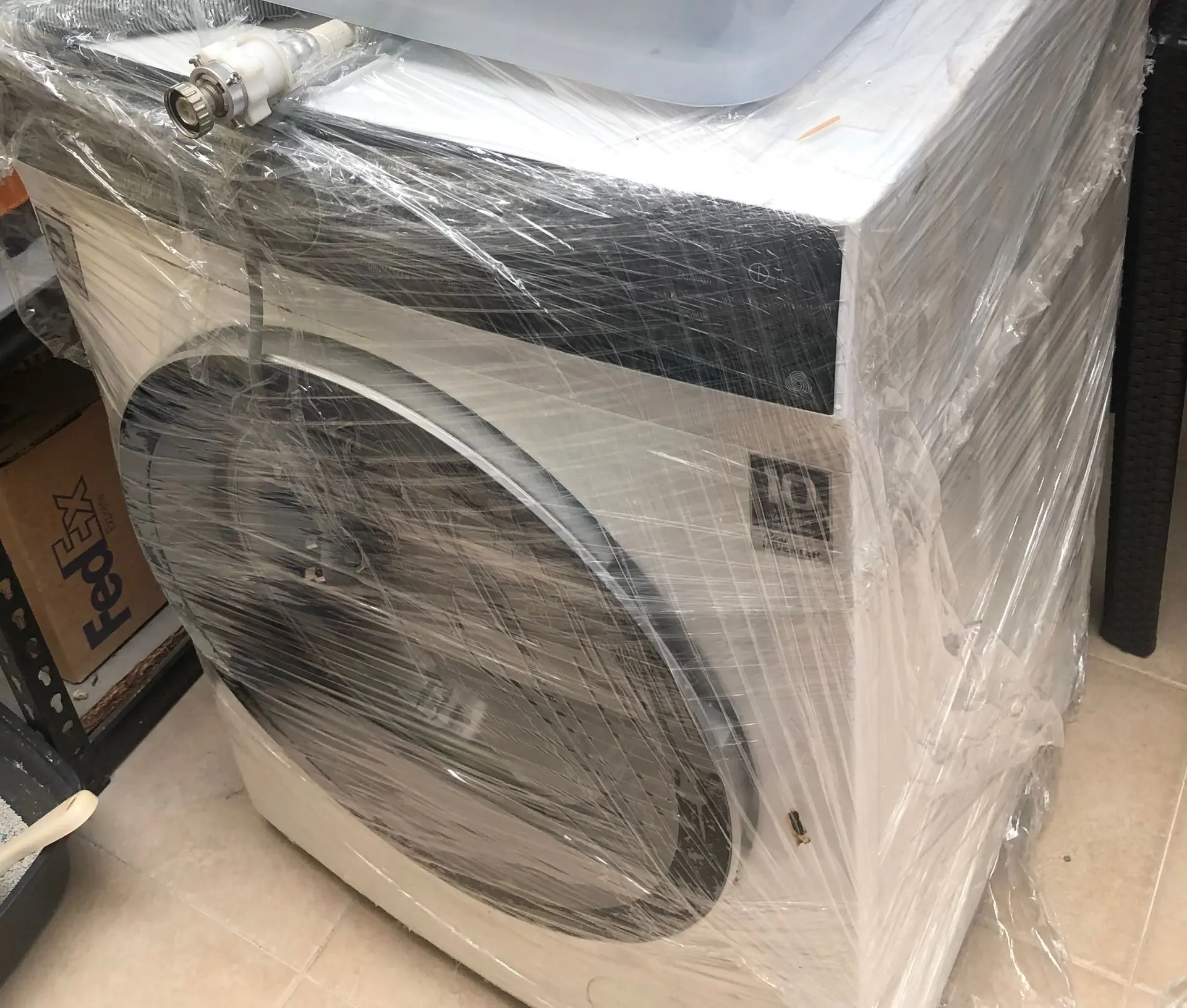
A washing machine sits in a corner doing nothing until the day you need it gone. Then it becomes the heaviest, most awkward object in the flat. Top-loaders hover around 35–40 kg dry. Front-loaders with a concrete counterweight inside the drum? Easily 60–75 kg. And there's always residual water sloshing in the drum or trapped in the drain hose — water that will dribble across your floor, into the lift lobby, and down the corridor the moment you tilt the machine onto a trolley.
That trapped-water dribble is the detail most people don't think about until it's already leaving a trail from the kitchen to the front door.
Your Disposal Options — Honestly
Not every old washer needs a private pickup. The cheapest route depends on your situation:
Retailer trade-in on delivery. If you're buying a new machine from Courts, Harvey Norman, or a similar retailer, most offer to haul the old one away when they deliver the replacement. This is usually the lowest-cost option if you've already arranged it at point of sale. Ask before delivery day — adding it after the fact isn't always possible.
E-waste recycling channels. Appliances with compressors, motors, and circuit boards qualify as e-waste. Licensed recycling intermediaries accept them, but getting a 70 kg front-loader to a drop-off point is the problem, not finding one.
Private pickup (that's us). This makes sense when there's no trade-in deal on the table, when the machine is on a high floor in a walk-up block, when you have stairs between the unit and the loading bay, or when you simply don't want to deal with the logistics of a heavy, water-logged appliance.
What We Actually Do
We pick up the machine from inside your unit — kitchen, yard, bathroom, wherever it's sitting. You handle the disconnect: turn off the tap, unplug it, and drain as much trapped water as you can the night before (run a short spin cycle empty, then pull the drain hose into a bucket). We'll manage the residual drips during the carry-out.
From there, we trolley it to our vehicle and route it through licensed recycling intermediaries who strip the steel drum, copper wiring, and motor components for material recovery. The machine doesn't go straight into a landfill bin.
We don't pay for the old machine — this is a disposal service, not a buyback.
Front-Load vs Top-Load: The Weight Reality
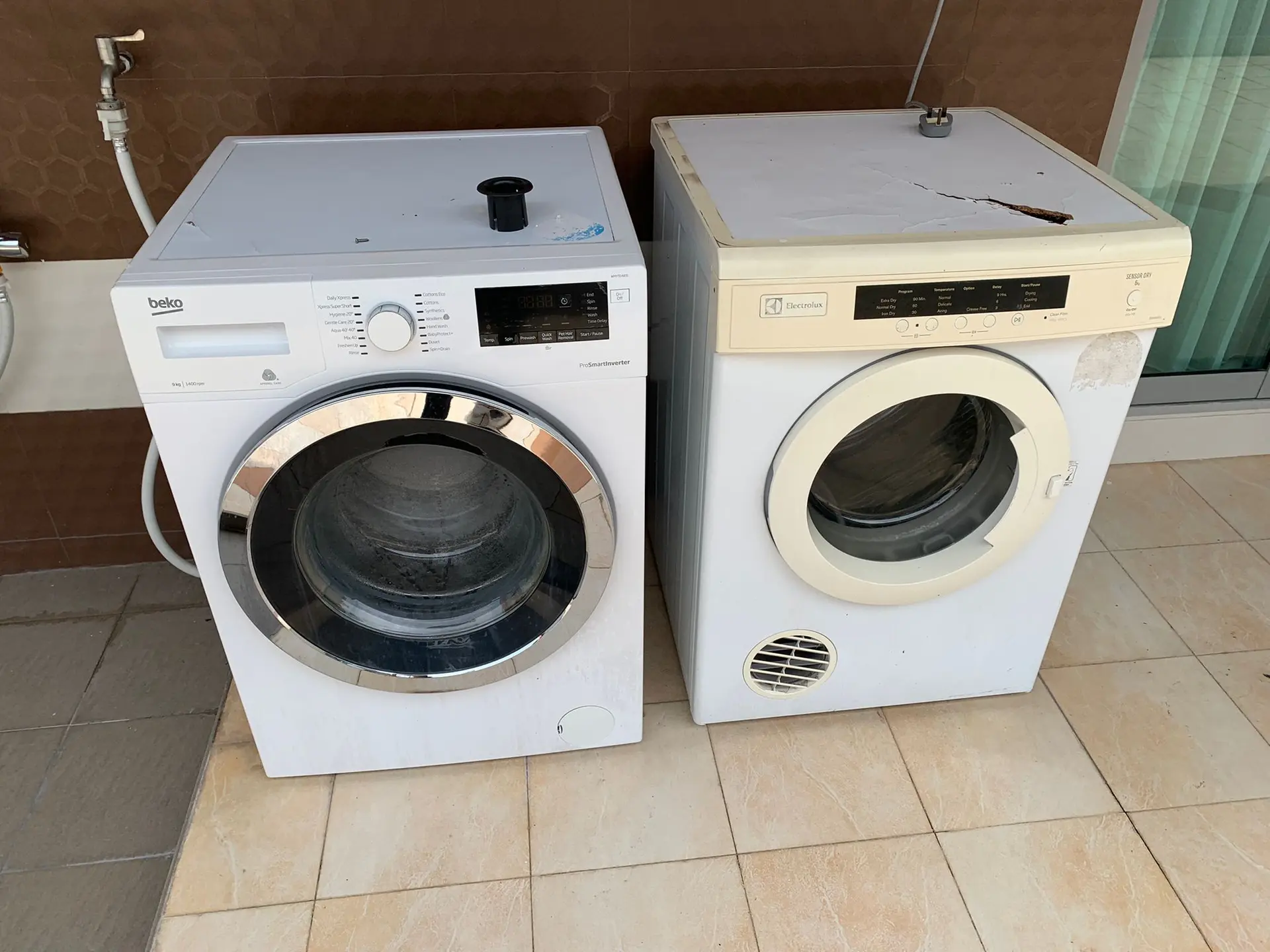
Top-loaders are lighter and their centre of gravity sits higher, which makes tilting them onto a trolley more predictable. Two crew members can usually walk one out through a standard HDB corridor without drama.
Front-loaders are a different animal. The concrete counterweight block behind the drum keeps the machine stable during spin cycles — and makes it brutally heavy to dead-lift. On stairs, that weight shifts forward unpredictably. In our 10+ years of clearing Singaporean homes, front-loaders on upper-floor walk-ups remain one of the trickier single-item jobs we do. The combination of weight, bulk, and residual water means slow, deliberate movement down each step.
HDB Flats
No service lift exists in HDB blocks. Your washer goes out through the same passenger lift everyone else uses, or down the stairwell if the lift is too small or the block is a walk-up. Narrow HDB corridors between the yard and the front door add another constraint — doors may need to come off hinges temporarily for wider front-loaders. Surcharges may apply for walk-up buildings or stair carries; this is confirmed at quote stage.
Condos
Condo buildings typically require a service lift booking for bulky-item moves. Rules differ per building — the owner or tenant must request permission and any lift booking from their management ahead of our arrival. Where the MCST requires lift padding, that's provided and arranged by building management directly. We show up at the confirmed slot and handle the machine from your unit to our vehicle.
Quick Answers
Do I need to drain the machine first? Yes, as much as possible. Run an empty spin cycle, then pull the drain hose low into a basin or towel. There'll still be residual water in the pump housing — we expect that and manage it during the carry — but the less water inside, the lighter and cleaner the job.
Do you take the old hoses and drip tray? Yes. Inlet hoses, drain hoses, and the plastic drip tray can go with the machine. Just disconnect them beforehand and leave them next to the washer.
What happens to the machine after pickup? It goes to licensed recycling intermediaries who disassemble it for material recovery — steel, copper, aluminium, and plastics are separated and processed. Components that can't be recycled are disposed of through proper waste channels.
Get a Quote in Minutes
WhatsApp a photo of the machine (and the path to your front door if it's tight) to 9888 1292. We'll confirm the job scope, any applicable surcharges for stairs or after-hours timing, and a collection slot that works for you.
Related
- E-Waste Disposal Services — full breakdown of how we handle electronics and appliances responsibly.
- Fridge Disposal Singapore — similar weight challenges, different refrigerant-handling requirements.