Clearing an Elderly Parent's Hoarded Home in Singapore: A Practical Guide for Families
By Junk Value Team
You know the flat. You grew up in it. But somewhere along the way, the corridor narrowed to a single-file path between stacked boxes. The spare bedroom became a storage room, then the storage room became impassable. Your parent still lives there, still knows where everything is (or says they do), and still has strong feelings about every plastic bag, every stack of old magazines, every piece of furniture older than you are.
You're not alone in this. And you don't need to figure it all out before picking up the phone.
This guide covers what a professional clearance actually looks like when the home is packed, the parent is still living there, and the family needs to move forward — whether that means making the flat safe, preparing for a renovation, or helping Mum or Dad move in with you.
How Is Clearing a Packed Home Different From a Normal Clearance?
A standard furniture disposal job might involve a sofa, a bed frame, a washing machine. The crew arrives, carries the items out, and leaves.
A packed home is a fundamentally different job. In our 10+ years of clearing Singaporean homes, the pattern is consistent: what looks like "a lot of furniture" from the doorway turns out to be layers. Clothes folded on top of beds that haven't been slept in for years. Drawers stuffed with receipts, letters, and rubber bands. Wardrobes that can't be moved until everything inside and on top of them is dealt with first. Bags behind bags behind more bags, running along every wall.
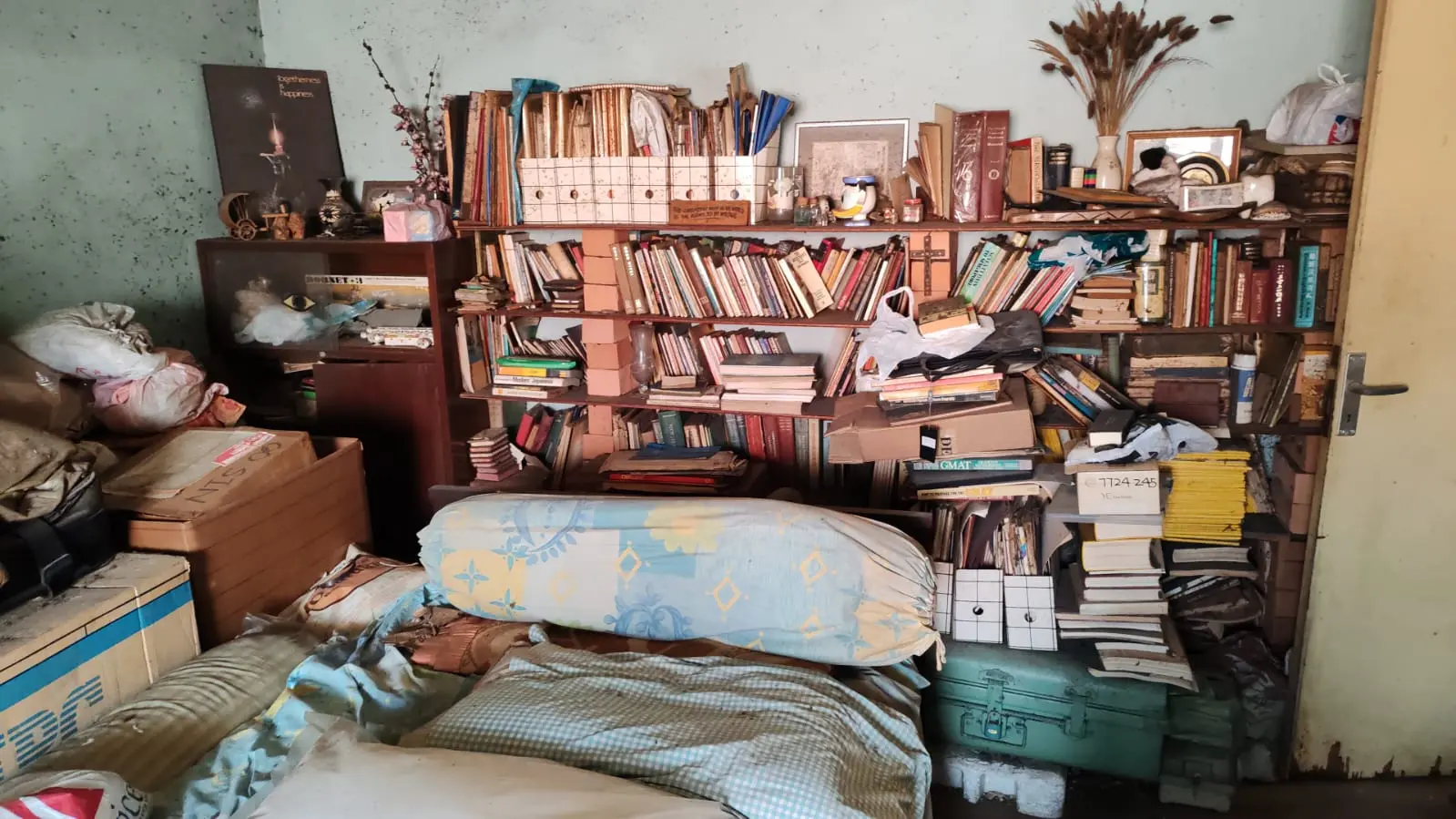
The volume is far larger than the furniture suggests. And the real difference is decision density. In a normal clearance, everything goes. In a packed home, a useful item, a pile of old newspapers, and an important letter can sit in the same bag. Someone in the family needs to have looked through it before clearance day.
If you're trying to understand the full scope of what an HDB clearance involves, our complete guide to HDB flat clearance walks through the logistics. For homes that are being cleared entirely, our full HDB clearance service page covers what the crew handles end to end.
Who Decides What Goes?
Your parent does — as long as they're willing and able to. They've lived with these things for decades, and while you might see clutter, they see a lifetime of choices that made sense at the time. Respecting that isn't just kindness; it's practical. A clearance that happens over someone's head tends to stall the moment the parent objects.
What works: the family talks it through before the clearance day. Not on the day. Siblings agree on what the goals are (safety? making space for a hospital bed? full move-out?) and who has the final call on uncertain items when the crew is there.
One decision-maker on site is the single most useful thing a family can do. When three siblings are debating whether to keep a cabinet while two crew members wait in the corridor, the job slows to a crawl. Pick the person your parent trusts most, brief them on what's been agreed, and let them be the point of contact.
Full Clearance or Just Making the Home Livable?
Not every job needs to empty the flat to bare walls. Plenty of families call us for a partial clearance: open up the bedroom so a care bed can fit, clear the corridor so a wheelchair or walker can pass, or free up the kitchen so meals can be cooked safely again.
Partial clearances — one room, or just the walkways — are a normal job for us, not a lesser one. Sometimes the goal is simply to make the home functional while your parent stays put.
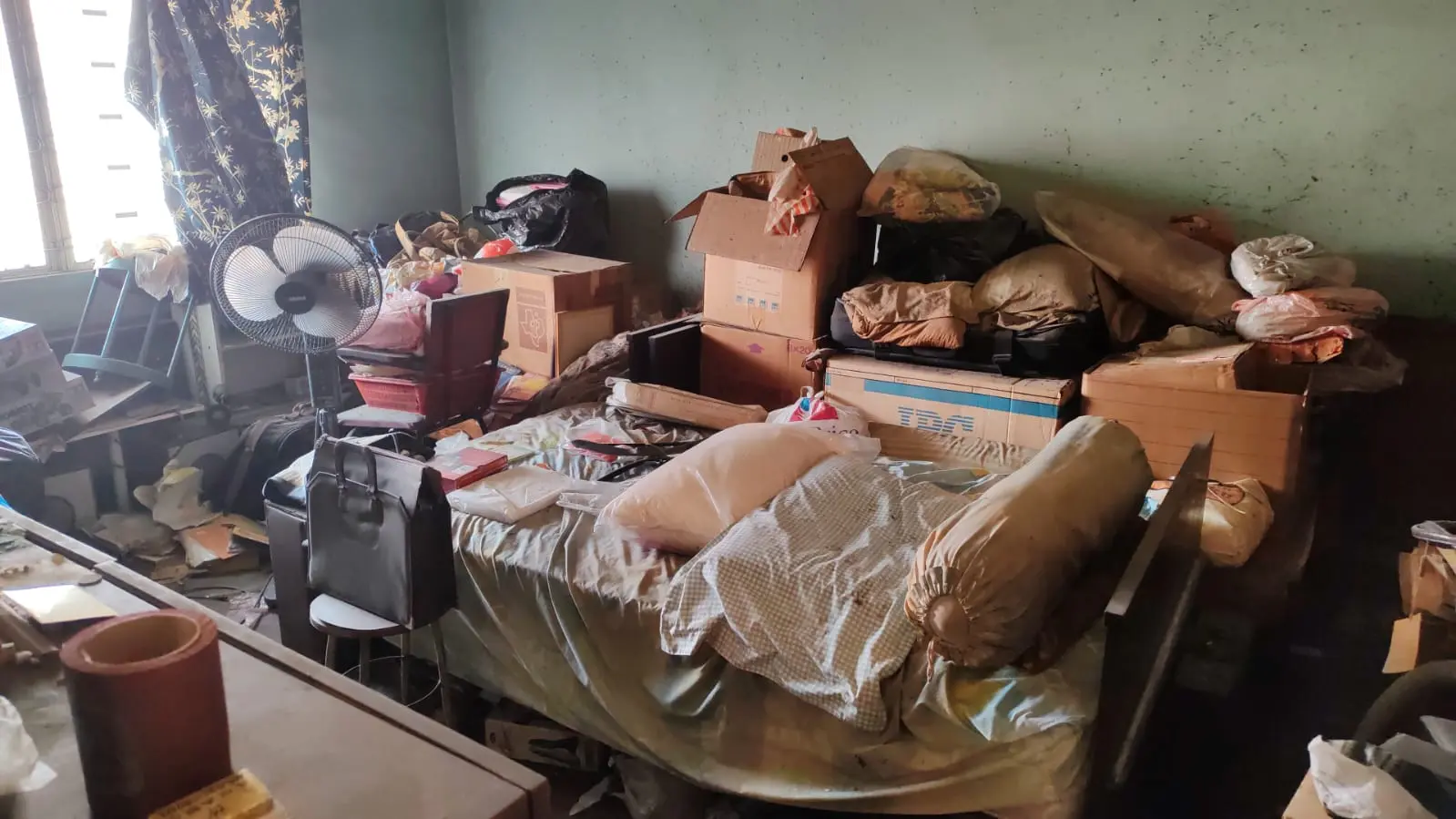
If you're making space for medical equipment, the old bed frame and mattress usually go first, and our hospital bed disposal service covers the other end of that story, when the care bed is no longer needed.
A full clearance is the other end of the spectrum: every room, every cupboard, every shelf. That's typical when the flat is being handed back to HDB, sold, or gutted for renovation. Both are jobs we do regularly. The quote accounts for whichever scope you need.
What Should the Family Do Before the Crew Arrives?
The most important prep has nothing to do with packing or sorting. It's about pulling out the things that matter before anyone else touches the flat.
Documents and personal papers. NRIC, passports, insurance policies, bank books, property documents, old photographs. In a packed home, these are rarely in one place. They're in drawers, tucked into books, slipped between stacks of newspapers. Go through the flat with your parent if possible and collect anything that looks official or irreplaceable. Put it all in one bag and take it home with you before the clearance.
Items the parent wants to keep. Let your parent walk through and point out what stays. A favourite chair, a set of plates, a sewing machine — whatever it is, mark it clearly. Masking tape and a marker work fine. The crew will work around marked items.
Agree as a family on what's uncertain. There will be grey-area items: things nobody wants but nobody feels right throwing away. Decide your approach in advance. "If nobody claims it by clearance day, it goes" is a common family rule that saves hours of on-site debate.
For condo owners, there's one more step: arrange MCST approval and any required lift booking with your building management before the clearance day. Rules differ per building, and this is the owner's or tenant's responsibility — we can't liaise with management on your behalf. Our condo service lift booking guide explains what to expect.
What Happens on the Clearance Day?
The crew works room by room, keeping the path to the door clear so nothing gets handled twice. To see what that looks like on a real job, read our hoarded HDB flat clearance case study: a kitchen blocked to the ceiling, a single path to the bedroom, and three full truckloads, with photos from before, during and after.
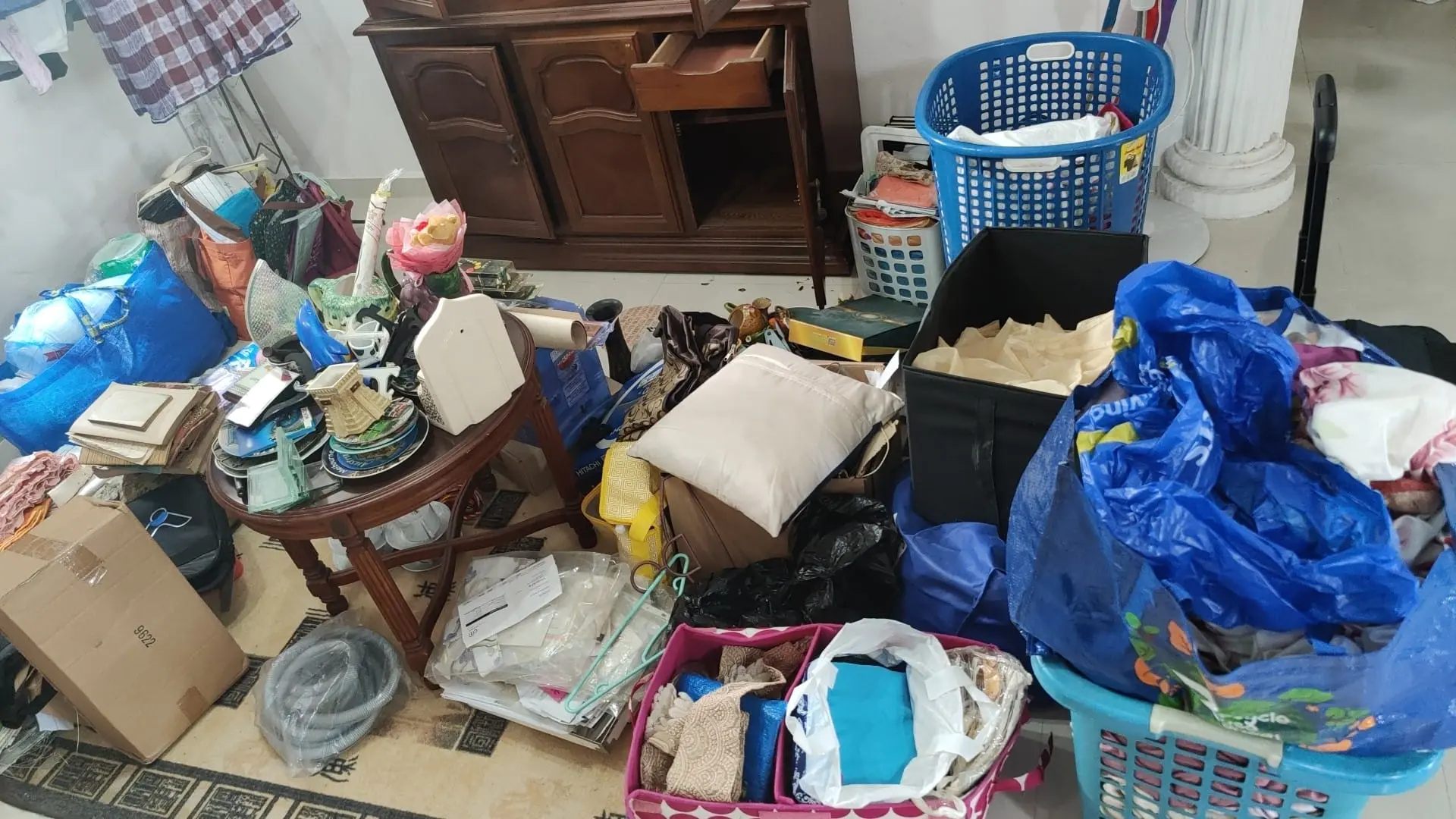
Large furniture — wardrobes, bed frames, heavy wooden cabinets — usually has to be dismantled in the room before it can leave. A solid teak wardrobe from the 1970s isn't fitting through an HDB bedroom door in one piece. The crew brings the tools for this.
Bags and boxes get carried out in batches. Loose items are consolidated. The crew loads everything into the vehicle (van, lorry, or larger truck depending on volume) and makes as many trips as needed.
Having one family member on site makes a real difference. Not to supervise the crew, but to answer the questions that come up: "This drawer has old letters in it — keep or go?" "There's a box under the bed we can't identify — want to check it?" Those calls take five seconds from someone who knows the family, and they prevent regret later.
For HDB flats without a lift — older walk-up blocks, especially — everything comes down by stairs. Crew size and time both increase, and surcharges apply for stair access. Our walk-up HDB removal guide goes into what that involves.
Typical crew size is two to four people depending on the scale. A single-bedroom partial clearance might need two; a full five-room flat packed floor to ceiling will need more hands and possibly more than one trip.
Can Any of It Be Reused or Recycled?
Some of it, yes. Metal items and paper get separated and sent through recycling channels. Furniture that's still in usable condition gets a second life where possible. We'd rather see a working fan or a solid wood table get another life than go straight to disposal.
We won't pretend that everything gets saved. A water-damaged particleboard shelf or a stained mattress has one destination. But we sort what we can, and recycling is part of how we work on every job.
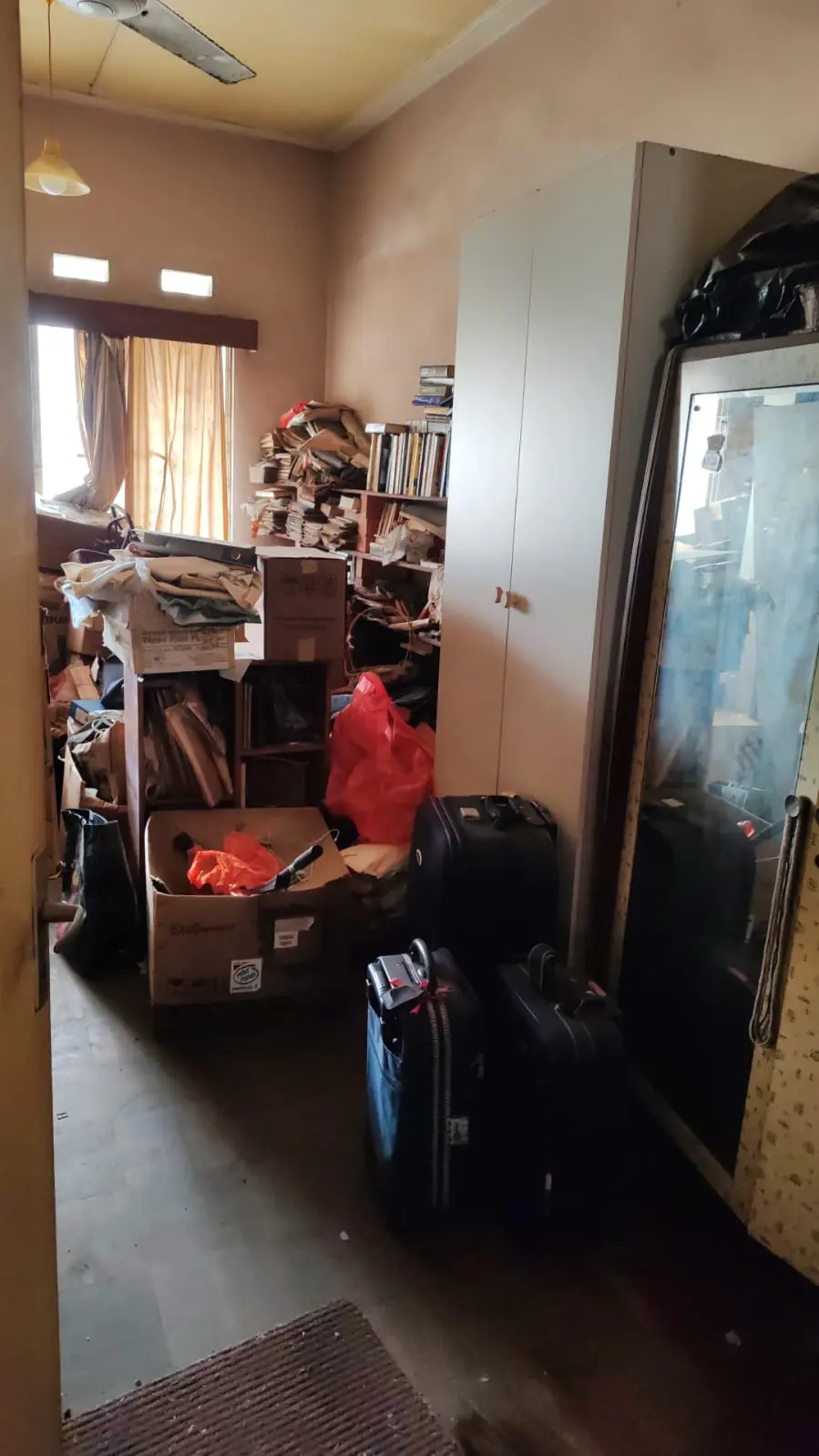
One thing to be clear about: we do not pay for items collected. No buyback, no trade-in value, no cash or credit. This is a disposal service. If your parent has items they believe are valuable, the family should sell or gift those separately before the clearance.
If the family wants to pass things on first, our guide to reducing and reusing before disposal has practical options. For the rest, see which furniture can actually be recycled and what happens to junk after collection.
Can the Town Council Take It Instead?
Town councils do offer bulky-item collection, but there's a catch that matters for packed homes: they only collect items that have already been dismantled. A whole wardrobe left at the void deck won't be picked up. Neither will an intact bed frame or a full bookshelf.
For a single broken chair, the town council route works. For a flat that's been filling up for twenty years, it's not a realistic option. You'd need to dismantle every large item yourself, carry it all downstairs, and work within the council's collection schedule.
Our town council bulk item collection guide explains how the process works and where it fits — useful for smaller ongoing disposal, less so for a major clearance.
What If Your Parent Has Already Passed Away?
That's a different situation with its own pace and process. The emotional weight shifts, the paperwork changes, and the timeline is often tied to property handover rather than making a home livable.
Our full HDB clearance page explains how we handle estate and bereavement jobs.
Is a Packed Condo or Landed House Handled Differently?
The core job is the same — sort, dismantle, carry, load, dispose — but the logistics around it change.
Condos mean management rules. Every building has its own MCST requirements: designated disposal hours, lift booking procedures, loading bay access, and sometimes lift padding, which building management provides when it's required. The owner or tenant needs to arrange all of this with their management before the clearance day. We can't do that on your behalf, because we don't have the authority to make requests to your MCST. Our condo bulky item disposal guide covers what to expect.
Landed houses add volume. Storerooms, garden sheds, car porches used as storage, second floors with narrow staircases. A landed property that's been filling up for decades usually holds far more than an HDB flat. Surcharges may apply for stair and ramp access. Our landed property junk removal guide walks through the specifics.
Elderly Parent Home Clearance FAQs
Does my parent need to be there on the clearance day? They don't have to be. Many families prefer to have the parent stay with a relative during the clearance, especially if the volume is large and the process would be distressing to watch. What matters is that one family member is on site to make decisions on uncertain items and to confirm what's been marked to keep.
Can we start with just one room? Absolutely. A single-room clearance is a normal job for us. Some families clear the bedroom first to make it safe for sleeping, then come back weeks later for the living room. Others start with the corridor to restore a safe walkway. There's no minimum scope.
Do you buy or pay for any of the items you collect? No. We are a disposal service. We do not offer buyback, trade-in value, or any form of payment for items collected. If the family believes certain items have resale value, those should be sold or given away separately before the clearance.
How do we get a quote for a packed flat when we can't even see the floor? Send us photos of every room via WhatsApp, even if the photos just show piles. The more angles you send, the more accurate the quote. Quotes are free and valid for 14 days, so you have time to coordinate with family before committing.
Are there extra charges for weekends or after-hours clearances? Surcharges may apply for after-hours work, Sundays, and public holidays. Stair access and ramp use also carry additional charges. All of this is confirmed at the quote stage so there are no surprises on the day.
You don't need to have everything sorted before you reach out. Send us photos of the rooms as they are — piles and all — and we'll give you an honest assessment of what's involved.
WhatsApp us at 9888 1292 with photos of each room for a free quote. No obligation, no judgement — just a clear picture of what it takes and what it costs.