What Actually Happens to Your Junk After We Collect It
By Junk Value Team
You watched the crew load your old fridge, that sagging queen mattress, and three dining chairs onto the lorry. The flat looks bigger already. But once the tailgate closes and the truck pulls away from your block — where does all of it actually go?
Most residents never think past the pickup. And honestly, the disposal industry hasn't done a great job of explaining the downstream process. After 10+ years of clearing Singaporean homes, we think you deserve a straight answer about what happens next — including the parts that aren't glamorous.
Why the Post-Collection Journey Matters
Singapore is a small island with finite land. Semakau Landfill, our only remaining landfill, was projected to run out of space by 2035. Every tonne diverted from incineration and landfill extends that runway. When you hire a professional disposal service instead of dumping everything into a single bin, you're enabling a sorting process that pulls recyclable materials out of the waste stream before they reach the incinerator.
Most readers eventually want one pickup that covers everything. That's what e-waste pickup is for: photo quote, source-sort, licensed routing.
That said, we won't pretend everything gets a second life. Some materials simply can't be economically recycled here. Transparency about those limits is more useful than vague "we recycle everything" promises.
Stage 1: Sorting at Intermediary Facilities
Your items don't go straight to a landfill or incinerator. They arrive at intermediary sorting yards — facilities that specialise in breaking mixed loads into material categories.
A typical residential clearance might contain:
- Metal (bed frames, shelving units, washing machine drums, aluminium window frames)
- Wood (solid timber wardrobes, plywood shelves, particleboard desks)
- Fabric and foam (mattress layers, sofa cushions, curtain material)
- Plastics (appliance casings, storage containers)
- Glass and ceramics (tabletops, tiles from minor reno debris)
- Electronics (monitors, CPUs, cables)
At the yard, workers and sometimes machinery separate these streams. Metal gets pulled aside quickly — it has the highest resale value to scrap processors. Wood is assessed: solid hardwood from older HDB flats (think those heavy 1960s rosewood wardrobes we've cleared from Ang Mo Kio estates) can sometimes be repurposed, while degraded particleboard typically cannot.
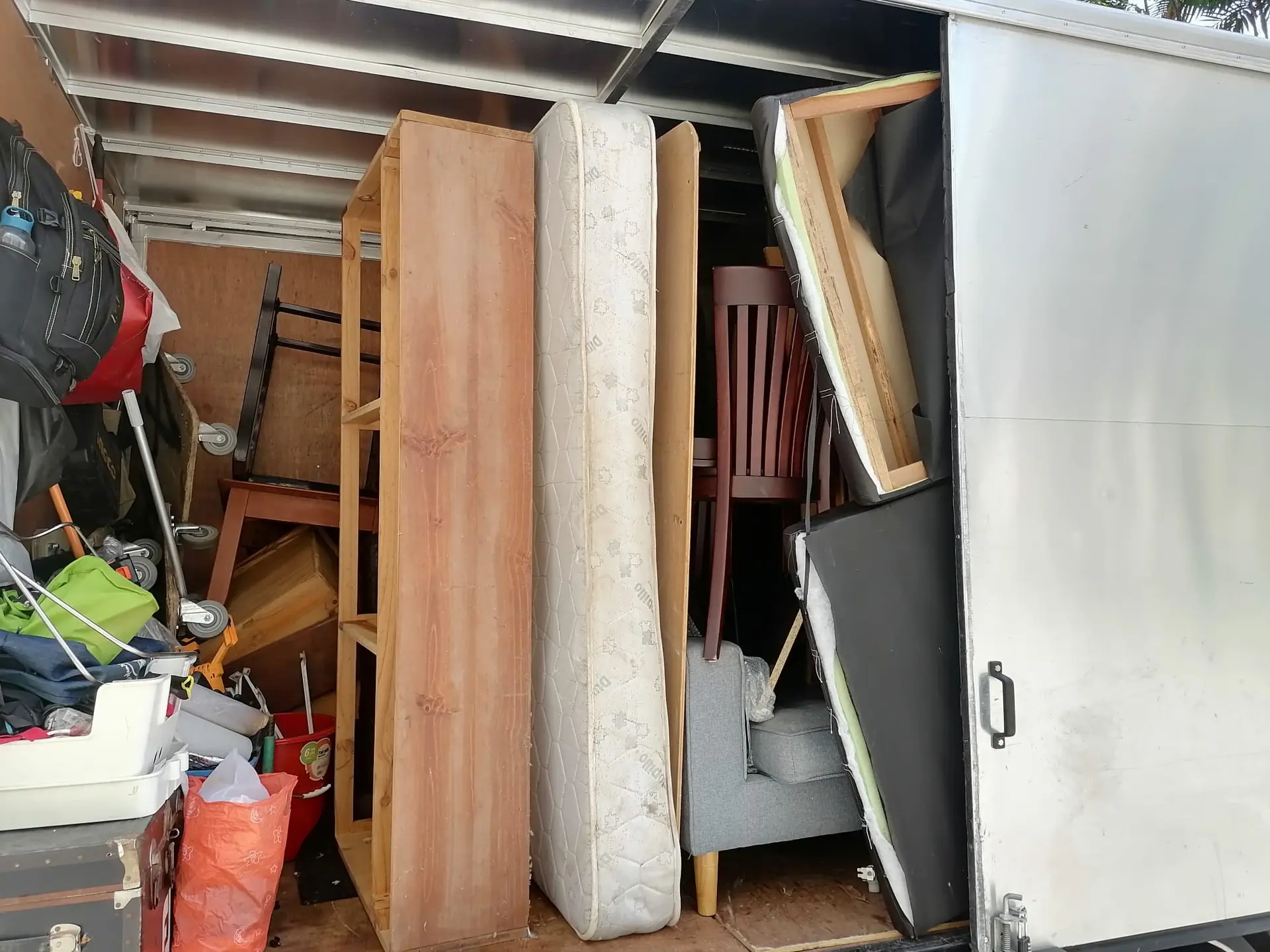
Appliances like the ones above go through a different sub-process. Refrigerators contain refrigerant gases that need proper extraction before the metal shell can be crushed and recycled. Washing machines yield steel drums, copper wiring, and small motors — all of which have value to licensed processors.
Stage 2: Recyclable Materials Go to Processors
Once sorted, each material stream moves to specialised facilities:
Metals are compacted and sold to scrap metal processors who melt them down for reuse in manufacturing. Steel from a single bed frame re-enters the supply chain as raw material. Copper wiring from old appliances is particularly sought after.
Paper and cardboard — from packaging, old books, or office clearances — goes to paper mills. Singapore exports a significant portion of recyclable paper to regional processing plants.
Electronics are channelled through proper recycling routes where precious metals (gold, silver, palladium in circuit boards) are recovered and hazardous components like lead solder are handled safely.
Reusable furniture and items that are still in functional condition get routed into second-hand channels where possible. Not every scratched dining table qualifies, but a structurally sound study desk or a working office chair often does. We make that call at the sorting stage based on condition.
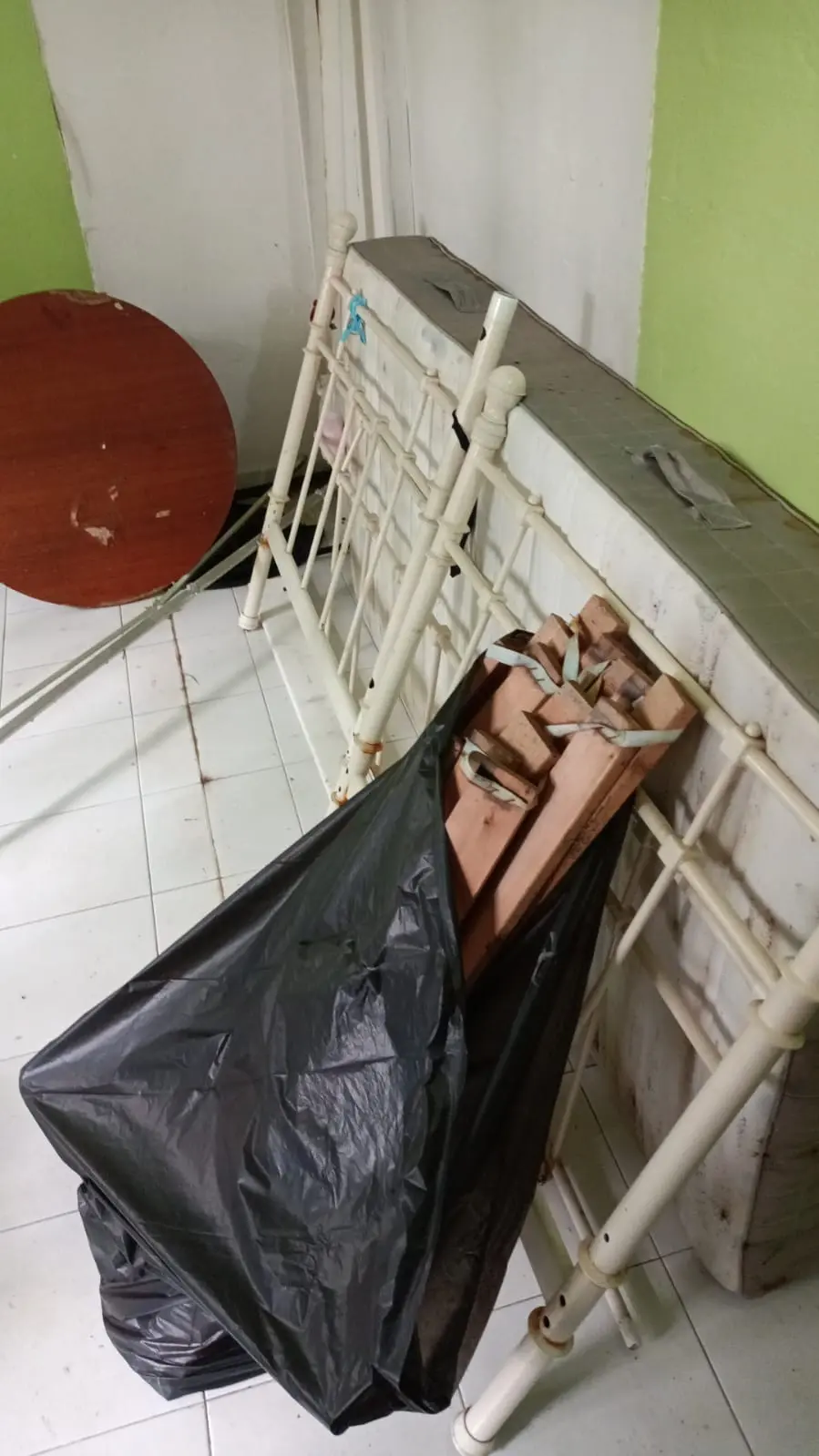
A sectional sofa like the one above presents an interesting case. The metal frame underneath is recyclable. The foam cushioning usually isn't — polyurethane foam recycling infrastructure barely exists in Southeast Asia. The fabric covering goes to textile sorters, but stained or degraded upholstery typically ends up as residual waste. One sofa, three different destinations.
Stage 3: What Can't Be Recycled
We'll be direct. Not everything finds a second life.
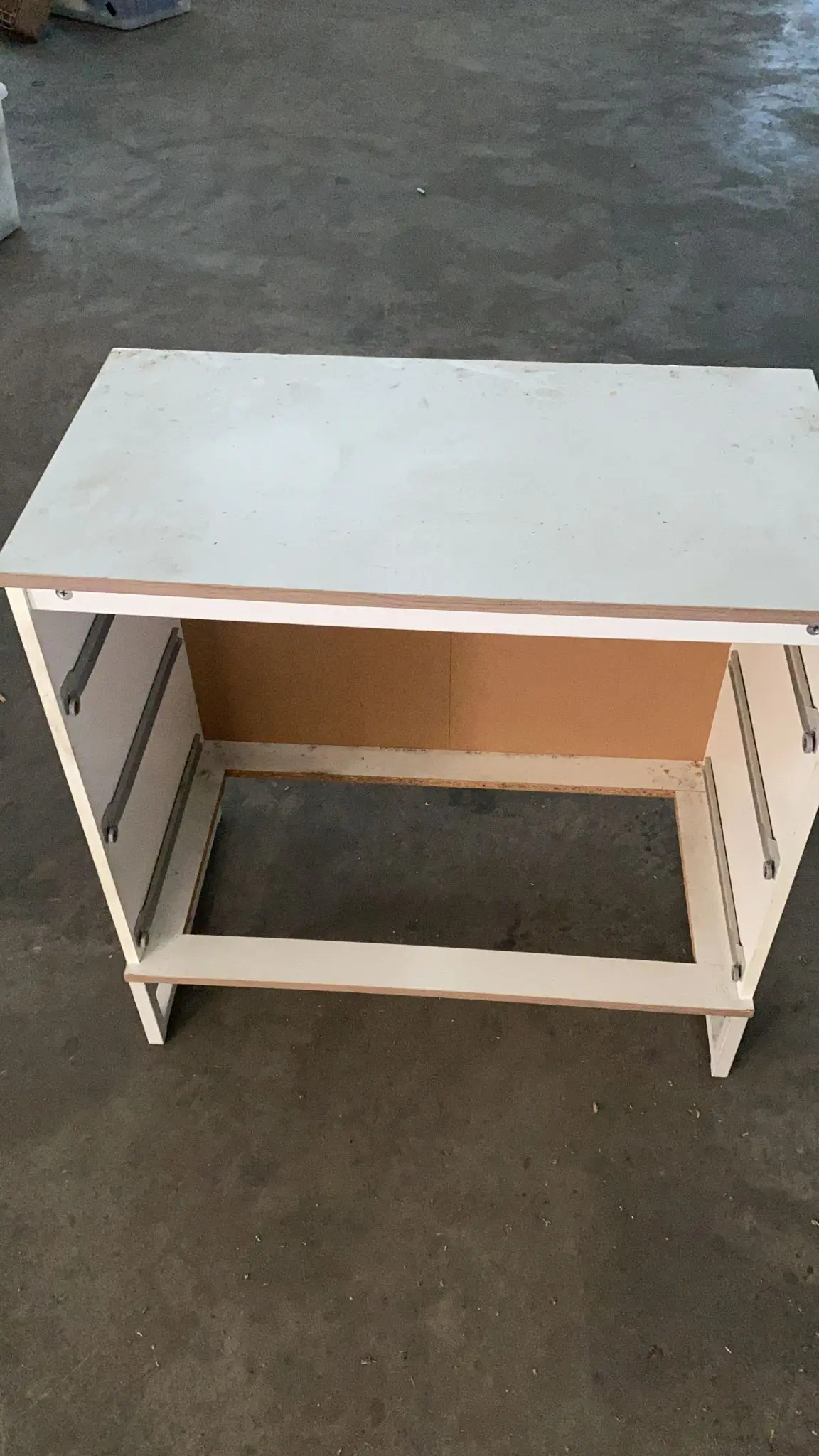
Particleboard furniture that's swollen from moisture — common in older HDB kitchens where the cabinet bases have absorbed years of condensation — has no recycling value. Laminated surfaces bonded to composite wood can't be economically separated. Heavily soiled mattresses, mouldy fabric items, broken ceramics, and degraded plastics all fall into the "residual waste" category.
This residual waste goes to one of Singapore's four waste-to-energy incineration plants (Tuas, Tuas South, Senoko, Keppel Seghers). Incineration reduces the volume by about 90%, and the resulting ash — called incineration bottom ash — is what finally reaches Semakau Landfill.
So the chain looks like this: your home → our truck → intermediary sorting yard → recyclable streams split off → residual waste to incineration → ash to Semakau.
What Professional Sorting Changes
If you dragged that same load to the kerb for general waste collection, everything would go to incineration unsorted. No metal recovery. No electronics recycling. No chance for reusable items to find a new owner.
Professional disposal services route items through intermediaries who have the space, equipment, and buyer relationships to extract value from mixed loads. In our 10+ years operating across Singapore's estates, we've seen the sorting infrastructure improve significantly — more material categories are now economically viable to recycle than even five years ago.
Does that mean we achieve a 100% diversion rate? No. Anyone claiming that is misleading you. A realistic residential clearance might see 40–60% of materials diverted from incineration by weight, depending heavily on what's in the load. A clearance heavy on metal furniture and appliances diverts more. One dominated by foam mattresses and water-damaged particleboard diverts less.
Common Surprises From a Decade of Clearances
Solid wood furniture is the easiest to divert. Those heavy old wardrobes that are murder to carry down a narrow HDB corridor? The timber itself is valuable. Ironically, the items that are hardest to move are often the ones with the best recycling outcomes.
"Recyclable" plastics often aren't. Residents assume all plastic gets recycled. In practice, contaminated, mixed, or low-grade plastics from household items frequently end up as residual waste. The recycling symbol on a product doesn't guarantee it will be recycled in Singapore's current infrastructure.
Appliances need to be whole. A fridge that's been partially dismantled by a well-meaning owner actually creates more work at the sorting stage. Refrigerant lines may have been breached, releasing gases. If you're hiring a professional service, leave the appliances intact — the intermediary facilities have the right tools.
Mini-FAQ
Q: Does my old furniture definitely get donated to someone? Not necessarily. Items in good functional condition get routed into second-hand channels where possible, but we won't mislead you — a water-stained sofa or a wobbly shelf isn't going to find a new home. The honest answer is that condition determines the outcome.
Q: Is Semakau Landfill really running out of space? The government has extended its projected lifespan through waste reduction initiatives and improved incineration efficiency. But yes, it remains Singapore's only landfill, and space is finite. Every tonne diverted through proper sorting helps.
Q: Can I request that specific items be recycled rather than incinerated? We route materials through the most appropriate channels based on material type and condition. You can't specify a destination for individual items, but hiring a professional disposal service (rather than general waste collection) maximises the chance of recyclable materials being recovered.
Want to Clear Responsibly?
Send us photos of what you need cleared on WhatsApp. We'll give you a free quote, and your items will go through proper sorting channels rather than straight to incineration.
WhatsApp us at 9888 1292 — snap a few photos, and we'll respond with a quote. Surcharges may apply for after-hours, Sundays, or walk-up buildings; we'll confirm everything upfront before you commit.