Furniture Recycling in Singapore: What Actually Gets Recycled (And What Doesn't)
By Junk Value Team
You've got an old wardrobe. Maybe a dining set that's seen better decades. You want to do the right thing — recycle it, not just dump it. But here's the question nobody seems to answer clearly: can furniture actually be recycled in Singapore?
When you're past the DIY threshold, residential pickup sits at the affordable end of the market: we WhatsApp you a clear quote from photos, no surprise charges on the day.
The honest answer? It depends entirely on what your furniture is made of.
In our 10+ years of clearing Singaporean homes, we've seen well-meaning homeowners assume everything goes to some magical recycling facility. It doesn't. Some materials have genuine second lives. Others end up incinerated no matter what anyone promises you. Let's break it down material by material so you know exactly what you're dealing with.
Why This Matters More Than You Think
Singapore incinerates the vast majority of its general waste. Semakau Landfill has a finite lifespan. Every piece of furniture that can be diverted from incineration — whether through reuse, material recovery, or proper recycling channels — extends that runway.
But here's the tension: most furniture isn't made of one material. That IKEA shelf? Particle board, metal brackets, plastic edge banding, maybe a glass door. A sofa? Timber frame, steel springs, polyurethane foam, synthetic fabric. Each component has a different fate.
Understanding this helps you make better decisions — about what to buy, what to keep, and what to expect when it's time to let go.
Solid Wood: The Gold Standard for Recyclability
Hardwood furniture — your teak dining tables, rosewood cabinets, solid oak bookshelves — is the most recyclable furniture material by far.
What happens to it: Solid wood can be repurposed into new furniture, chipped for landscaping mulch, processed into biomass fuel, or reclaimed by craftspeople. We've cleared 1950s-era solid wood wardrobes from Ang Mo Kio HDB flats that weighed more than some modern refrigerators. That old-growth timber has genuine material value.
The reality check: Not all "wood" furniture is solid wood. Knock on it. If it sounds hollow or light, it's probably particle board with a wood veneer. The distinction matters enormously for recyclability.
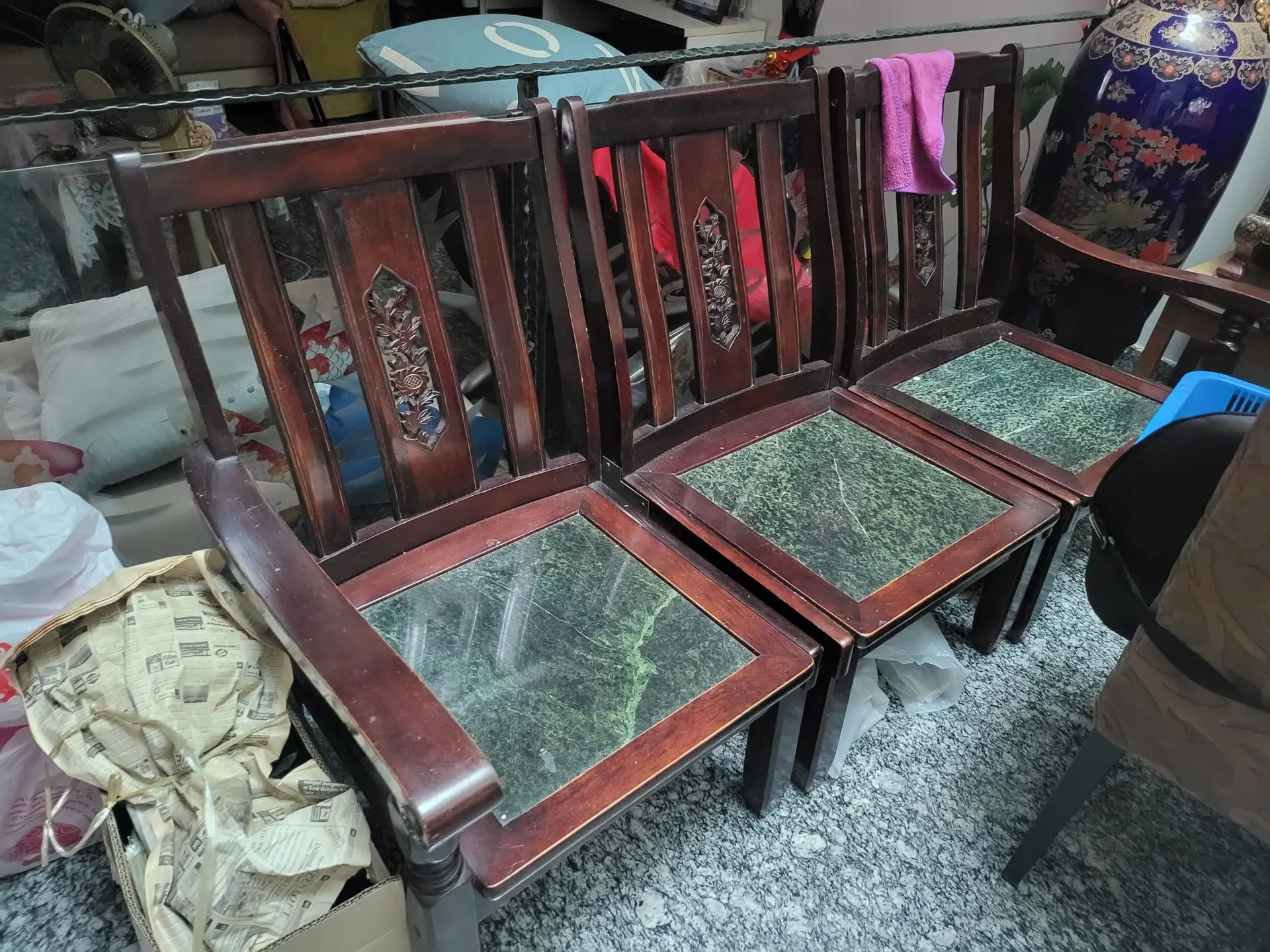
Solid wood pieces like these bar stools and table have real recycling potential — the timber can be reclaimed, repurposed, or at minimum processed as biomass rather than heading straight to incineration.
Metal Frames: Highly Recyclable, Always in Demand
Metal is the easiest win in furniture recycling. Steel bed frames, aluminium chair legs, iron shelving units — all of it has established recycling pathways in Singapore.
What happens to it: Metal gets sorted, processed, and fed back into manufacturing. Singapore has active scrap metal channels. Steel and aluminium are infinitely recyclable without quality degradation.
What we see on the ground: The challenge isn't recyclability — it's separation. A metal bed frame bolted to a particle board headboard needs dismantling before the metal can be properly routed. That's labour. That's why your town council won't collect a whole bed frame — they need it dismantled first. We handle that dismantling as part of the job.
Particle Board and MDF: The Uncomfortable Truth
Here's where eco-conscious homeowners get disappointed.
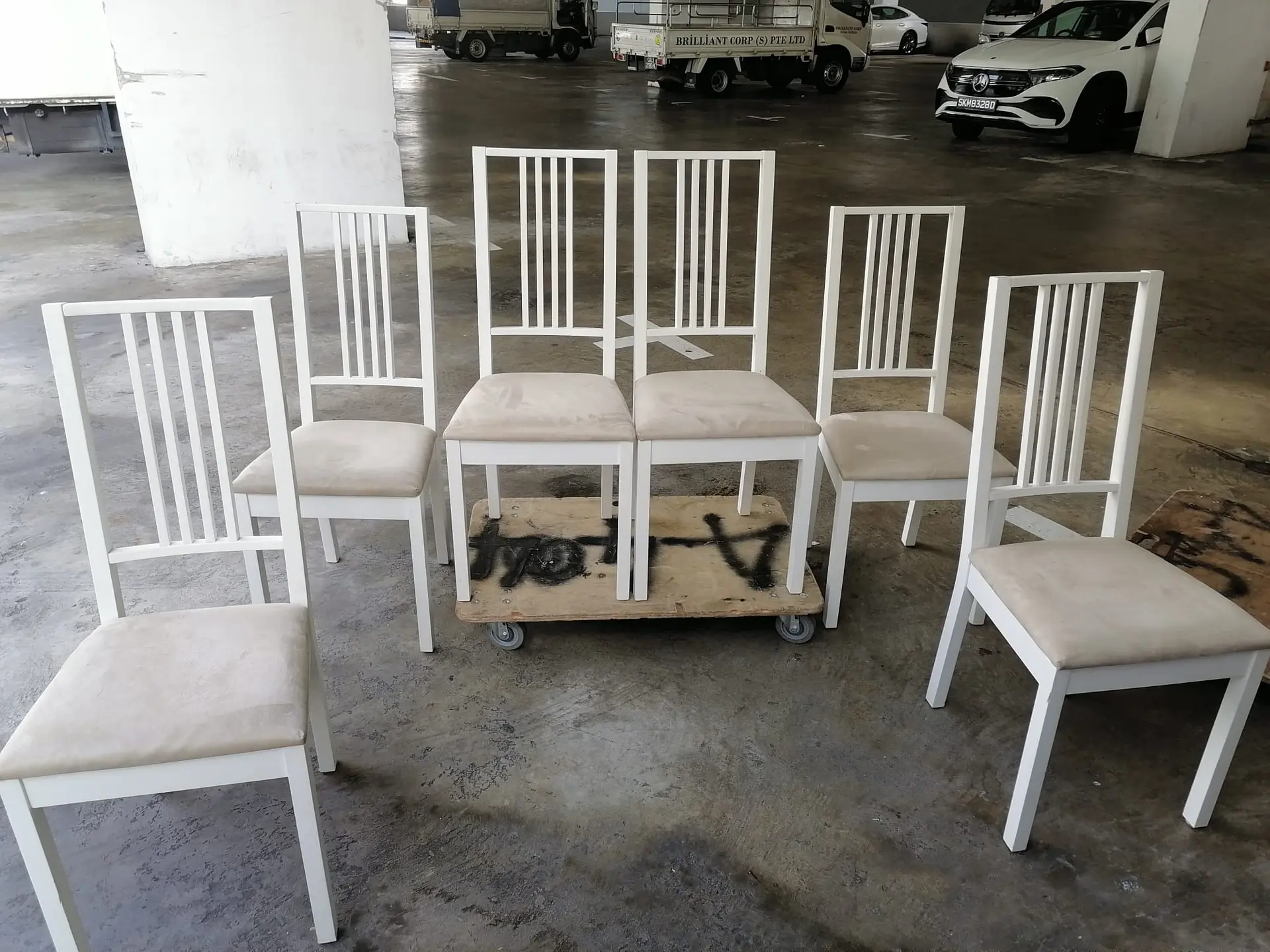
Particle board (also called chipboard) and MDF (medium-density fibreboard) make up the majority of affordable furniture sold in Singapore. Your flat-pack wardrobes, TV consoles, shoe cabinets — almost certainly particle board with a laminate or melamine finish.
Can it be recycled? Technically, in limited circumstances. Practically, in Singapore? Rarely.
The problem is the resin. Particle board is wood chips bonded with formaldehyde-based adhesives. MDF is even more densely glued. These adhesives contaminate the wood fibre, making it unsuitable for most recycling processes. Add a melamine or laminate surface layer, and you've got a composite material that no standard wood recycler wants.
What actually happens: Most particle board furniture in Singapore ends up incinerated at waste-to-energy plants. The energy is recovered (Singapore's incineration plants generate electricity), but it's not "recycling" in the way most people imagine.
The honest framing: If your BILLY bookcase is structurally sound, the best environmental outcome is reuse — someone else using it as-is. We route reusable items into second-hand channels where possible. But a water-damaged, delaminating particle board wardrobe? There's no magic recycling fairy for that. It's going to incineration.
Fabric, Foam, and Upholstery: Mostly Not Recyclable
Sofas, mattresses, upholstered dining chairs — these are the hardest items to recycle.
Fabric: Synthetic upholstery (polyester, nylon) is technically recyclable but not economically viable at furniture scale in Singapore. No local facility processes used furniture fabric.
Foam: Polyurethane foam — the stuff inside every sofa cushion and mattress — is notoriously difficult to recycle. Some overseas facilities can rebond it into carpet underlay, but Singapore doesn't have this infrastructure at meaningful scale.
Springs and internal metal: The steel springs inside mattresses and sofas are recyclable, but extracting them requires dismantling the entire piece. We do this — separating metal from foam and fabric so each material goes to its appropriate channel.
Office chairs like this one are a mixed-material challenge: metal base (recyclable), plastic shell (limited recyclability), foam padding and mesh fabric (typically not recyclable). Proper disposal means separating what can be recovered from what can't.
Common Mistakes We See After 10+ Years
Assuming "eco-friendly disposal" means 100% recycling. It doesn't. Responsible disposal means maximising what can be diverted — routing metal to scrap, solid wood to reclamation, reusable items to second-hand channels — while being honest that some materials will be incinerated. Anyone promising you zero-waste furniture disposal in Singapore is oversimplifying.
Leaving furniture at the void deck hoping the town council takes it. They might — if you've dismantled it first. Whole wardrobes, intact bed frames, assembled desks? Town councils require self-dismantling before collection. Most homeowners don't own the tools or have the time. That's exactly where we come in.
Not separating materials before disposal. If you've got a metal shelf unit with particle board shelves, removing the shelves yourself before collection means the metal frame has a cleaner path to recycling. Small effort, real impact.
What "Eco-Friendly Disposal" Actually Means in Practice
When we clear your furniture, here's the real process:
- Assessment — we identify materials and condition on-site.
- Reuse routing — items in good structural condition get directed into second-hand channels where possible.
- Material separation — metal components separated from wood, foam from springs, recyclable from non-recyclable.
- Responsible routing — recyclable materials go through proper recycling channels via licensed intermediaries. Non-recyclable materials go to waste-to-energy incineration.
It's not glamorous. But it's honest. And it diverts significantly more material from direct landfill than throwing everything into a single skip.
Mini-FAQ
Can I recycle my IKEA furniture in Singapore? Most IKEA furniture is particle board with melamine coating — limited recyclability due to adhesive content. If it's in good condition, reuse is the best environmental outcome. If it's damaged, it will likely be incinerated for energy recovery. Metal components (shelf brackets, bed frame rails) are fully recyclable.
Is it worth paying for eco-friendly disposal vs just using the town council? Town council bulky item collection requires you to dismantle furniture yourself and wait for scheduled collection days. If you want materials properly separated for maximum recycling, and you don't want to spend a Saturday with a screwdriver and saw, professional disposal with material sorting is worth it. Surcharges may apply for after-hours or non-lift access — confirmed at quote stage.
Does solid wood furniture always get recycled? Solid wood has the highest recyclability potential, but condition matters. Termite-damaged, rotting, or heavily treated timber may not be suitable for reclamation. Clean, structurally sound hardwood almost always finds a second life.
Get a Realistic Quote for Your Furniture
Send us photos of what you need cleared. We'll tell you honestly what can be recycled, what can be reused, and what the job involves — no sugarcoating.
WhatsApp us at 9888 1292 with photos for a free quote. It's fast. It's honest. It's done.