Making a Cluttered Flat Safe for an Elderly Parent Who's Staying
By Junk Value Team
Your parent isn't moving out. They've told you that, maybe more than once. The flat is theirs, the neighbourhood is theirs, and the kopitiam downstairs still knows their order.
But the corridor between the bedroom and the toilet has become a single-file squeeze past stacked boxes and an old shoe rack nobody uses. The walking frame your mum got from the hospital barely fits through. And every time you visit, you notice another pile that wasn't there six months ago.
This isn't about emptying the flat. It's about making the paths through it safe — so your parent can keep living there.
Which Parts of the Flat Matter Most?
Not every room needs attention at once. When families ask us where to start, we talk about routes, not rooms.
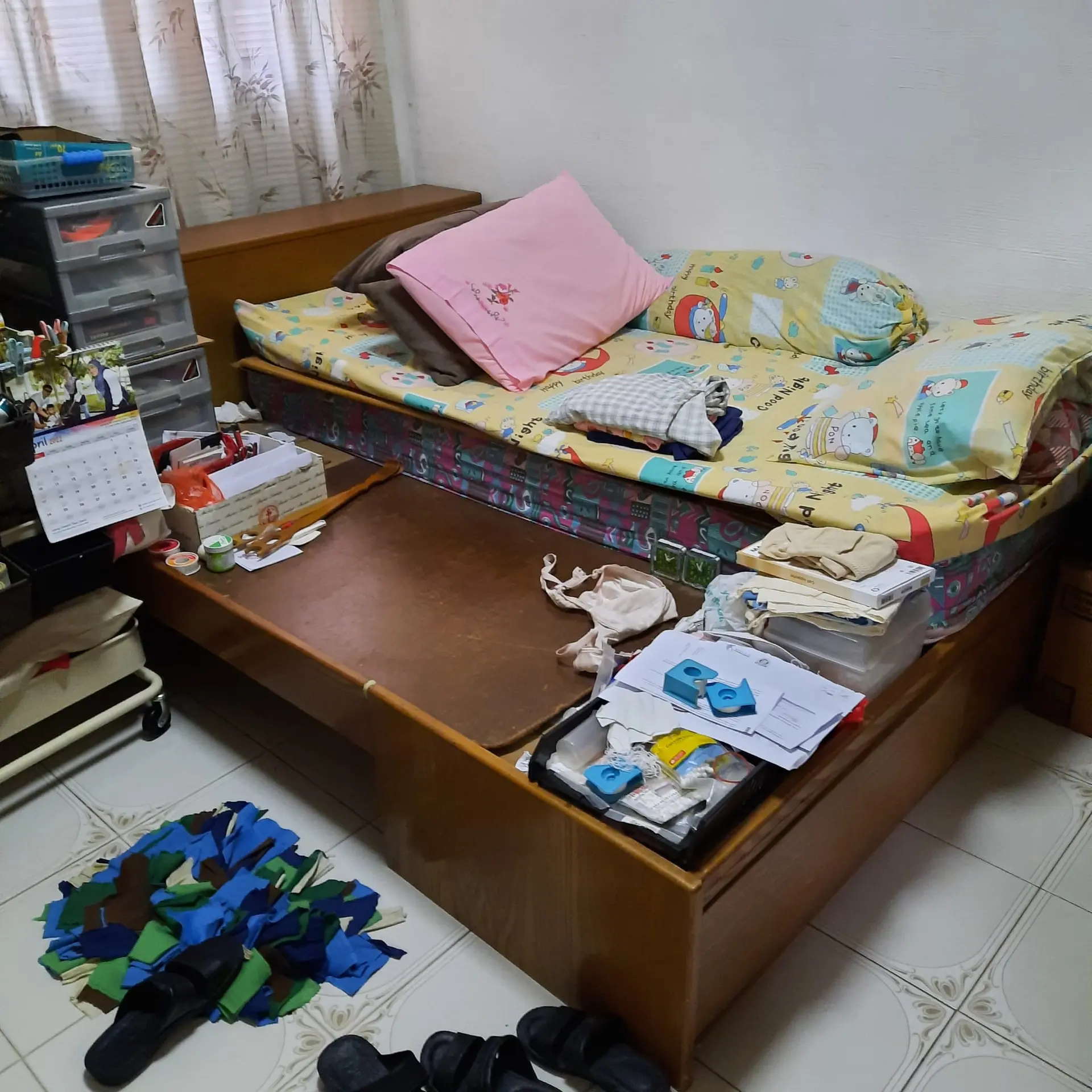
Bed to toilet. This is the path your parent walks at 3am, half-awake, possibly without glasses. If there's a fan on the floor, a stack of newspapers against the wall, or bags leaning into the walkway, that's where a fall starts. A clear, unobstructed route between the bed and the bathroom is the single most important thing.
Around the bed itself. Can your parent get in and out from at least one side without stepping over anything? Is there floor space to place a walking frame or steady themselves on a chair? If boxes or unused furniture crowd the bed on both sides, one side needs to be freed up completely.
The path to the front door. In an emergency — a fall, a medical episode, paramedics arriving — the stretcher needs to get from the front door to wherever your parent is. A corridor narrowed by a disused exercise bike and three suitcases of old clothes slows that down.
The kitchen floor. Pots stacked on the ground, plastic bags of recyclables, old appliances that migrated off the counter — kitchens in long-lived-in flats tend to accumulate things at floor level. Wet floors plus obstacles at ankle height is a bad combination for anyone, especially someone whose balance isn't what it was.
What Usually Needs to Go First?
In our 10+ years of clearing Singaporean homes, the items that free up the most usable space tend to be the same ones families overlook because they've been there so long they've become invisible.
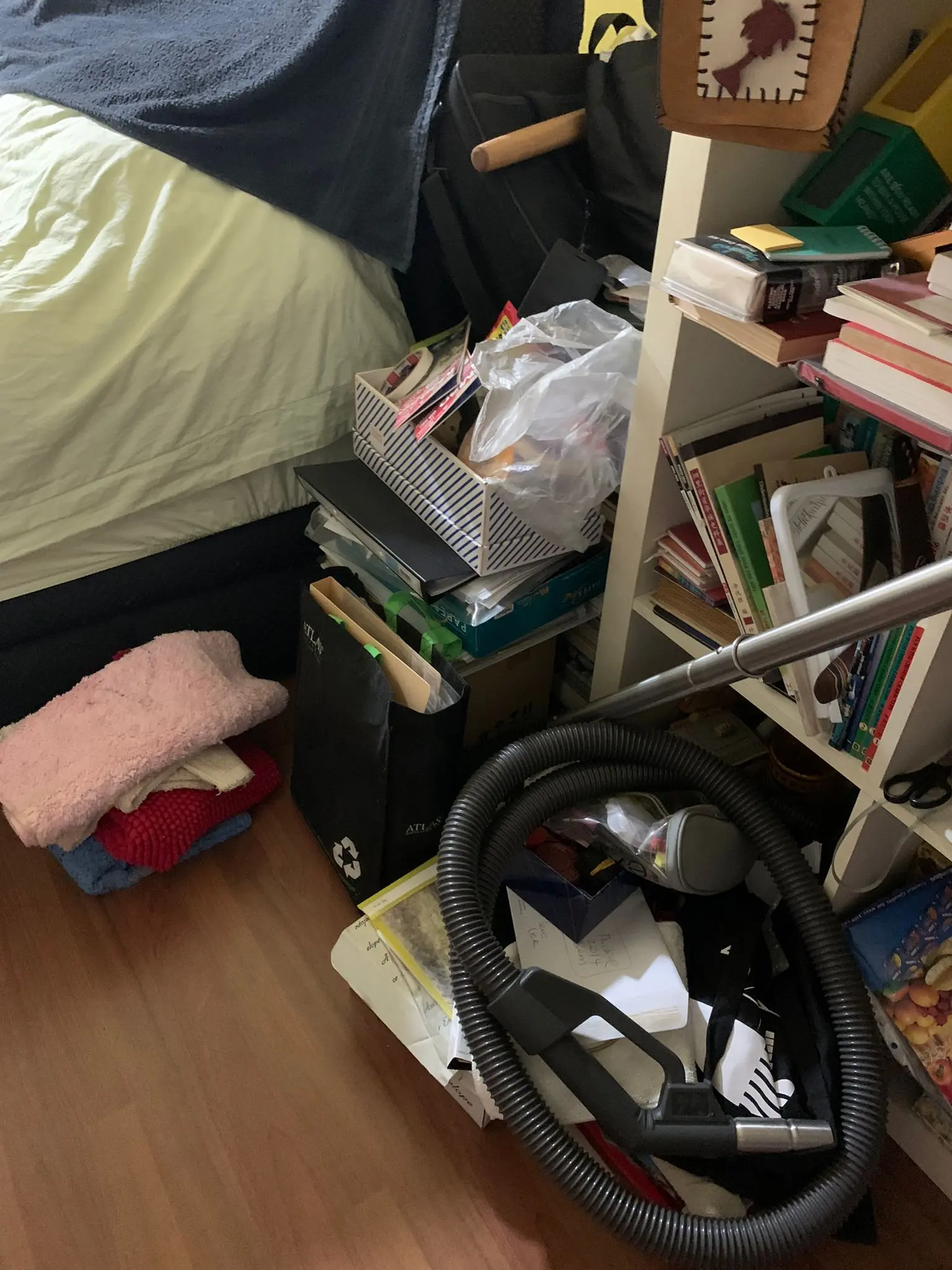
Floor-level piles are the biggest culprits. Stacks of old magazines, bags of clothes meant for "someday," broken small appliances sitting in corners. They don't look like much individually, but collectively they eat up the walkable area of a room.
Extra furniture is the next layer. A second wardrobe in the bedroom that holds winter clothes from a trip fifteen years ago. A display cabinet in the corridor that hasn't been opened in years. A dressing table nobody sits at. Each piece narrows the path, and together they can block a wheelchair entirely.
Old mattresses stacked or leaning against a wall take up a surprising amount of space and attract dust. Broken fans, dead rice cookers, a TV from the CRT era — these tend to cluster in corners and under tables.
And then there are the wardrobes. Solid wood ones from the 60s and 70s weigh enough that your parent certainly can't move them alone, and neither can most adult children without help. If a wardrobe is blocking a route or making a room unusable, it often needs professional dismantling to get it out through HDB corridors and into a standard passenger lift.
How Do You Make Room for a Wheelchair or Hospital Bed?
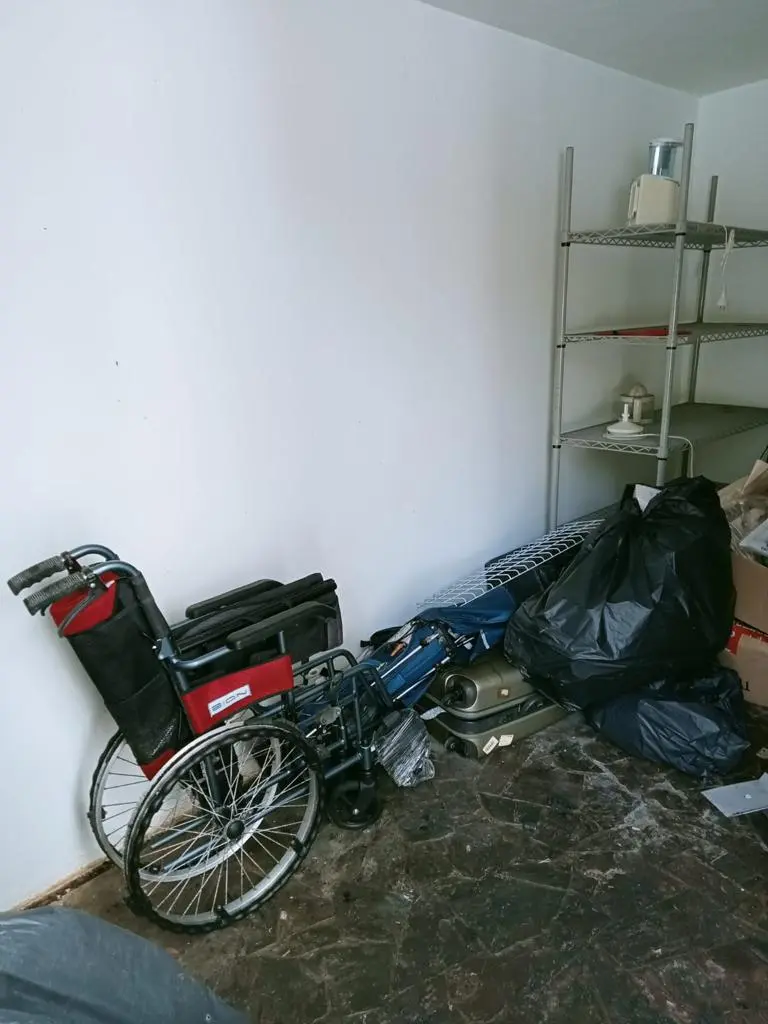
A wheelchair needs a clear doorway and room to turn. A walking frame needs a little less, but still more than most cluttered corridors offer. If your parent's mobility is declining and a wheelchair is on the horizon — or already in use — the bedroom layout usually has to change.
The old double bed frame and mattress are frequently what goes. A hospital bed or a single bed pushed against one wall opens up floor space a wheelchair can actually navigate. We've handled this specific swap many times: the old bed frame comes out, the room gets rearranged, and suddenly there's space to move.
If the situation involves replacing a regular bed with a hospital bed, the old frame and mattress usually need to go first, because most HDB bedrooms can't hold both. Our crew of 2–4 can dismantle a bed frame on-site and carry it out. And when the hospital bed is eventually no longer needed, our hospital bed disposal service covers that step too.
Can You Clear Part of a Flat and Leave the Rest?
Yes. This is actually what most families in this situation need — not a full-flat strip, but a targeted clearance of specific items from specific areas.
Your parent can stay in the flat during the work. We're clearing a corridor, removing a wardrobe from a bedroom, taking out a stack of old appliances from the kitchen — not gutting the place. The crew works through one area at a time, and your parent can be in another room.
This matters because the goal isn't a showroom. It's a home that's safe to walk through. Your parent's things are their things. The armchair they sit in every evening stays. The cabinet with the photo frames stays. What goes are the items that create physical risk — the ones blocking paths, stacked high enough to topple, or heavy enough to cause injury.
If your parent is reluctant about letting things go, that's normal for someone who has lived in the same flat for decades. We've written about navigating that conversation and about approaching a broader clearance gradually — both worth reading if you're expecting some resistance. The short version: go slow, involve your parent in choosing what stays, and don't try to do everything in one session.
What If There's No Lift on That Floor?
Older HDB blocks — the ones most likely to house a long-time elderly resident — sometimes have lifts that stop only on certain floors, or no lift at all. Carrying a solid-wood wardrobe down four flights of narrow stairs is genuinely hard physical work.
We do it regularly, but stairs and ramp access mean extra time, extra effort, and extra charges. This gets confirmed at the quoting stage, so there are no surprises. If you're requesting a quote, mention the floor and whether there's lift access — a quick photo of the stairwell helps us plan the right crew size and equipment.
For more on what's involved, our post on walk-up HDB bulky item removal covers the practical realities.
One thing worth knowing: HDB town councils do offer bulky-item collection, but they require you to dismantle items first. A whole wardrobe or intact bed frame left at the void deck won't be collected. That dismantling step is part of what we handle.
How Do You Keep It Clear Afterwards?
The clearance creates space. Keeping it clear is the longer project, and it works best when it's gentle and regular rather than dramatic.
A small clear-out every few months — one bag of old newspapers, one broken appliance, one box of clothes that no longer fits — is far easier on everyone than waiting until the flat fills up again and facing another big session. Some families build it into their regular visits: "I'm coming over Saturday, Mum, let's go through that one drawer together."
Your parent gets to choose what goes each time. That sense of control matters. Nobody responds well to someone else deciding what they should keep, especially in their own home.
And if a few months down the road there's a bed frame or a set of shelves that's ready to go, you already know the process: snap a few photos, send them over, get a quote.
FAQs
Do you buy or pay for any of the items you collect? No. We're a disposal service, not a buyback or trade-in operation. We don't offer cash, credit, or any form of compensation for collected items. Where items are still in reusable condition, we give them a second life where we can, but the customer doesn't receive payment for them.
Does my parent have to be out of the flat during the clearance? No. Your parent can stay in the flat. Our crew works through one area at a time, and the rest of the home remains accessible. Many families prefer to be present so their parent feels comfortable with what's being removed.
How do I get a quote for a partial clearance like this? Send us photos of the items and areas you'd like cleared via WhatsApp. Include shots of the access route — the corridor, the lift lobby, stairs if relevant. We'll come back with a quote based on what we see. Quotes are free and valid for 14 days, so there's no pressure to commit immediately. Surcharges may apply for after-hours work, Sundays, public holidays, or stair access — all confirmed before you agree to anything.
Ready to make your parent's flat safer to walk through? Send us a few photos on WhatsApp at 9888 1292 and we'll get back to you with a free quote. No obligation, no pressure — just a practical starting point.