My Parent Won't Let Anything Go: How to Start the Clearance Conversation
By Junk Value Team
You pick up a stack of old newspapers from the dining chair. Your mum says, "Don't touch that." You put it back. The conversation is over before it started.
If this sounds familiar, you're not alone. In our 10+ years of clearing Singaporean homes, we've met a lot of families at exactly this moment. The parent who won't part with anything. The adult child who can see the flat filling up and doesn't know how to help.
This isn't a guide about winning the argument. It's about finding a way in that keeps your parent's dignity intact and still makes progress, even if that progress is one corner of one room.
Why Do Parents Hold On to So Much?
Families tell us the same handful of reasons, and they all make sense when you hear them out.
Your parent grew up in a generation where things were genuinely hard to come by. A rice cooker that still works isn't junk to someone who remembers saving up for it. Old clothes might come back into use. Spare parts might fix something one day. "Might need it" is a completely rational position when your formative years taught you that replacing things wasn't easy or cheap.
Then there's the emotional layer. A flat that's been lived in for decades accumulates objects that stand in for people, milestones, entire chapters of life. Asking your parent to throw those things away can feel, to them, like asking them to throw away the memories attached.
And sometimes the sheer volume is the problem. A home that has filled up over decades can feel impossible to sort through. Where do you even begin? So nothing moves.
Should You Start With Safety Instead of Mess?
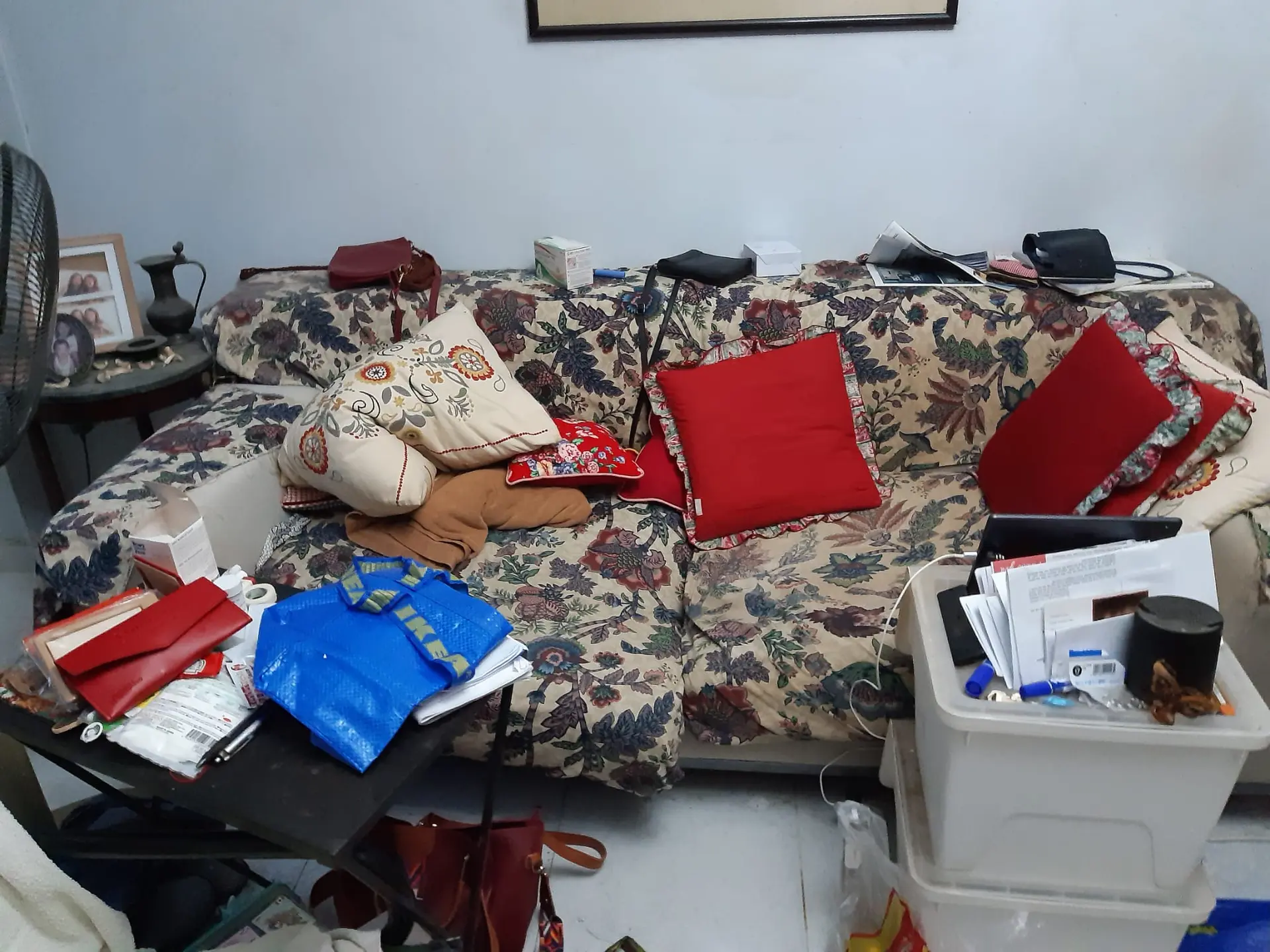
"This place is so messy" will shut the conversation down. "I'm worried you might trip going to the toilet at night" opens it up.
The difference is framing. Mess is a judgement about how someone lives. Safety is concern for someone you love. Most parents will resist the first and at least hear the second.
Walk through the flat with your parent and look at it through a practical lens. Can they reach the front door without stepping over things? Is the path between the bedroom and bathroom clear enough to navigate in the dark? Can they get to the kitchen without squeezing past stacked boxes?
If there's a specific hazard, like heavy boxes stacked high on top of a wardrobe, name it gently. "I just want to make sure you can get around safely" is a sentence most parents can accept.
For families dealing with a home that has reached the point where daily living is affected, we've written a more detailed walkthrough on approaching a clearance for an elderly parent's home that covers the logistics side of things.
Which Room Should You Start With?
Not the bedroom. Not the living room. Those are the spaces your parent lives in most, and every object there has been seen and touched a thousand times. Emotional attachment runs deepest in the rooms they occupy daily.
Start with the area they care about least. A storeroom. The household shelter that's been used as a storeroom for years. The space under the kitchen sink. A single shelf.
The goal of the first session isn't volume. It's proof that the process can happen without pain. If your parent sees that clearing one shelf didn't result in anything precious being lost, the next shelf becomes easier.
Pick a time when energy is good — not after a long day, not during a family gathering where everyone has opinions. Just you and your parent, one small area, no rush.
How Do You Handle the Things They Want to Keep?
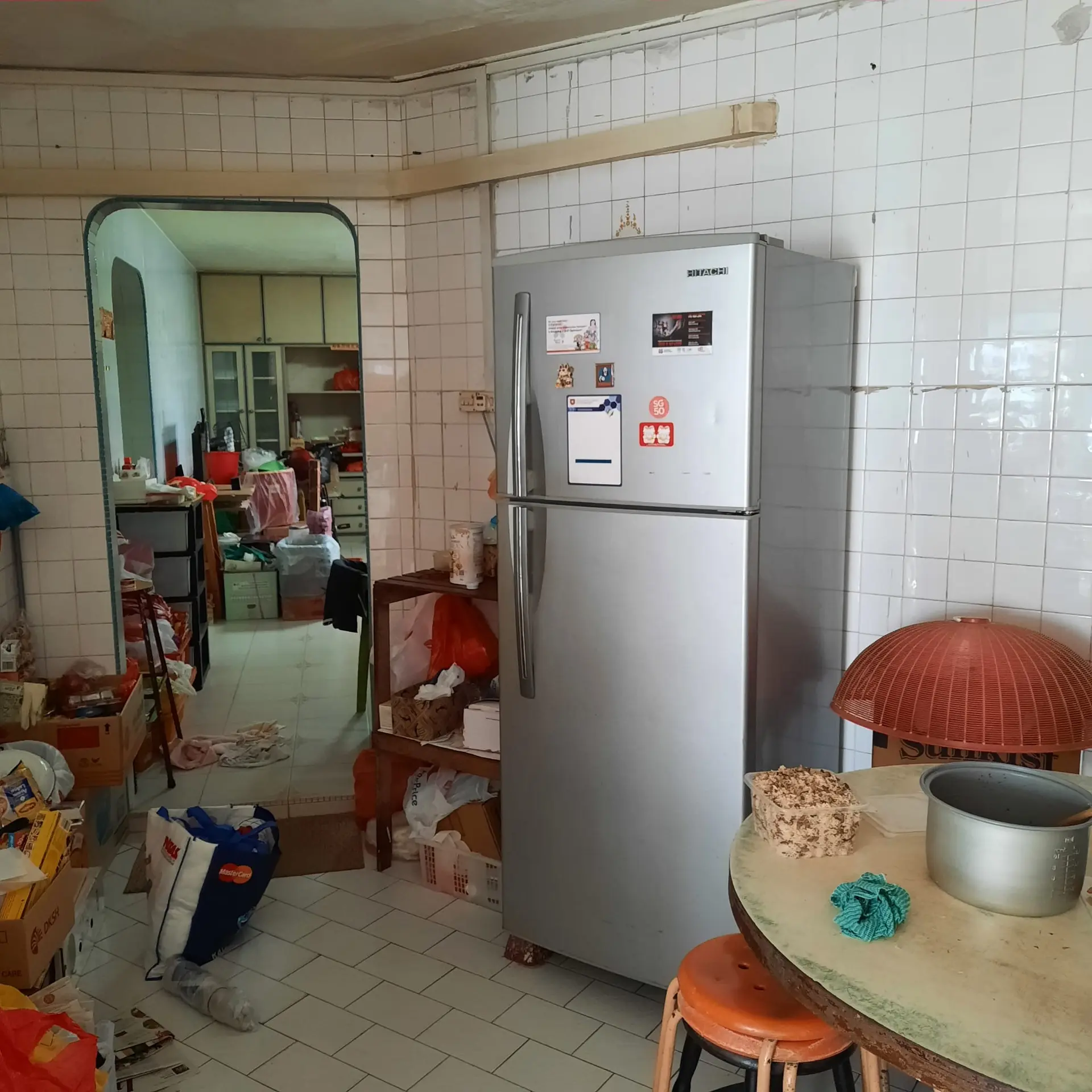
Every clearance we've been part of has a "maybe" pile. That's normal. Forcing a yes-or-no decision on every single item is exhausting and counterproductive.
A keep box works well. Designate one box or one shelf for things your parent can't decide on yet. It stays in the flat. Nobody touches it. You revisit it in a few weeks, or you don't. The point is that your parent knows there's a safe place for undecided items, which makes it easier to let go of the ones they're actually ready to part with.
For sentimental objects — your late grandmother's sewing machine, old photo albums, a child's school trophy — photographs can carry the memory without the object taking up floor space. Snap a picture, label it, keep a digital album. Some families print a small photo book of the items that mattered most.
And if your parent wants to pass something to a specific person — a neighbour, a friend from the void deck, a grandchild — help make that happen. An item going to someone they know feels completely different from an item going into a lorry. Our guide on reuse before disposal covers more ways to give items a second life where possible.
Should You Clear It While They're Away?
No.
We've seen what happens when a family clears a room while the parent is out. The parent comes home, sees the empty space, and the trust is gone. The next room becomes much harder, because now they're guarding everything.
Even if your parent's attachment to certain items seems irrational to you, removing things without their knowledge or agreement treats them like they don't get a say in their own home. They do. It's their home, and while they're able to decide, the final say is theirs.
One more thing that helps: siblings should talk among themselves first. Agree on the approach before anyone sits down with Mum or Dad. If your parent feels outnumbered — three children all saying "you need to clear this place" — it stops being a conversation and starts feeling like an intervention. One person leads. The others support quietly.
What Does a Clearance Look Like Once They Agree?
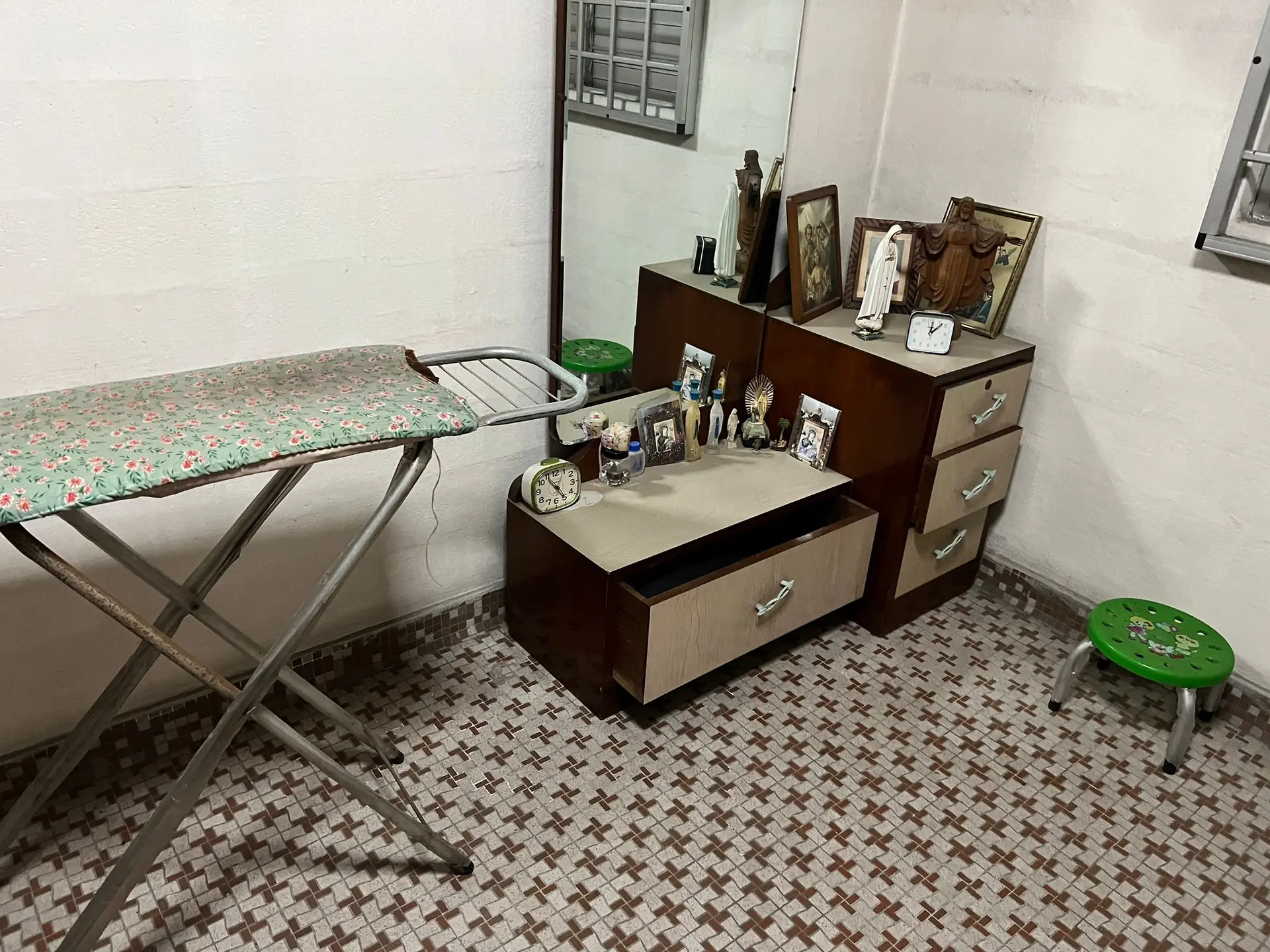
It doesn't have to be the whole flat. Partial jobs are completely normal for us. One room. One category of items. Just the bulky pieces that are blocking the corridor.
The process is straightforward: snap photos of what needs to go and send them to us on WhatsApp. We'll give you a free quote based on what we see. Quotes are valid for 14 days, so there's no pressure to decide immediately.
On the day itself, your parent can absolutely be there. Some prefer to be — it gives them a sense of control over what leaves and what stays. Our crew of two to four people (depending on the job) will handle the carrying, the manoeuvring through HDB corridors and standard lifts, and any dismantling needed for large wardrobes or bed frames that won't fit through doorways whole.
Where items are still in reusable condition, we give them a second life where we can rather than sending everything straight to disposal. Metal and paper get recycled. The goal is always to minimise what ends up as pure waste.
For HDB flats, keep in mind that town councils will only collect bulky items if they've already been dismantled — they won't take a whole wardrobe or an intact sofa. That dismantling is part of what we do, so you don't need to figure out how to take apart an old solid-wood cabinet on your own.
If you're planning a larger clearance, our guide to clearing an elderly parent's packed home walks through the decisions to make before the crew arrives. And if the conversation leads to a full HDB clearance, we handle those too — at whatever pace works for the family.
FAQs
Can my parent change their mind about certain items on the day? Yes. The crew won't take anything your parent wants to keep. If they pull something out of the "go" pile at the last minute, it stays.
Do you buy or offer trade-in value for the items you collect? No. We're a disposal service, not a buyback operation. We don't pay for items collected, and there's no trade-in, credit, or compensation involved. Reusable items get a second life where possible, but the customer doesn't receive payment for them.
What if we only want to clear one room for now? That's fine. Partial clearances are a regular part of what we do. Send us photos of just the items or the specific area you want cleared, and we'll quote on that scope. Surcharges may apply for after-hours work, Sundays, public holidays, or walk-up buildings — all confirmed at the quote stage.
Ready to start with one room, one corner, or even just the bulky items blocking the hallway? Send us photos on WhatsApp and we'll get back to you with a free, no-obligation quote.