Semakau Landfill Is Running Out — What That Means for Every Singaporean Household
By Junk Value Team
Singapore Has One Landfill. Just One.
No backup. No Plan B site waiting offshore. Semakau Landfill — that man-made island 8 km south of mainland Singapore — is the only landfill we have. And at current disposal rates, it fills up by 2035.
If you'd rather route the whole pile responsibly without the trip to a public collection bin, E-Waste Collection sorts and routes it through licensed recyclers — clear quote first.
That's not a projection from some fringe environmental group. It's the government's own timeline. Nine years from now, give or take, we run out of space to bury what we can't burn.
If you've ever dragged a broken wardrobe to the void deck and thought "someone else's problem now" — this is where that problem ends up.
What Makes Semakau Different From Any Other Landfill
Most countries dig a hole in the ground. Singapore built an island.
Semakau sits between Pulau Semakau and Pulau Sakeng, connected by a 7-km rock bund that creates enclosed cells. These cells receive incineration ash — not raw garbage. That distinction matters enormously.
Here's the chain: your discarded sofa, broken fridge, or renovation rubble gets collected → transported to one of Singapore's waste-to-energy incineration plants → burned at extreme temperatures → reduced to ash (roughly 10% of its original volume) → that ash gets barged to Semakau and buried in lined cells.
So when we say Semakau is filling up, we're talking about the residual ash from burning millions of tonnes of waste annually. The landfill isn't receiving whole sofas. It's receiving what's left after incineration has already done the heavy lifting.
That 90% volume reduction through incineration is what's kept Semakau viable this long. Without it, we'd have needed a new landfill decades ago.
Why 2035 Should Worry You Now
Nine years sounds distant. It isn't.
Building new waste infrastructure takes a decade of planning, environmental assessment, and construction. There is no second island earmarked. The options are: extend Semakau's lifespan, or face a waste crisis unlike anything Singapore has dealt with.
The math is brutal. Singapore generates roughly 7.4 million tonnes of waste annually. Our domestic recycling rate hovers around 50-60% for the overall economy — but household recycling sits far lower. Every kilogram that doesn't get recycled or reused eventually becomes ash in a Semakau cell.
What fills Semakau fastest? Non-recyclable bulky waste. Composite furniture (particleboard with laminate that can't be cleanly separated). Mixed-material items that contaminate recycling streams. Electronics dumped into general waste instead of proper e-waste channels.
In our 10+ years clearing Singaporean homes, we've seen entire flats' worth of furniture — solid wood pieces from the 50s and 60s, still structurally sound — headed for incineration simply because the owner didn't know alternatives existed.
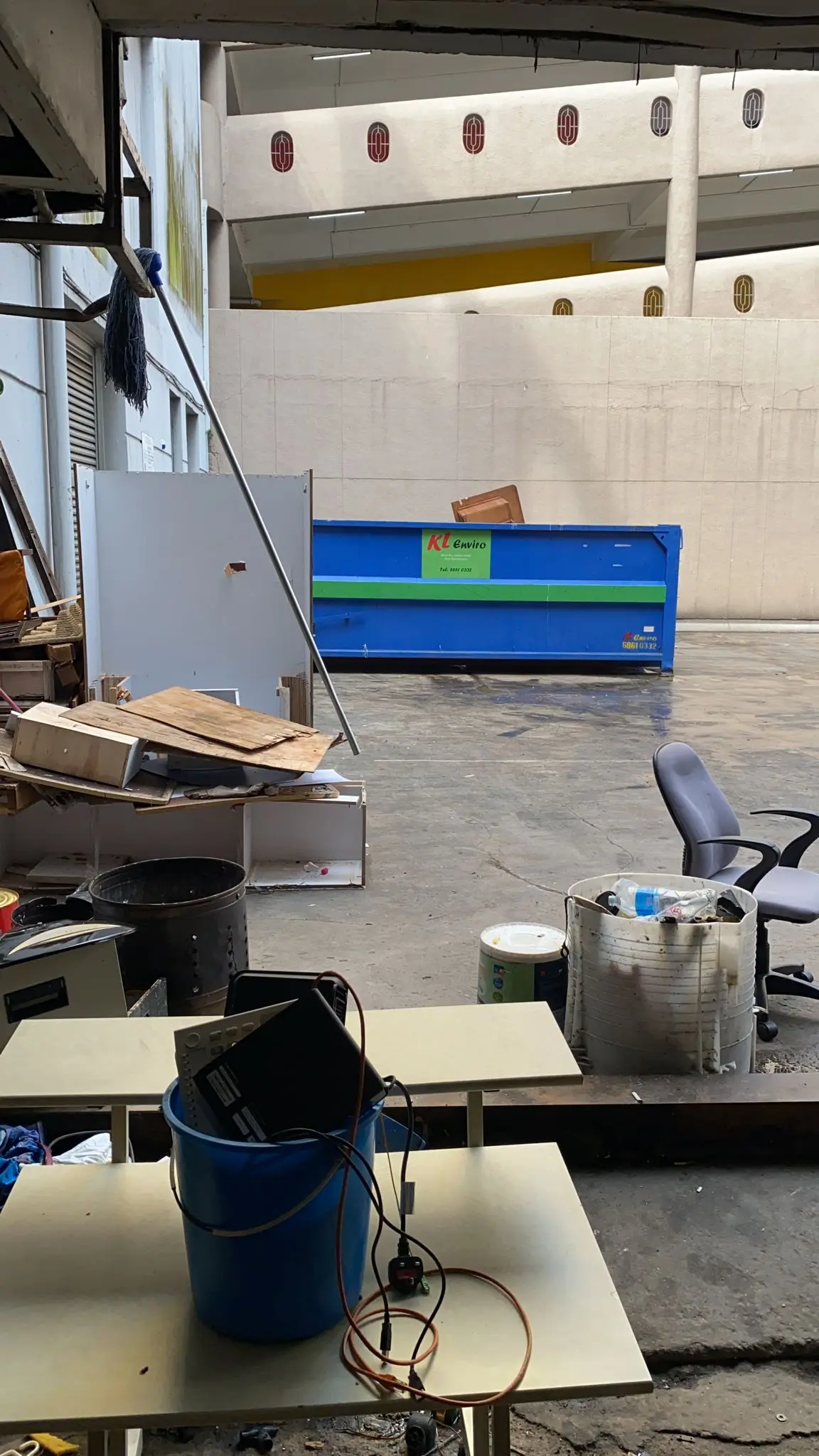
Your Disposal Choices Directly Affect the Timeline
This isn't abstract policy. Every household decision compounds.
Scenario A: You're renovating your HDB flat. Old wardrobe, bed frame, dining set, a decade-old washing machine — all need to go. You could leave them at the void deck and hope the town council collects. But here's the thing most people don't realise: town councils like Tanjong Pagar TC or Holland-Bukit Timah TC will only collect bulky items if you've dismantled them first. A whole wardrobe sitting intact? It stays there. Eventually it gets reported, and the disposal chain that follows is rarely optimised for material recovery.
Scenario B: You engage a disposal service that actually routes materials. Metals get separated. Reusable furniture enters second-hand channels. E-waste goes through proper recycling streams via licensed intermediaries. Wood gets sorted from laminate. What's left — the genuinely non-recoverable fraction — goes to incineration, and only the resulting ash reaches Semakau.
The difference between these two scenarios, multiplied across 1.4 million HDB households, is measured in years of landfill lifespan.
What We've Learned in a Decade of Clearing Homes
Three patterns we see repeatedly:
People underestimate what's reusable. That IKEA KALLAX shelf with a scratch on one side? Still perfectly functional. The washing machine that "makes a noise"? Often repairable. We route reusable items into second-hand channels where possible — not everything needs to become ash.
Mixed loads kill recycling potential. When a customer dumps paint tins, food waste, and electronics into the same pile as timber offcuts, the entire load becomes contaminated. Separation at source — even rough separation — dramatically increases what can be diverted from Semakau.
Renovation debris is the silent volume killer. A single 4-room HDB renovation generates anywhere from 2 to 5 tonnes of debris. Concrete, tiles, drywall, softwall partitions — these materials are heavy and voluminous. The good news: concrete and clean fill can be recycled into road base and construction aggregate. But only if it's collected separately from general waste.
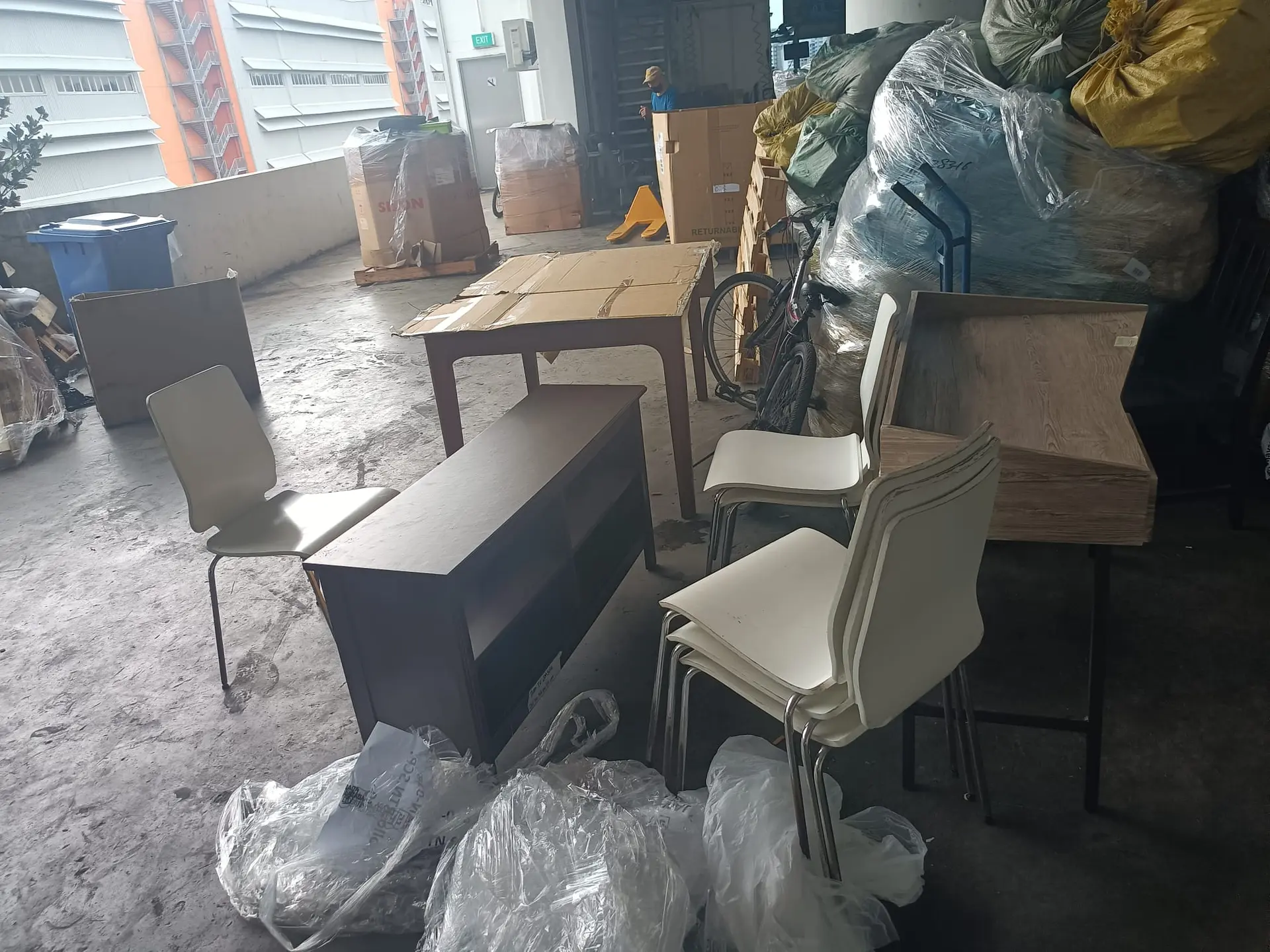
What Responsible Disposal Actually Looks Like
We won't pretend every item we collect avoids Semakau. That would be dishonest. Some materials — heavily contaminated composites, certain plastics, degraded foam — have no viable recycling pathway in Singapore today.
But here's what responsible routing achieves:
- Metals (from appliances, bed frames, shelving): separated and sent to metal recyclers. Aluminium and steel are infinitely recyclable.
- E-waste (computers, TVs, monitors, air-con units): routed through proper recycling channels via licensed intermediaries who extract precious metals and manage hazardous components.
- Reusable furniture and appliances: directed into second-hand channels rather than destruction.
- Clean timber: separated from laminated boards for appropriate processing.
- Renovation debris: concrete and tiles routed to construction recyclers where possible.
The residual fraction — what genuinely can't be recovered — goes to incineration. And only the ash reaches Semakau.
It's not zero-waste. But it's significantly less than the alternative of dumping everything into a single general waste stream.
Common Mistakes That Send Recoverable Items to Semakau
Mixing e-waste with general bulky items. That old CRT monitor contains lead. That laptop battery contains lithium. When they enter general incineration, those materials create toxic ash that takes up landfill space and creates environmental risk. Separate them.
Assuming the town council handles everything. They don't. TC bulky-item collection requires prior dismantling, runs on scheduled days, and doesn't optimise for material recovery. It's a last resort, not a first choice.
Waiting until the last day before key handover. Rushed disposals mean zero time for sorting. Everything gets lumped together. We've seen families on moving day literally throwing reusable items down the rubbish chute because they ran out of time. A bit of planning — even 24 to 48 hours of lead time — makes proper routing possible.
Frequently Asked Questions
How much longer can Semakau actually last if recycling improves? The 2035 projection assumes current waste generation and recycling rates. Government targets aim to extend it to 2045 or beyond through increased recycling, reduced consumption, and new waste-to-resource technologies. Every tonne diverted from incineration adds time.
Does it matter how I dispose of a single sofa? Individually? The impact is tiny. But Singapore has over 1.4 million residential units. If even 30% of households chose responsible disposal over void-deck dumping for their next bulky item, the cumulative tonnage diverted would be substantial. Collective action through individual choices.
Can I just put everything at the void deck for the town council? Only if you've dismantled items first — and even then, collection runs on the council's schedule, not yours. Whole items left intact are non-compliant and may not be collected at all. For anything beyond a single dismantled piece, a proper disposal service handles the logistics, sorting, and routing that TC collection simply doesn't offer.
What You Can Do Right Now
Next time you're clearing out — whether it's a full renovation, a move, or just that broken bookshelf you've been stepping around for six months — think about where it ends up.
Not in the abstract "somewhere" sense. In the very specific "Semakau cell filling up 8 km offshore" sense.
We handle the heavy lifting, the dismantling, the sorting, and the routing. You get a clean space. Semakau gets a few more months.
It's not complicated. It's just intentional.
Get a free quote: Send us photos of what needs to go via WhatsApp at 9888 1292. We'll tell you what can be diverted and what the job involves. No obligation, no dollar figures until we've seen what you're working with.