Sorting a Hoarded Home: What to Find Before Anything Is Thrown Away
By Junk Value Team
A flat that's been lived in for decades holds more than furniture. Somewhere between the stacked newspapers and the carefully saved shopping bags, there's an NRIC. A bank book. Maybe an insurance policy no one in the family knew about. Gold earrings wrapped in tissue at the back of a drawer.
The sorting job before a clearance crew arrives is yours. Not because it's fun — it's slow, dusty, and sometimes emotional — but because only the family knows what matters and what can go. This guide covers what to look for, where things tend to hide, and a system that keeps you moving without second-guessing every item.
What Should You Look For First?
Start with the things that cause real problems if they're accidentally thrown away. In our 10+ years of clearing Singaporean homes, we've learned that families often underestimate how scattered important items can get in a packed flat.
Identity documents. NRIC, passport, birth certificate, marriage certificate. These are sometimes kept together in a folder, but just as often they're in separate drawers across different rooms.
Financial papers. CPF statements, bank books (especially POSB and OCBC passbooks from the older generation), fixed deposit certificates, insurance policies, and any letters from banks or insurers. A bank book might show an account the family didn't know existed.
Property documents. The flat's lease or title papers and any letters about the property. Sometimes they're filed neatly, sometimes they're stuffed onto a cupboard shelf.
Cash. Older parents often keep cash at home. Notes folded into envelopes, tucked into red packets, or slipped between pages of books. We'll cover the hiding spots below.
Gold and jewellery. Rings, chains, earrings, brooches. Often wrapped in tissue paper or kept in small boxes that look unremarkable from the outside.
Keys. Safe deposit box keys, padlock keys, spare house keys. A key with no obvious lock still means something — set it aside rather than tossing it.
Old photos, letters, and personal papers. These can't be replaced. Even if you don't have time to sort through every photo album on the spot, bag them for later.
Where Do Things Hide in a Packed Flat?
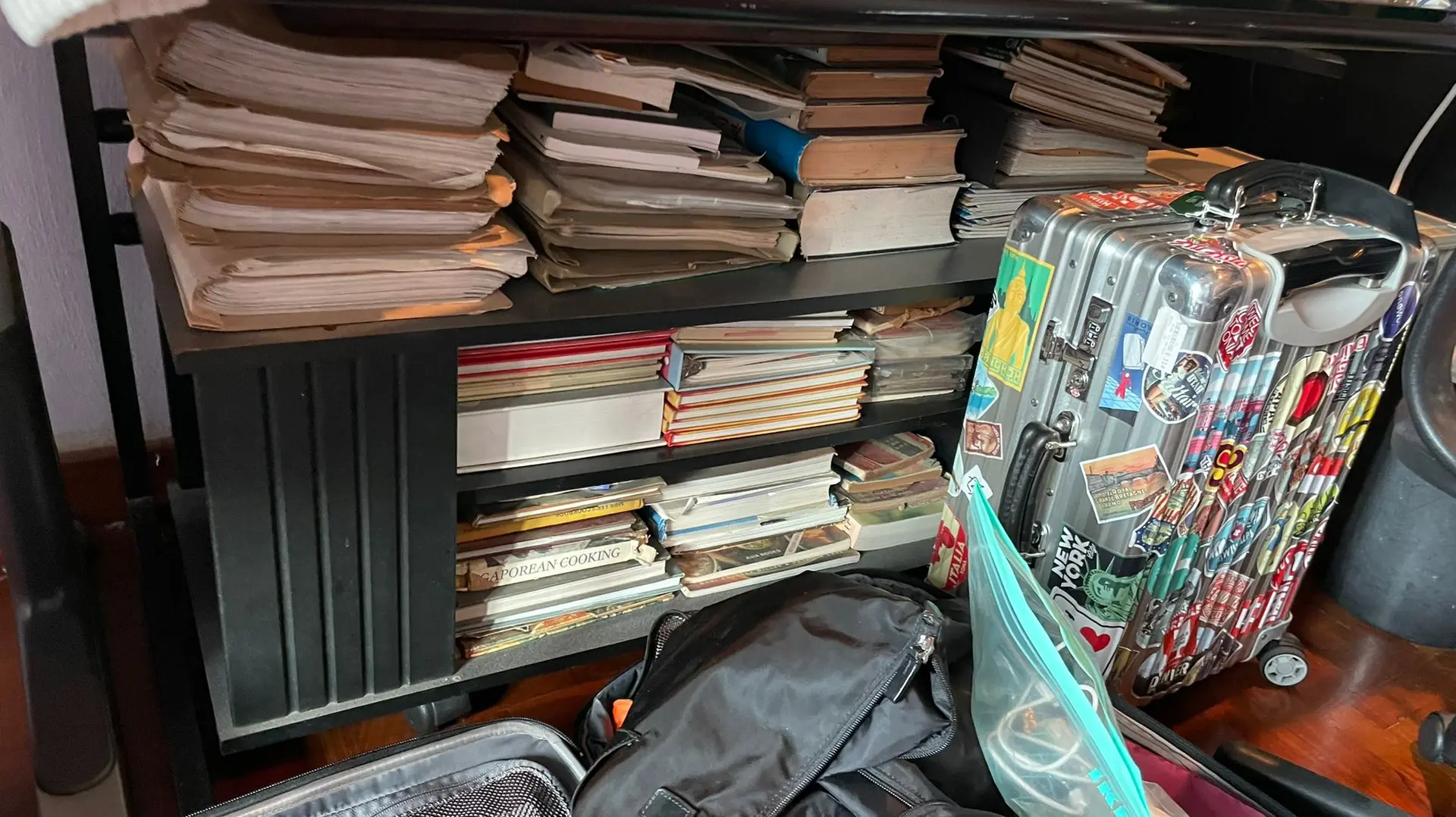
A flat that has filled up over decades develops its own storage logic. Things migrate to unlikely places. Families regularly tell us they found valuables in spots they almost skipped.
Inside books and folders. Cash between pages. Documents slipped into the back of ring binders. Old photos used as bookmarks. If there's a bookshelf, flip through every book — at least fan the pages.
Handbags and coat pockets. A handbag hanging on a bedroom door hook might hold a gold chain, an old POSB passbook, or a fold of notes. Check every pocket of every bag.
Biscuit tins and containers. The classic Khong Guan tin that holds sewing supplies might also hold jewellery, keys, or foreign currency from a trip decades ago. Any sealed container in a bedroom or living room warrants opening.
Red packets. A stack of old ang baos can still have notes inside that were never banked. Check every single one.
Under mattresses and between bed frames. Lift the mattress. Check the gap between the mattress and the bed frame.
Back of wardrobes. Behind the hanging clothes, on the top shelf, in shoe boxes stacked at the bottom. Wardrobes in packed flats tend to become deep storage — the back half hasn't been touched in years.
Kitchen cabinets (upper shelves). Documents and cash turn up here too. Families sometimes find bank letters in the kitchen because that's where the mail got opened and put down.
How Do You Sort a Room Without Getting Stuck?
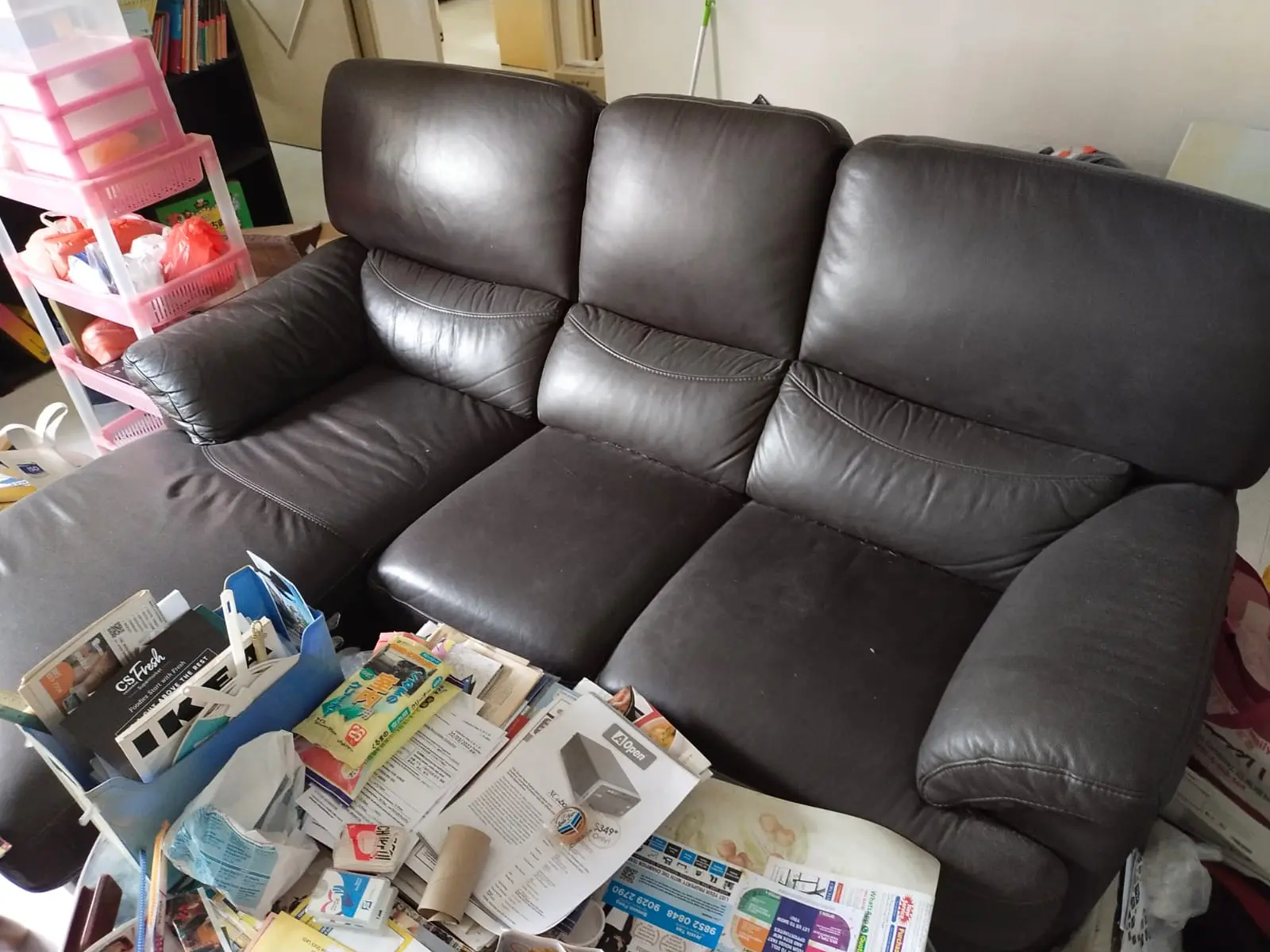
The biggest risk isn't throwing out something important. It's getting paralysed halfway through the first room, reading every letter and examining every object, then running out of weekend hours with three rooms still untouched.
Use three categories. Keep it physical — three areas on the floor, three boxes, three bags. Whatever works.
Keep. Identity documents, financial papers, property papers, cash, jewellery, keys, irreplaceable photos. Anything you're certain about goes straight into this pile.
Check later. Paperwork you're not sure about. Letters that might be from a bank or might be junk mail. Items that could have sentimental value but you can't decide right now. Bag these by room — label the bag — and move on. You'll go through them at home, at the kitchen table, with a cup of coffee. Not on the floor of a dusty bedroom.
Go. Everything else. Broken furniture, old newspapers, worn-out clothes, cracked kitchenware, expired household products.
Work one room at a time. Finish the bedroom before starting the kitchen. A half-sorted flat across four rooms is harder to manage than one fully sorted room and three untouched ones.
One critical rule: don't read every letter on the spot. If it looks like it could be from a bank, insurer, or government agency, it goes into "check later." You'll lose hours reading through decades of correspondence if you stop to examine each page.
What About Old Phones and Computers?
A parent's old phone or laptop often holds the only copies of certain photos, messages, and contact lists. Before any device leaves the flat, check whether it powers on. If it does, back up photos and contacts to a USB drive or cloud account.
Even devices that don't turn on may have recoverable data on their hard drives or memory cards. Set them aside for a family member who's comfortable with data recovery, or take them to a data recovery service.
Once you've secured the data, devices still need proper handling. Hard drives in old desktops and laptops contain personal information — bank logins, saved passwords, scanned documents. Our guide to laptop and desktop disposal with data security covers what to think about before those devices leave your hands.
Is Old Furniture Worth Keeping?
Solid wood furniture from the 1950s and 60s is heavy, well-built, and sometimes worth more than the family assumes. A teak sideboard or a rosewood display cabinet might have value to someone even if it doesn't fit your own home.
That said, most old furniture in a packed flat is particle board, laminate, or damaged beyond practical use. Warped MDF wardrobes and stained foam mattresses aren't candidates for a second life.
If you're unsure about a piece, take a photo and set it aside. Our guide on reuse before disposal walks through how to tell what's worth passing on from what's genuinely end-of-life. Reusable items get a second life where possible, and we recycle metal and paper, but the sorting decision on sentimental or potentially valuable pieces is always the family's call.
How Much Sorting Should Happen Before the Crew Comes?
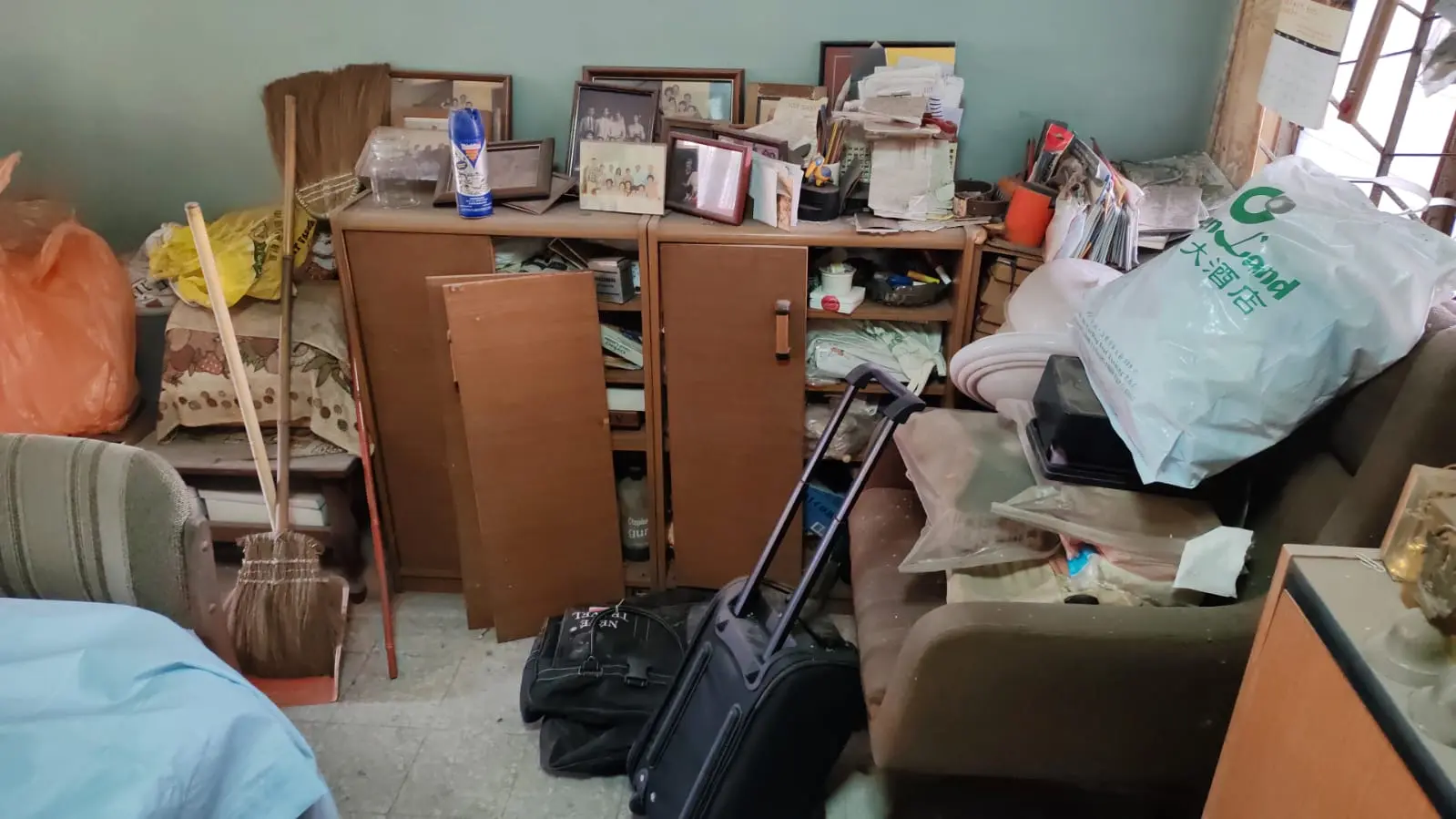
Enough that everything left in the flat can go. That's the standard. When our crew of two to four arrives with a lorry, they're there to clear — not to open drawers and make judgement calls on your family's paperwork.
You don't need to dismantle furniture. You don't need to bag every loose item. You do need to have pulled out anything the family wants to keep, check, or decide on later. The "check later" bags go home with you. What stays in the flat gets loaded.
For families working through a full flat clearance — whether it's ahead of a renovation, a move to a nursing home, or after a loss — the sorting process often takes more than one visit. That's normal. A packed flat might need several sessions before you're confident nothing important remains.
If your parent is still involved in the decisions, clearing an elderly parent's packed home maps out the whole process, and if they're moving into care, see clearing a parent's flat for a nursing home move.
FAQs
Do you buy any of the items you collect, or offer trade-in value? No. We're a disposal service, not a buyback operation. We don't pay for items collected, and there's no trade-in, credit, or compensation. Reusable items get a second life where possible, and we recycle metal and paper, but the customer doesn't receive payment for anything we take away.
Can the crew help sort through belongings on the day? The crew is there to load and remove items. Sorting through drawers, checking pockets, and deciding what stays is the family's job, and it needs to happen before the crew arrives. If you find something during the clearance that you want to pull out, of course you can — but the sorting itself shouldn't be happening in parallel with the removal.
How do we get a quote for clearing a packed flat? Send us photos of the rooms via WhatsApp. Wide-angle shots of each room work best — they show the volume and the access path. We'll reply with a quote based on what we see. The quote is free and valid for 14 days. Surcharges may apply for after-hours work, Sundays, public holidays, or stair carry in walk-up buildings — all confirmed at the quote stage.
Ready to get a quote once the sorting is done? Send your room photos over WhatsApp and we'll size up the job for you.