What Happens to the Metal in Your Old Furniture and Appliances?
By Junk Value Team
Your Old Bed Frame Is Worth More Than You Think — Just Not to You
Here's something most Singaporean homeowners never consider: that rusty metal bed frame you're desperate to get rid of contains steel that will outlive you. Literally. Steel can be recycled indefinitely without losing its structural properties. Same goes for the aluminium in your old window frames, the copper winding inside your dead washing machine motor, and the stainless steel shell of that fridge that finally gave up.
Most small-office clear-outs aren't emergencies. commercial decommissioning support is set up for that case: planned, photo-quoted, no surprise charges.
The problem? Most people treat metal-containing items as pure junk. They see a broken office chair and think "waste." They don't see the steel gas cylinder, the aluminium base, the chrome-plated armrests — all recoverable, all valuable to the recycling chain.
In our 10+ years clearing Singaporean homes and offices, we've handled a lot of metal-heavy items. We know exactly what's inside them, where the value sits, and how it gets extracted. Let us walk you through it.
Why Metal Recovery Matters More Than Ever
Singapore imports virtually all its raw materials. Every kilogram of steel or aluminium recovered domestically is a kilogram that doesn't need to be shipped in. That's not just an environmental argument — it's an economic one.
Metal is, hands down, the most economically viable material to recycle from household junk. Unlike fabric, foam, or laminated wood (which often costs more to process than the recovered material is worth), metals have consistent market value. Scrap steel, copper, and aluminium are traded commodities with real demand from local and regional buyers.
This is why your disposed items don't just end up in a landfill. The metal components get separated and sorted, then passed to intermediaries who sort them further and send them on for recycling.
How Metal Gets Separated From Your Furniture
Steel Frames: Beds, Tables, Shelving
That IKEA bed frame you bought eight years ago? Mostly steel tubing. Same with metal shelving units, folding tables, and storage racks. The separation process is straightforward but labour-intensive:
- Manual disassembly — bolts removed, wood or MDF panels separated from the metal skeleton
- Sorting by grade — mild steel, stainless steel, and galvanised steel all go to different streams
- Compaction or cutting — oversized frames get cut down for efficient transport to processing yards
From there, sorted scrap moves through the scrap metal yards found across Singapore's industrial estates, where it's consolidated by grade before going on to be melted down and reused.
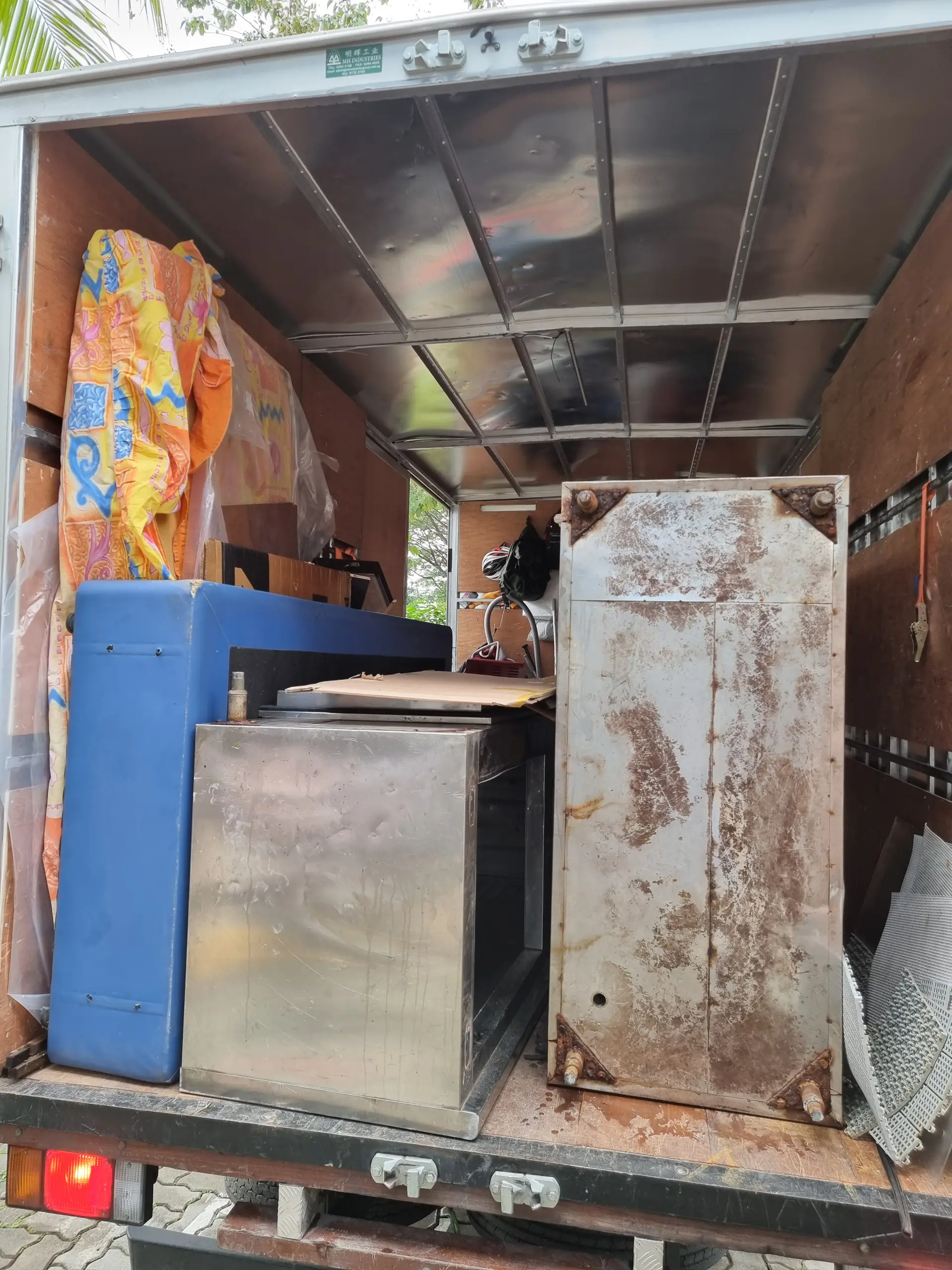
Those modular office cabinets? Almost entirely sheet steel. A single office clearance can yield hundreds of kilograms of recoverable metal — far more than a typical residential job.
Appliances: The Hidden Treasure Chest
A washing machine isn't just a washing machine to a recycler. It's:
- Steel drum and outer casing (the bulk of the weight)
- Copper motor windings (small but high-value)
- Aluminium heat sinks and brackets
- Small amounts of brass in valves and fittings
Refrigerators are similar — steel body, copper in the compressor, aluminium in the condenser coils. Even a basic microwave yields usable steel from its chassis. When a dead washer is what's prompting the clear-out, our washing machine removal service makes sure that steel drum and copper motor reach the right recovery channels.
The catch? These items need proper handling. Fridges contain refrigerant gases that must be recovered before the unit gets shredded. This is why responsible routing matters. It's not something you can DIY at the void deck.
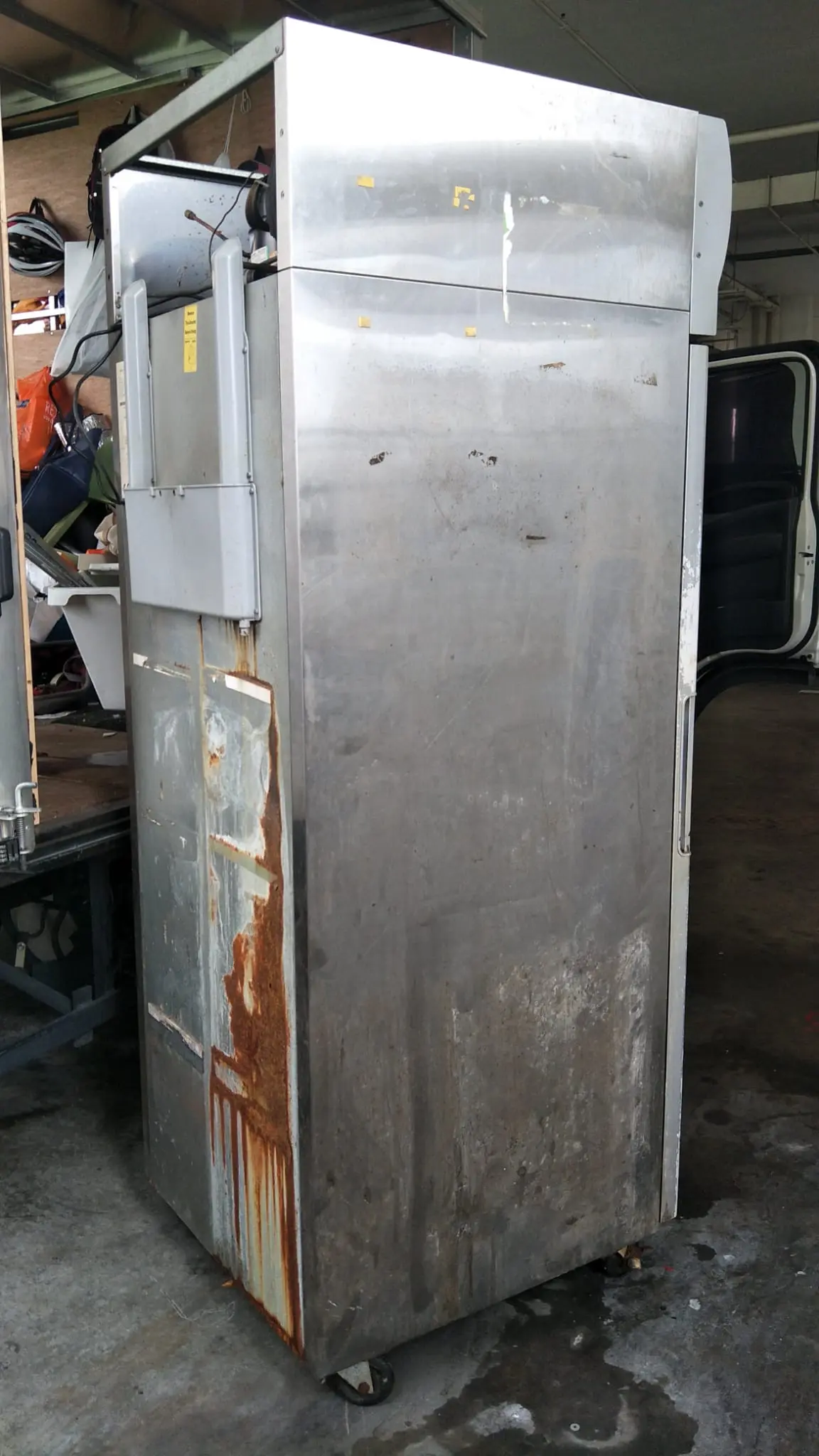
Commercial-grade stainless steel equipment — like what you see above from a kitchen clearance — is particularly valuable in the scrap stream. Stainless commands a premium over mild steel because of its chromium and nickel content.
HDB vs Condo: Getting Metal Items Out
HDB Flats
The challenge with HDB disposal isn't the recycling — it's the logistics of getting heavy metal items out of the unit. We're talking about manoeuvring a queen-size steel bed frame through a standard HDB corridor, into a passenger lift, and down to ground level. No service lift exists in HDB blocks. Tight corners, narrow doorways, neighbours' shoes lining the corridor. It requires technique.
Your town council does offer bulky item collection — but only if you've dismantled the items yourself first. A fully assembled metal bed frame sitting at the void deck? They won't touch it. That's where our dismantling capability comes in.
Condos and Commercial Properties
Condos typically have a service lift and designated loading bay, which makes moving heavy metal items significantly easier. However, rules differ per building. Your MCST may require advance booking of the service lift, specific time slots for disposal activities, and lift padding during transit. You'll need to arrange approval with your building management ahead of the pickup — that's between you and your MCST.
For commercial properties, the same applies. Building management sets the rules; we work within them.
Common Mistakes We See After 10+ Years
Mixing metal with general waste. Metal is easiest to recover when it's kept separate from the start. Once a steel shelf is buried in a pile of general waste, it's far less likely to make it back into the recycling chain.
Assuming rust means worthless. Rust is surface oxidation. The steel underneath is perfectly recyclable. Old metal cabinets caked in decades of rust still have value in the scrap stream.
Stripping copper yourself. We've seen homeowners try to extract copper wiring from old appliances before disposal, thinking they'll sell it. Unless you have proper tools and know what you're doing, you'll spend hours with a screwdriver for a tiny amount of copper. Not worth the cut fingers.
Leaving items "for the karung guni." Freelance collectors are increasingly rare, and they're selective. They'll take a clean aluminium pot but walk past a bulky metal bed frame that requires transport. Don't assume someone will magically appear for your heavy items.
Mini-FAQ
Q: Do you pay me for the metal in my old furniture? No. We're a disposal service, not a scrap dealer. We handle the collection, transport, and responsible routing of your items — including ensuring metals reach proper recycling channels. The convenience is the value; we don't offer buyback or compensation for items collected.
Q: Can I request that my items specifically go to recycling rather than incineration? Reusable items get a second life where possible, and metals are separated for recycling as standard practice. We can't guarantee a specific destination for every component, but metal recovery is economically sensible — it happens naturally in the disposal chain because the material has real value.
Q: What metal items are too large or heavy for you to handle? We've cleared industrial lab equipment, commercial kitchen setups, and warehouse racking systems. Send us photos and we'll tell you what's involved. Crew size scales with the job — typically 2-4 personnel with the right tools. Surcharges may apply for after-hours jobs, walk-up buildings, or stair/ramp access — confirmed at quote stage.
Ready to Clear Your Metal Junk the Right Way?
Whether it's a single steel bed frame or an entire office worth of metal shelving, we'll handle the heavy lifting, dismantling, and routing. Fast. Clean. Done.
WhatsApp us at 9888 1292 with a photo of what you need cleared. Free quote, no obligations.