Hospital Bed Disposal in Singapore: A Practical Guide for Families
By Junk Value Team
The electric hospital bed is still in the bedroom. The air mattress pump hums faintly if you bump the plug. A folded wheelchair leans against the wall, and a commode chair sits in the corner. If you're reading this, the person who needed that equipment no longer does — and we understand that can be a difficult transition.
What follows is practical. We'll walk through every option so you can decide what makes sense for your situation.
Is the Hospital Bed Rented or Owned?
Many home hospital beds in Singapore are rented from medical-supply companies. If yours is rented, the supplier takes it back — you don't need to arrange disposal at all.
Check the frame itself first. Rental beds usually carry a sticker from the supplier, usually on the motor housing or one of the side rails. It'll show a company name, a phone number, and sometimes an asset tag or serial number. If the sticker has worn off, look through paperwork from the original hospital discharge or any recurring billing statements. A monthly or quarterly charge on a bank statement is a strong clue that the bed is still on rental.
Call the supplier and arrange a return collection; rental companies normally arrange their own pickup. Ask whether the pressure-relief mattress and pump are part of the rental too, or were bought separately.
If there's no sticker, no paperwork, and no recurring charge, the bed was likely purchased outright. That means disposal is on you, and the next question is whether someone else can use it.
Can Someone Else Use It?
A working hospital bed is genuinely useful to another family. Before you think about disposal, it's worth spending a few days seeing if someone wants it.
What makes a bed worth passing on: the electric motor raises and lowers smoothly, the hand control works on every function, the side rails clip in and out without forcing, and the frame isn't rusted through. Cosmetic scuffs don't matter. A dead motor or frayed wiring does.
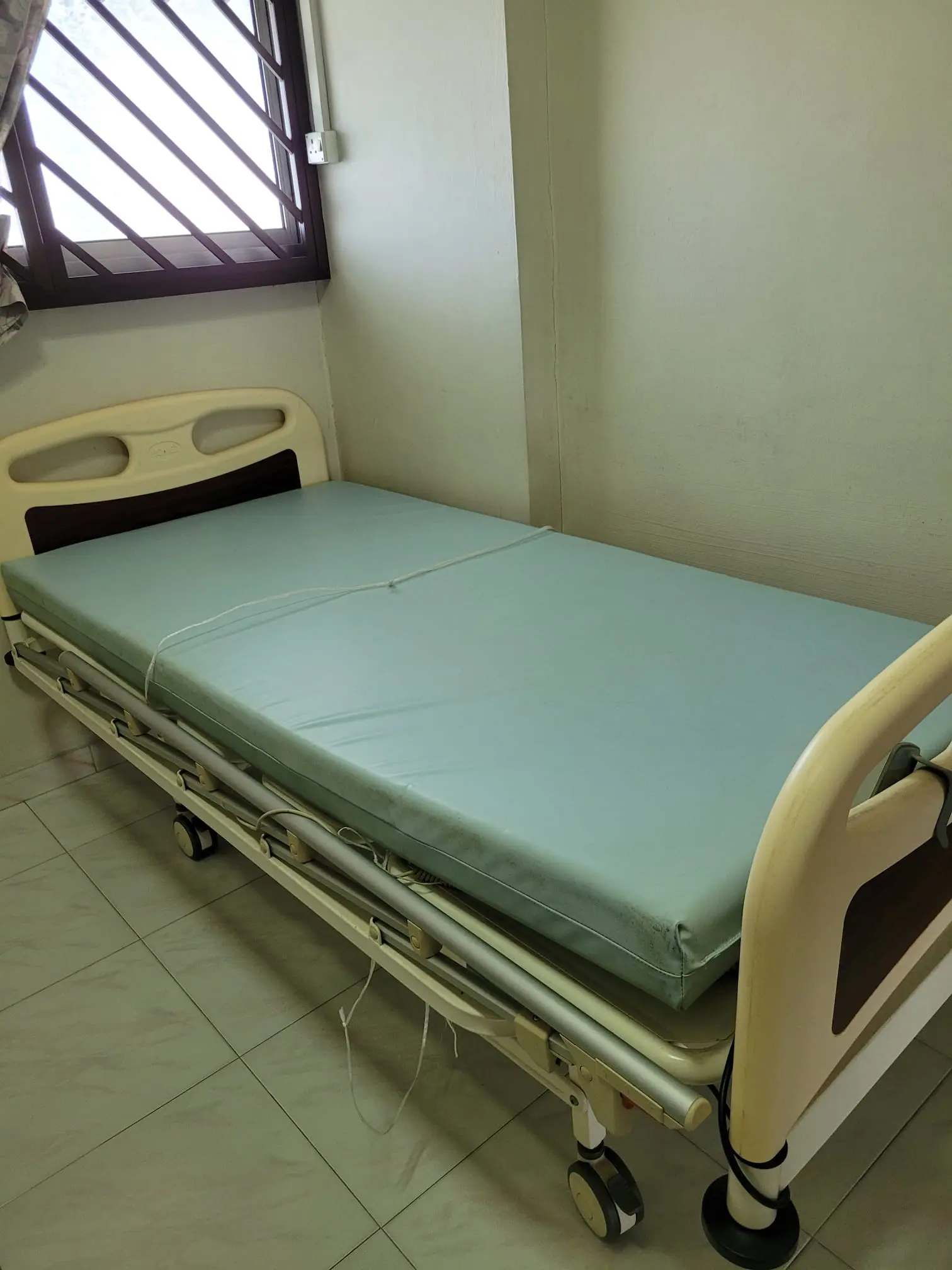
Ask the hospital social worker who arranged the original discharge — they often know families in need. Community groups, religious organisations, and neighbourhood chat groups are another channel. We'd suggest keeping the ask simple: post a photo, state the bed's condition honestly, and mention that the recipient arranges their own transport.
Don't feel obligated to hold the bed indefinitely. If nobody responds within a week or two, you've done your part. For a broader look at the reuse-before-disposal mindset, our guide on reducing and reusing before disposal covers the thinking in more detail.
Will the Town Council Take a Hospital Bed?
Probably not in any practical sense. Town councils do collect bulky items from HDB estates, but only items that have already been dismantled and placed at the void deck or designated collection point. A motorised hospital bed creates two problems for that route.
First, you'd need to fully disassemble it yourself — detach the headboard and footboard, unclip the side rails, separate the frame sections, and disconnect the motor, control box, and wiring. That's a real job requiring tools and some physical strength.
Second, the electrical components (motor, actuators, control box, hand control) are e-waste. Town council bulk collection isn't designed for e-waste routing. Mixing electrical parts into a general bulky-item pile means they likely won't reach proper recycling channels.
If you want the full picture on what town councils will and won't collect, we wrote a detailed breakdown in our town council bulk item collection guide. The short version: this route works well for a wooden bookshelf, less well for a heavy motorised steel bed frame with wiring.
How Is a Hospital Bed Taken Apart and Removed?
In our 10+ years of clearing Singaporean homes, we've handled hospital beds in HDB flats, condos and landed homes. The disassembly sequence is roughly the same every time.
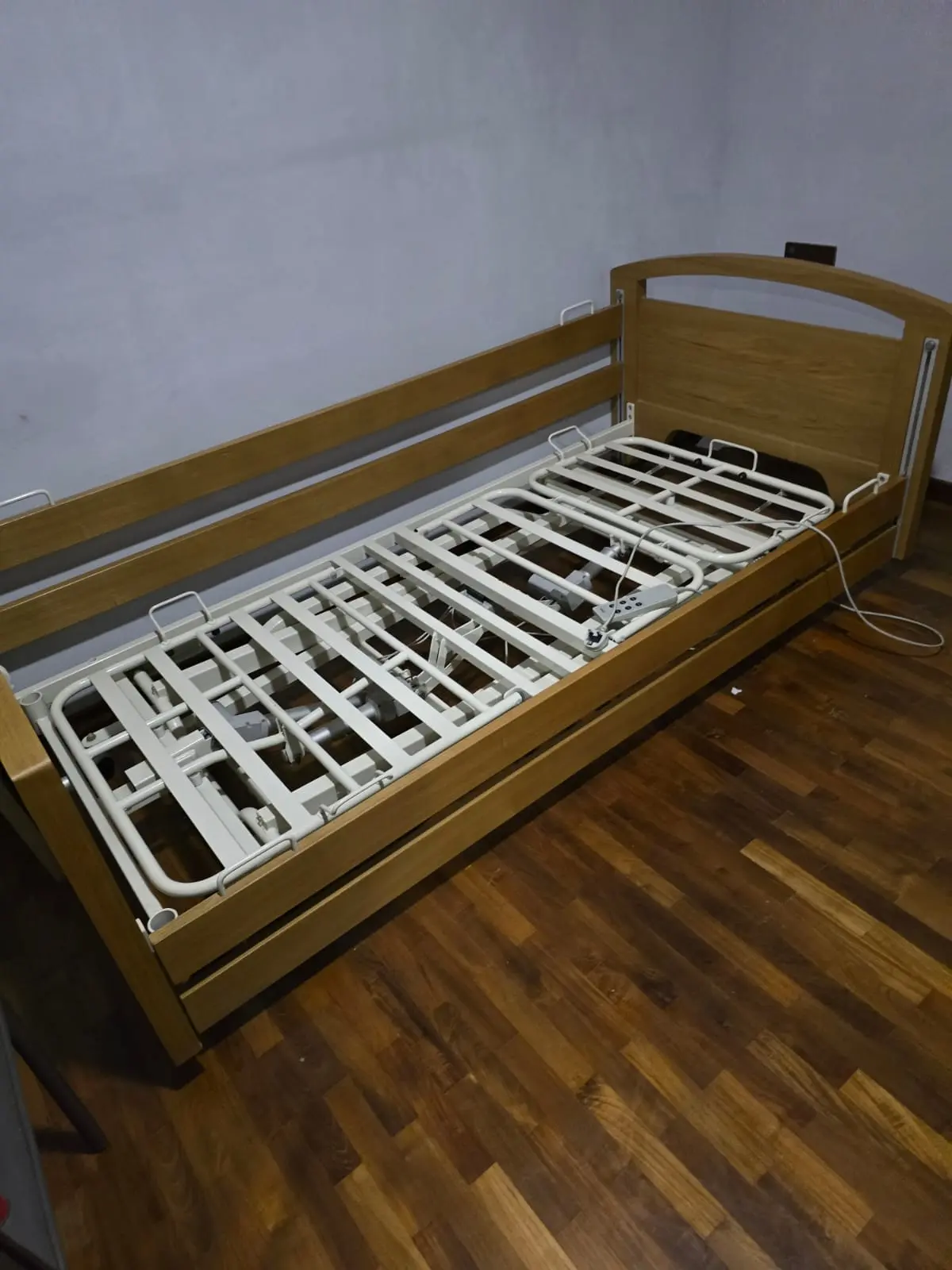
The headboard and footboard lift off their bracket pins. Side rails unclip or unbolt. The mattress and pump come off. Then the frame itself separates into two or three sections at the hinge points — this is how the manufacturer designed it to fit through standard doorways and into passenger lifts. The motor and control box are disconnected last.
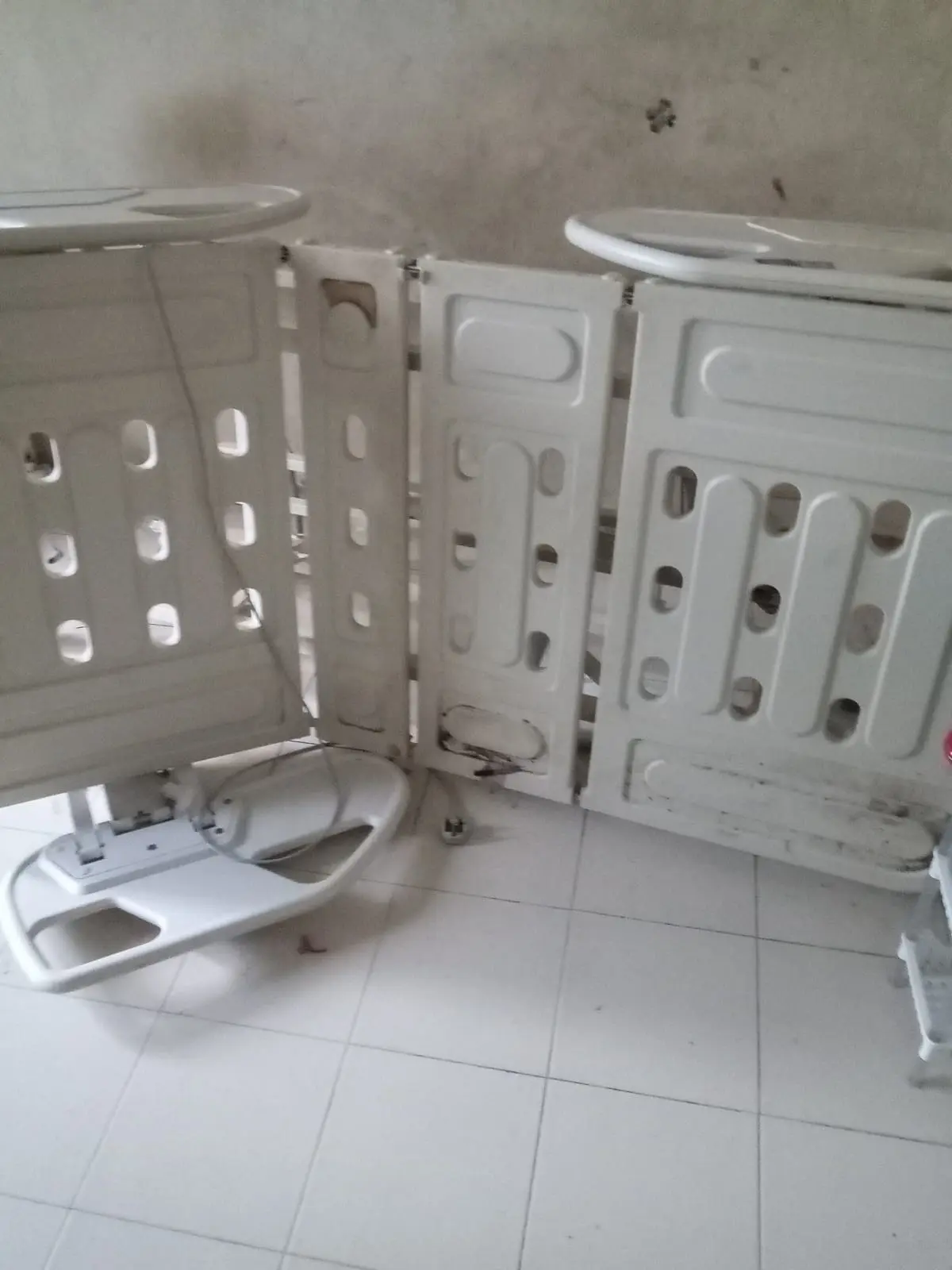
Each section is heavy steel, and the motor adds dead weight in an awkward spot. Navigating narrow HDB corridors and fitting frame sections into a standard passenger lift takes some manoeuvring. For condos, the owner or tenant needs to arrange any required lift booking and MCST approval ahead of the pickup day — rules differ per building, and that's between you and your management office.
Our hospital bed disposal service page covers what to expect from our end, including how we handle the electrical components separately from the steel frame.
What About the Air Mattress, Wheelchair and Commode Chair?
Hospital beds rarely travel alone. A typical home-care setup includes several other items, and each has its own disposal consideration.
Pressure-relief or air mattresses with an electric pump follow the same logic as the bed: if rented, return them. If owned and working, someone else may want them. If they're going, the pump is e-waste and the mattress itself is bulky waste. Our mattress disposal guide covers the logistics for all mattress types.
Manual wheelchairs and commode chairs are steel-and-plastic items. A working wheelchair is one of the easiest home-care items to pass on — community need is high. A commode chair in decent condition can also find a second home. If neither is wanted, both are straightforward to collect and recycle as scrap metal.
Motorised wheelchairs, mobility scooters and PMDs go too. We take them whole, battery still in place, and the battery and electronics are sorted out as e-waste while the frame goes for metal recycling.
For the electrical components in a hospital bed's motor and control box, proper e-waste routing matters. Our e-waste disposal guide explains why and how those parts are handled differently from general waste.
Where Does a Disposed Hospital Bed End Up?
A hospital bed breaks down into two streams once it leaves your home.
The steel frame, side rails, headboard brackets, and castors go to scrap metal recycling. Steel is one of the most recyclable materials there is, and the frame of a hospital bed is substantial. We route this through intermediaries who sort and process it before it reaches recycling facilities.
The motor, actuators, control box, hand control, and any wiring are e-waste. These contain copper, circuit boards, and sometimes a small backup battery. We route e-waste components through proper recycling channels so that recoverable materials are extracted rather than landfilled.
The mattress — whether it's a standard foam hospital mattress or a pressure-relief air mattress — is the hardest part to recycle. Most end up as residual waste routed through intermediaries to incineration facilities, with ash eventually reaching Semakau Landfill. Our metal recycling guide goes deeper into how steel and other metals from furniture and appliances get a second life.
Clearing the Rest of the Room or Flat?
Sometimes the hospital bed is just the starting point. If a parent has passed away, the family often needs to clear the entire flat — decades of belongings, old furniture, and accumulated household items on top of the medical equipment.
Often the hospital bed is one item among a whole flat of old furniture, stacked boxes and appliances that haven't been moved in years. If that's your situation, our deceased estate clearance guide walks through the process from start to finish.
For families where a parent has moved into a nursing home and you're downsizing the flat, our downsizing guide helps you think through what to keep, pass on, and let go of. And if you're preparing an HDB flat for sale or for the next occupant, our HDB flat clearance guide covers the full scope.
Hospital Bed Disposal FAQs
Do you buy hospital beds or offer any trade-in value? No. We're a disposal service, not a reseller or buyback operation. We don't pay for any items we collect, including working hospital beds. If the bed is in good condition, we'd encourage you to try passing it on to another family first — but that's between you and the recipient.
Can I just leave the hospital bed at the void deck for town council collection? Only if you've fully dismantled it first, and even then, the electrical components (motor, control box, wiring) shouldn't go into a general bulk collection. Town councils collect dismantled bulky items, not assembled motorised furniture. You'd also need to separate the e-waste parts and handle those through a different channel.
How do I get a quote for hospital bed disposal? Send us photos of the bed and any other equipment via WhatsApp. Include a shot of the full setup, the motor area, and anything else that needs to go (wheelchair, commode chair, mattress). We'll come back with a quote based on what we see. Surcharges may apply for after-hours pickups, Sundays, public holidays, or walk-up buildings without lift access — all confirmed at the quote stage.
Do I need to disassemble the bed before you arrive? No. Disassembly is part of what we do. We'll take the bed apart in the room, carry the sections out through your corridor and lift, and load everything onto our vehicle. You don't need to touch it.
When you're ready, send a few photos of the hospital bed and any other equipment to us on WhatsApp. We'll let you know what's involved and what it costs — no obligation.