Wood Waste Recycling in Singapore: What Actually Happens to Your Old Furniture
By Junk Value Team
That teak dining table your parents bought in 1975 and the flat-pack bookshelf you assembled last year will follow very different paths once they leave your home. One has genuine recycling potential. The other, frankly, doesn't — at least not in the way most homeowners imagine.
In our 10+ years clearing furniture from Singapore homes, the single most common question we get about wooden items is: "Can this be recycled?" The answer depends almost entirely on what the piece is made of.
Why wood waste matters in Singapore's disposal landscape
Wood accounts for a significant portion of bulky waste generated by households, particularly during renovations and move-outs. Singapore's incineration-to-landfill pipeline handles what doesn't get diverted, and Semakau Landfill has a finite lifespan. Every solid timber piece that gets chipped for biomass or repurposed into secondary products is volume that doesn't need incineration.
If you'd rather hand the whole thing to a crew, residential pickup is what we do — we'll send a clear photo quote first so you know what affects the price before pickup day.
The problem: most homeowners can't tell whether their wardrobe is solid meranti or laminated particle board. That distinction determines whether the wood enters a recycling stream or goes straight to thermal processing.
Solid timber — the recyclable one
Solid wood furniture from the 1950s through 1980s (the era of heavy teak sideboards, rosewood cabinets, and chengal bed frames) is genuinely recyclable. These pieces contain no synthetic resins binding the fibres together.
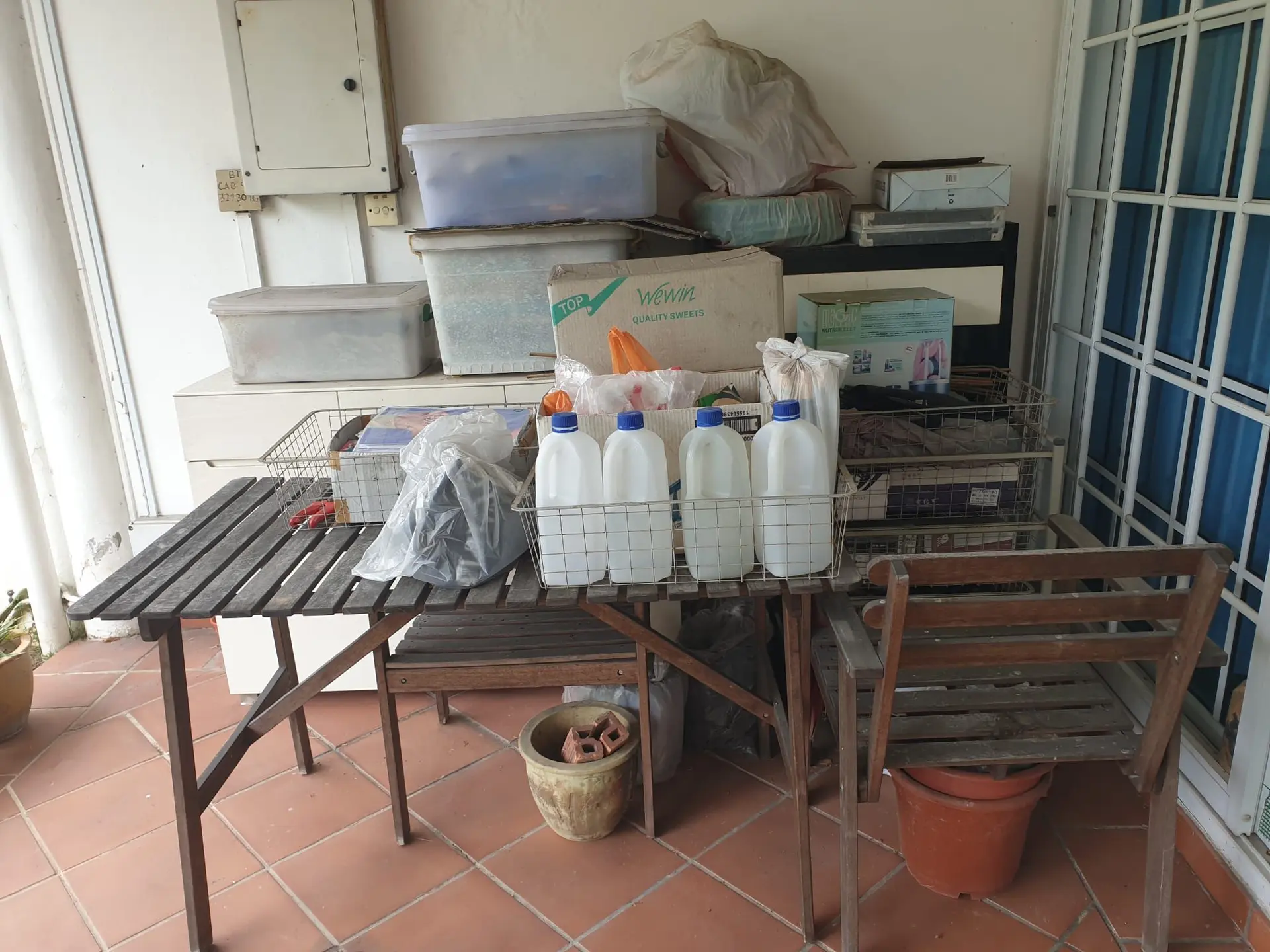
What happens to solid timber after collection:
Reuse as-is. Pieces in reasonable condition get routed into second-hand channels where possible. A solid wood dining table with surface scratches still has decades of structural life.
Chipping for biomass. Timber that's too damaged for reuse gets processed by licensed intermediaries into wood chips. These chips serve as biomass fuel or raw material for composite products. Singapore has wood waste processing facilities that accept clean timber for this purpose.
Pallet and crate stock. Thick hardwood planks sometimes get reclaimed for industrial pallets or shipping crates — a lower-grade reuse, but still diversion from incineration.
We've cleared entire Ang Mo Kio flats filled with 1960s furniture — wardrobes so heavy they needed four crew members and careful manoeuvring through HDB corridors. That weight comes from density, and density means quality timber with real recycling value.
Engineered wood and particle board — the difficult one
Most furniture purchased in Singapore after the mid-1990s uses engineered wood: particle board (chipboard), medium-density fibreboard (MDF), or plywood with melamine laminate. These materials are wood fibres bonded with formaldehyde-based resins and coated in synthetic films.
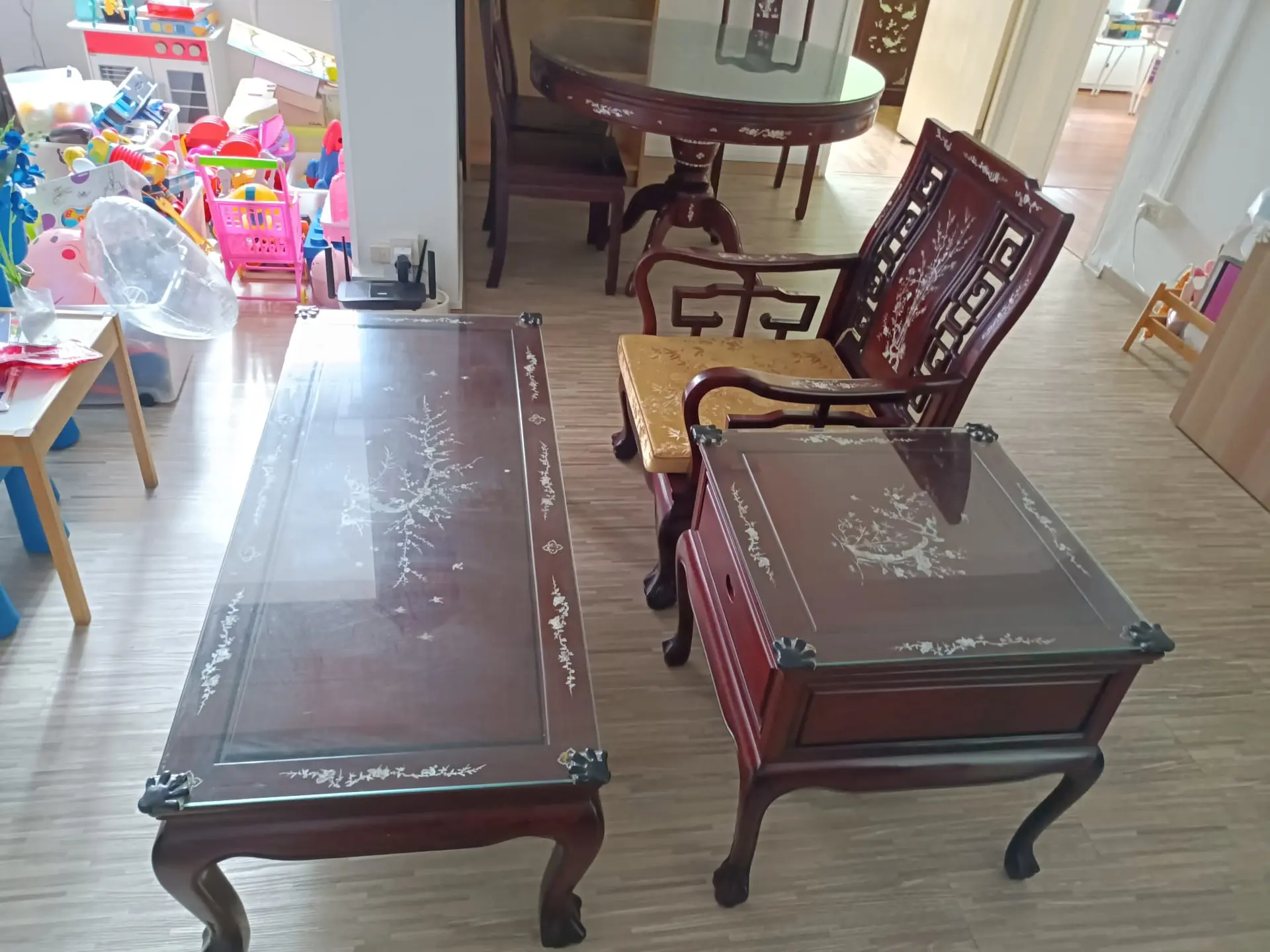
The recycling challenge is chemical, not logistical. Formaldehyde resins contaminate the wood fibre, making the material unsuitable for clean biomass processing. Melamine coatings don't separate cleanly. The adhesives used in lamination introduce plastics into what should be an organic waste stream.
In practice, most particle board furniture in Singapore ends up incinerated at facilities like Tuas South Incineration Plant, with the ash eventually reaching Semakau. Some intermediaries do accept engineered wood for lower-grade processing, but the diversion rate is significantly lower than for solid timber.
How to tell the difference at home: check any exposed edge (the back of a shelf, the underside of a drawer base, a chipped corner). Solid wood shows grain running consistently through the cross-section. Particle board shows compressed fibres — a distinctive speckled, crumbly texture. MDF appears smooth and uniform, almost like dense cardboard.
What this means when you're clearing furniture
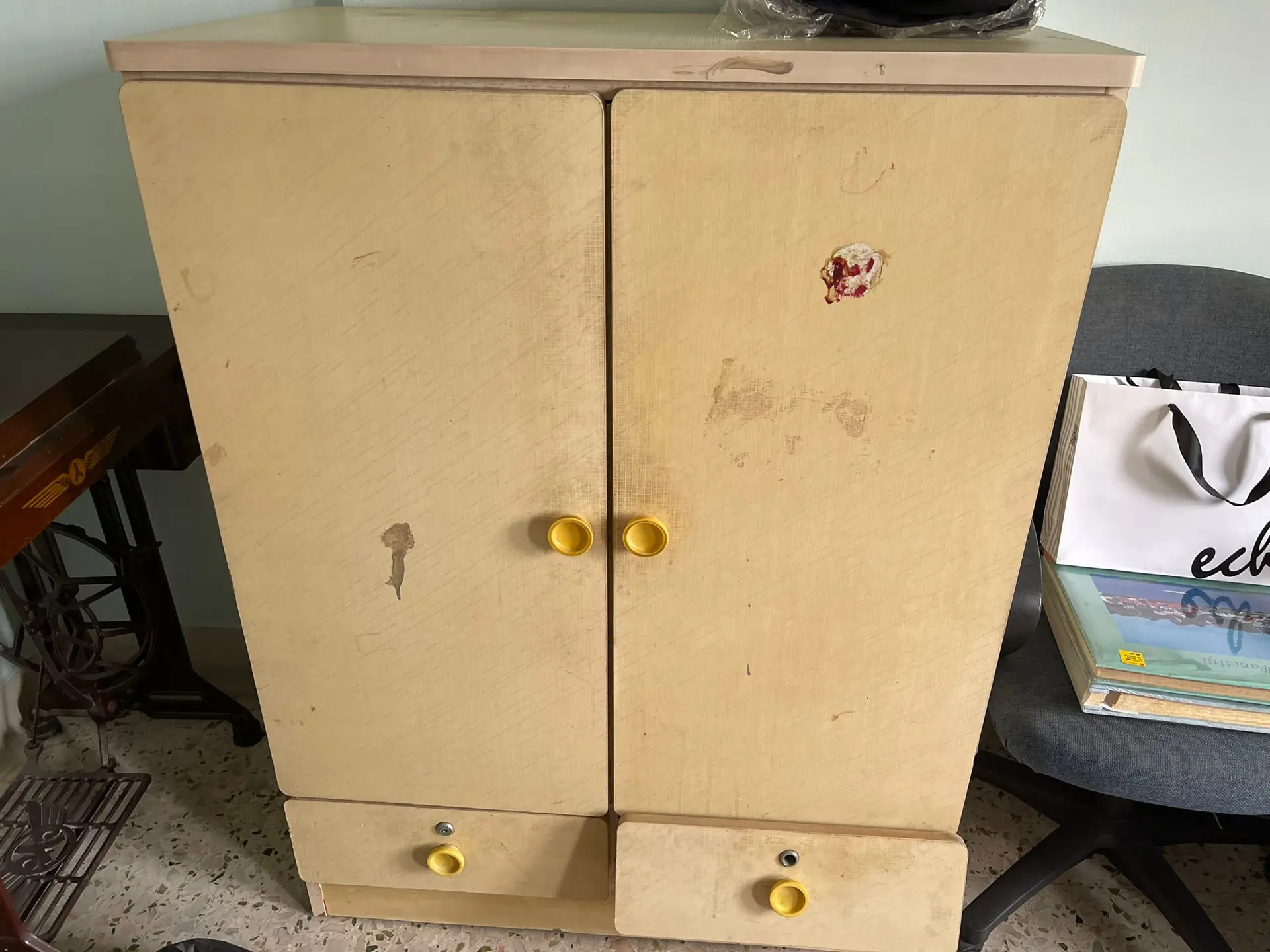
We sort materials after collection. A live-edge timber bar table (like the one we cleared from a Clementi home) goes into a completely different stream than a laminated TV console from the same job. The homeowner doesn't need to separate anything — that's our work — but understanding the distinction explains why we ask for photos before quoting. Material type affects handling, weight, and routing.
For HDB residents: your town council's bulky item collection requires you to dismantle furniture first. An intact solid wood wardrobe won't be collected whole. We handle dismantling as part of the job, and we do it with awareness of what the material is — careful disassembly for reusable timber, efficient breakdown for particle board heading to disposal.
For condo residents: building management approval for bulky item removal is your responsibility to arrange ahead of the pickup. Rules differ per MCST, and some restrict disposal to specific days or loading bay time slots.
Mistakes we see after a decade of wood furniture clearing
Assuming all "wood" furniture is recyclable. That IKEA KALLAX shelf looks like wood. It's paper-wrapped particle board. Recyclability is minimal compared to your grandmother's solid nyatoh dresser.
Painting over solid timber before disposal. Multiple coats of synthetic paint on a teak table reduce its reuse value. The wood underneath might be beautiful — but stripping paint adds cost that makes second-hand routing less viable.
Leaving furniture in damp conditions before collection. Mould-affected solid wood loses its reuse potential quickly in Singapore's humidity. If you're planning disposal, don't store pieces in an uncovered void deck or balcony for weeks beforehand.
Mixing construction timber with furniture timber. Renovation offcuts (treated pine studs, pressure-treated decking) contain chemical preservatives like CCA that make them hazardous. These require different disposal routing than untreated furniture timber.
Frequently asked questions
Can I request that my solid wood furniture specifically goes to recycling? We route reusable items into second-hand channels and recyclable materials to appropriate processing facilities wherever possible. We can't guarantee a specific outcome for every piece, but solid timber consistently has better diversion outcomes than engineered wood.
Does the type of wood affect the disposal quote? Weight is the primary factor. Solid hardwood furniture is significantly heavier than particle board equivalents — a 1970s teak wardrobe can weigh three to four times what a modern flat-pack version does. Photos help us assess this before the job.
What about plywood — is that recyclable? Plywood sits between solid timber and particle board. It's real wood veneers layered with adhesive. Some processing facilities accept it; others don't. It depends on the adhesive type and whether the plywood has been treated or coated. Better recycling potential than MDF, worse than solid timber.
Ready to clear wooden furniture responsibly?
Send us photos of what you need cleared via WhatsApp. We'll assess the materials, provide a free quote, and handle everything from dismantling to sorting and responsible routing.
WhatsApp us at 9888 1292 — snap a few photos of the pieces and we'll get back to you with a quote. Surcharges may apply for after-hours, Sundays, or walk-up buildings without lift access.