Furniture Disposal Singapore
The Bookshelf, the Drawers, the Dining Set and the Desk
You've already sorted the big stuff. Maybe the sofa's been dealt with, the wardrobe is gone, and the bed frame's out the door. What's left is the awkward middle pile: a tall bookshelf, a chest of drawers nobody wants, an old dining table with four chairs, and that study desk from a decade ago. Individually, none of them feel like a big job. Together, they're a logistical headache you don't want to solve piece by piece.
One trip that takes the whole lot is how this makes sense. You send us photos of everything, we quote the load, and the crew clears it in a single visit. No separate arrangements for each item.
The Free Options — and When They Don't Work
Paying for disposal isn't the only route, and we won't pretend otherwise.
Your town council will collect bulky items at no charge. The catch: you need to dismantle everything yourself first. A whole bookshelf or an intact dining table won't be picked up. You break it down, bundle it, and wait for the scheduled collection day. If you've got the tools, the time, and a place to store the pieces while you wait, that's a legitimate option. Our town council bulk item collection guide walks through the process.
Pieces in good condition can be given away. Listing a solid dining set or a decent chest of drawers on community groups or marketplace apps is worth trying if you have time to spare.
We're the paid option for when you don't want to dismantle a cam-locked bookshelf on your living room floor, carry a marble tabletop down the corridor, or wait for a scheduled collection day. We quote from photos, the quote is free, and nothing is charged that wasn't in that quote. Surcharges do apply for after-hours, Sundays, public holidays and stair carries, and they're in the quote before you agree to anything.
What We Take and How Each Piece Leaves the Flat
In our 10+ years of clearing Singaporean homes, we've handled every configuration of everyday furniture. Each type has its own quirks.
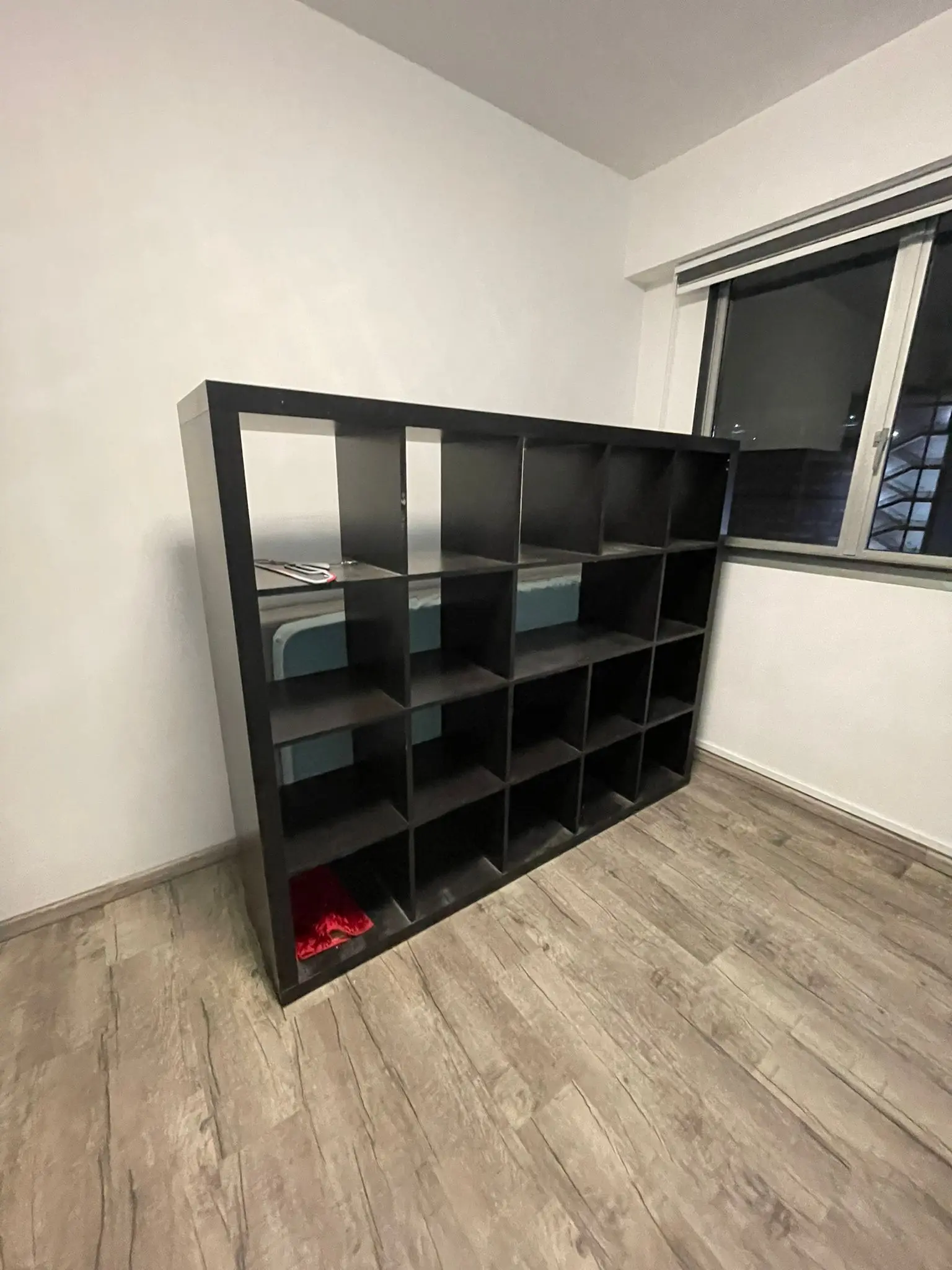
Bookshelves and display cabinets. A full bookshelf is dangerously heavy and nearly impossible to manoeuvre through a doorway. Empty every shelf before we arrive. Tall units are often secured to the wall with anti-tip brackets — mention this in your photos so the crew comes prepared. Cube shelves and flat-pack units are held together with cam locks that release in a specific sequence; forcing them apart splits the panels. Glass shelves and glass cabinet doors get lifted out and carried separately from the frame. More detail in our bookshelf and shelving unit disposal guide.
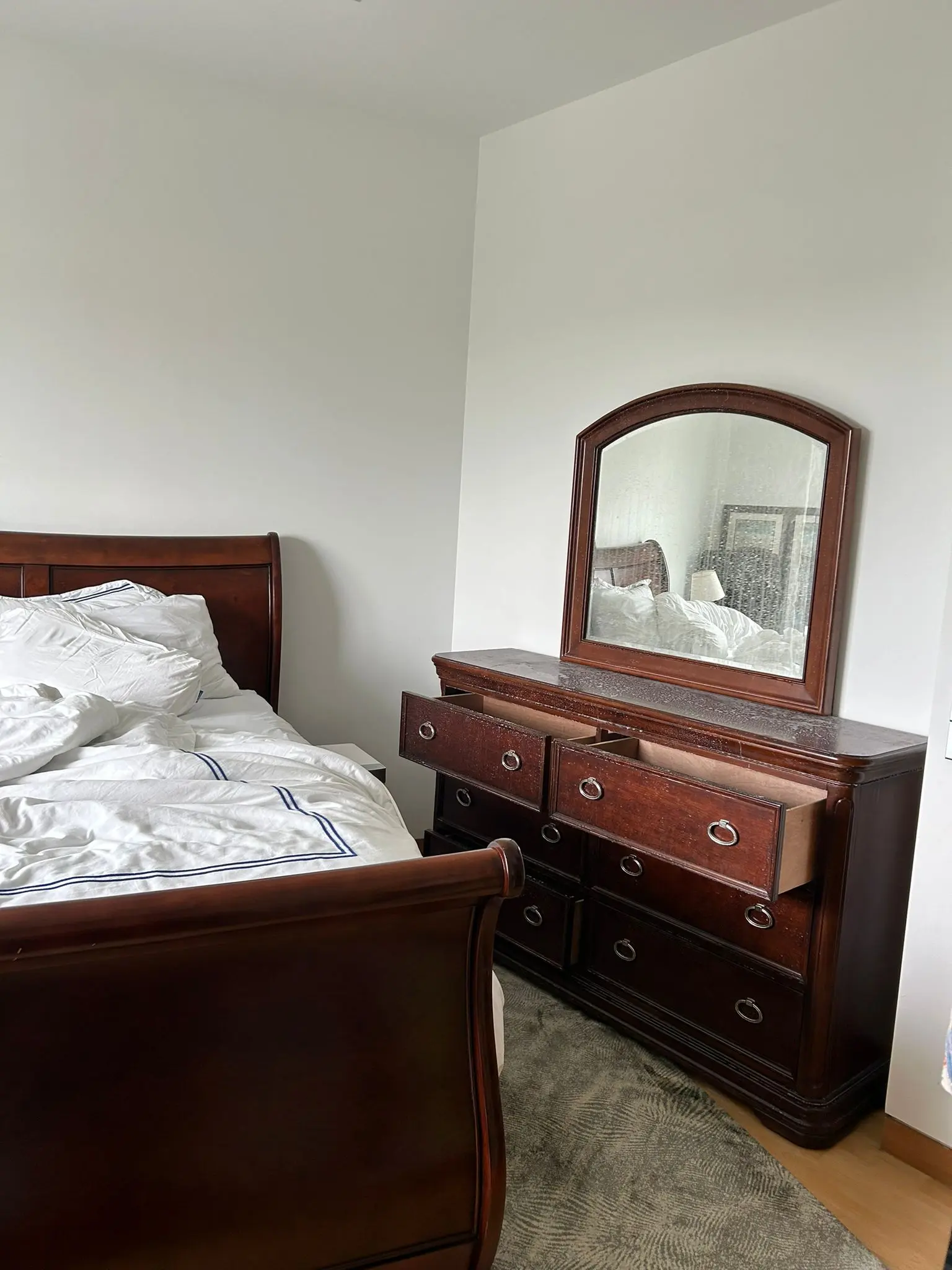
Chests of drawers and dressers. Every drawer comes out and goes down separately — the carcass alone is half the weight. A dresser with a mirror? The mirror unbolts from the back before anyone lifts the main body. Solid teak pieces from the 60s and 70s are a different beast from modern particleboard; both leave the flat, just with different handling.
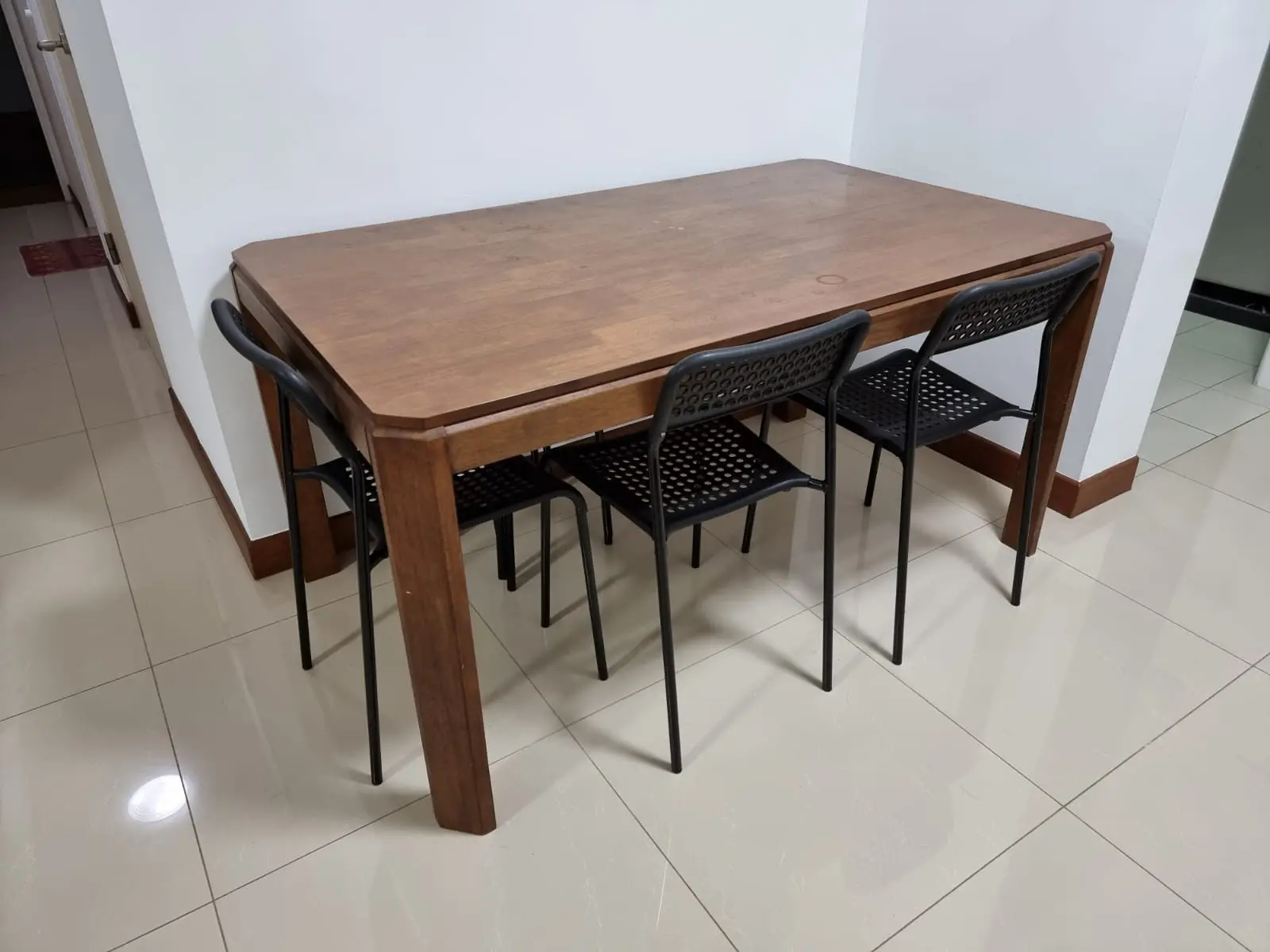
Dining tables and chairs. Table legs unbolt from the underside. A glass or marble top is carried separately from the base. Extension leaves count as part of the table, so include them in your photos. Chairs stack or nest for the corridor carry. Our dining table and chairs disposal post covers the full process.
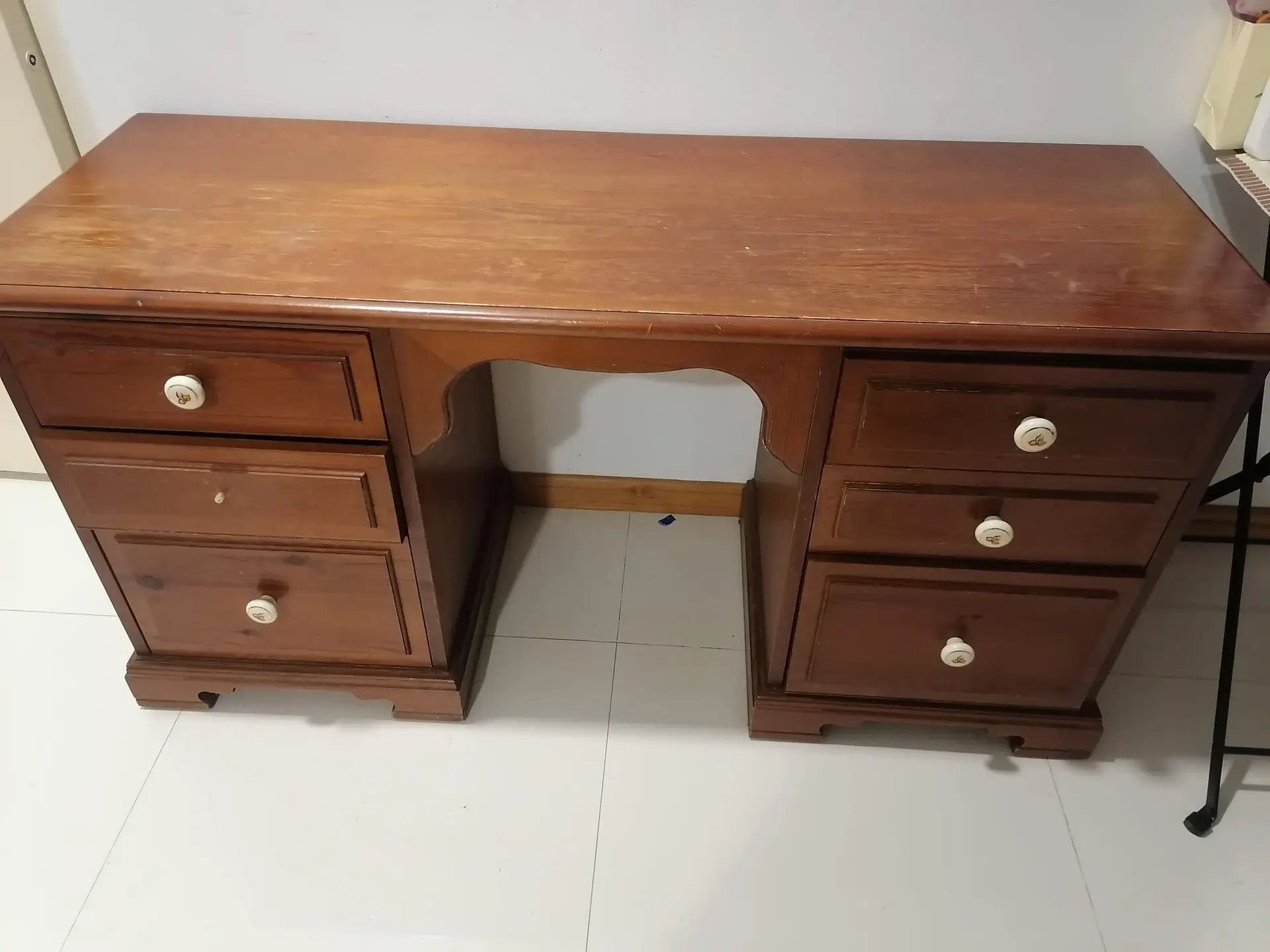
Study desks. A desk with a hutch has the hutch lifted off first. Twin-pedestal desks are heavy but manageable once the drawers are pulled. Clear everything off the surface and out of the drawers before the crew arrives.
TV consoles and shoe cabinets. These go out whole if they fit through the door and into the lift. If they don't, they come apart in panels. Empty them completely — a shoe cabinet full of shoes is nobody's idea of a good carry.
Before We Arrive
Two things make every job faster.
Empty all drawers, shelves and cabinets. Anything left inside is extra weight and extra risk.
If a bookshelf or cabinet is screwed to the wall, tell us in your WhatsApp photos — a quick note like "bolted to wall" is enough.
Where It All Goes
We sort the load once it's collected. Pieces that can be reused are kept for reuse where that's possible. Metal fittings and hardware go to recycling, and so does paper and cardboard. Everything else passes through intermediaries who sort it further before the remainder reaches its final destination.
HDB Flats
No service lift in an HDB block — your furniture goes down in the standard passenger lift. That means every piece needs to fit through your front door, along the corridor, and into that lift. Oversized items get dismantled in the flat. For HDB-specific guidance on clearing furniture, we've written a longer walkthrough.
Condos
Your MCST sets the rules, and those rules differ from building to building. Lift booking, approved moving hours, and any padding requirements are between you and your management office — arrange these before the pickup day. Lift padding, where the MCST requires it, is provided by building management. Let us know the access rules when you send your photos, and we'll plan accordingly.
FAQ
Can I quote several pieces together in one message? Absolutely — that's the way most people do it. Send photos of every item you want gone in a single WhatsApp message. We quote the full load as one job. One trip, one price, no need to negotiate each piece separately.
Will you come for just one small item, like a single shoe cabinet? We will. Send a photo and we'll quote it. Most customers find it makes more sense to bundle a few items together, but a single piece is fine if that's all you need cleared.
I have solid wood furniture in good condition — do you buy it or offer a trade-in? No. We're a disposal service, not a buyback operation. We don't pay for items, offer credit, or take anything in trade — regardless of age, condition, or material.
Get a Free Quote Now
Send photos of your bookshelf, drawers, dining set, desk — whatever the load looks like — and we'll reply with a quote. No obligation, no charge for the quote itself.
WhatsApp us at 9888 1292 or use our contact form.