Post-Renovation Cleanup: What Your Contractor Actually Leaves Behind
By Junk Value Team
Your Renovation Is "Done" — So Why Does Your Flat Still Look Like a Construction Site?
You've waited weeks. Maybe months. The contractor sends a final photo: new tiles gleaming, fresh cabinetry installed, a quick broom sweep across the floor. "All done, boss." You show up with your keys, ready to start arranging furniture — and stop dead at the doorway.
Most readers eventually want a number rather than a checklist. That's what residential pickup is for — send photos, get a clear quote, and we'll explain what drives the price.
Bags of broken tiles stacked in the bomb shelter. Old cabinet carcasses leaning against the kitchen wall. Offcuts of PVC piping in the yard. Packaging foam from your new fittings scattered across the bedroom. A fine layer of cement dust coating every horizontal surface.
This isn't a horror story. In our 10+ years of clearing Singaporean homes, this is Tuesday. Especially across Jurong West's older HDB blocks — the ones built in the '80s and '90s — where full-flat renovations mean ripping out decades of original fittings.
The Expectation Gap Nobody Warns You About
Here's the disconnect most homeowners don't realise until it's too late: your renovation quote almost never includes full debris removal.
Contractors typically include what the industry calls a "basic housekeeping" scope. That means:
- Sweeping visible dust and loose debris off floors
- Removing their own tools and equipment
- Hauling away the most obvious large rubble (sometimes)
What they don't include — unless you explicitly negotiated it — is the removal of:
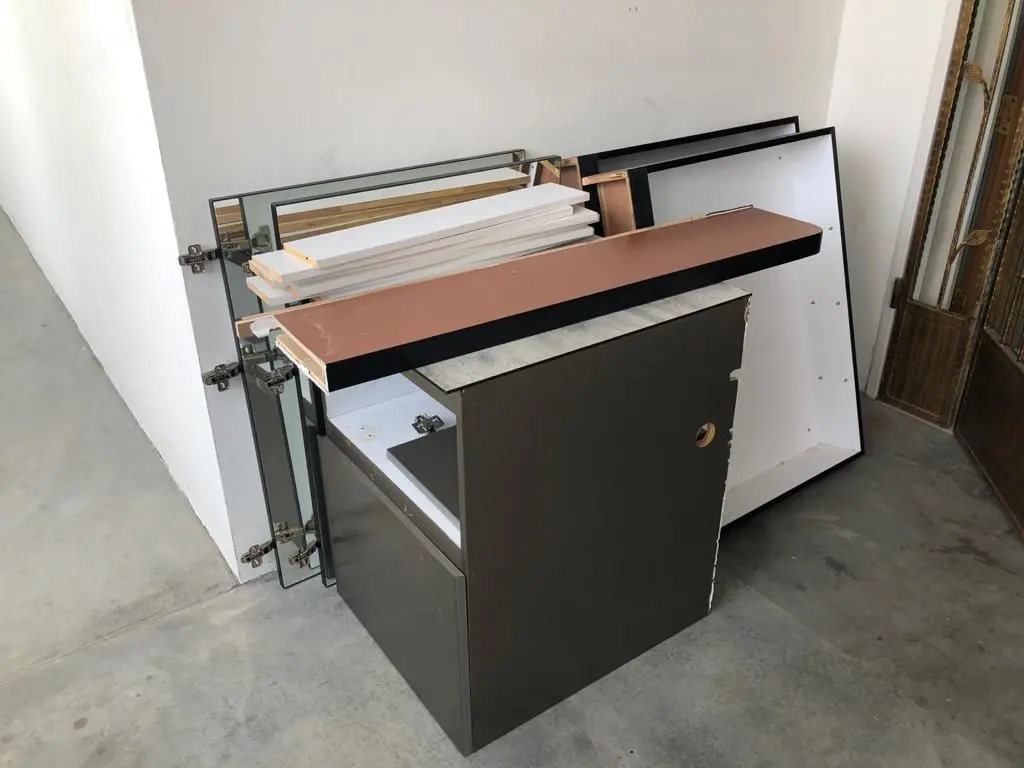
- Old fixtures they dismantled — your original kitchen cabinets, built-in wardrobes, vanity counters
- Packaging waste from new installations — styrofoam blocks, cardboard, plastic wrapping, cable ties
- Cut-off materials — pipe offcuts, electrical conduit pieces, metal brackets
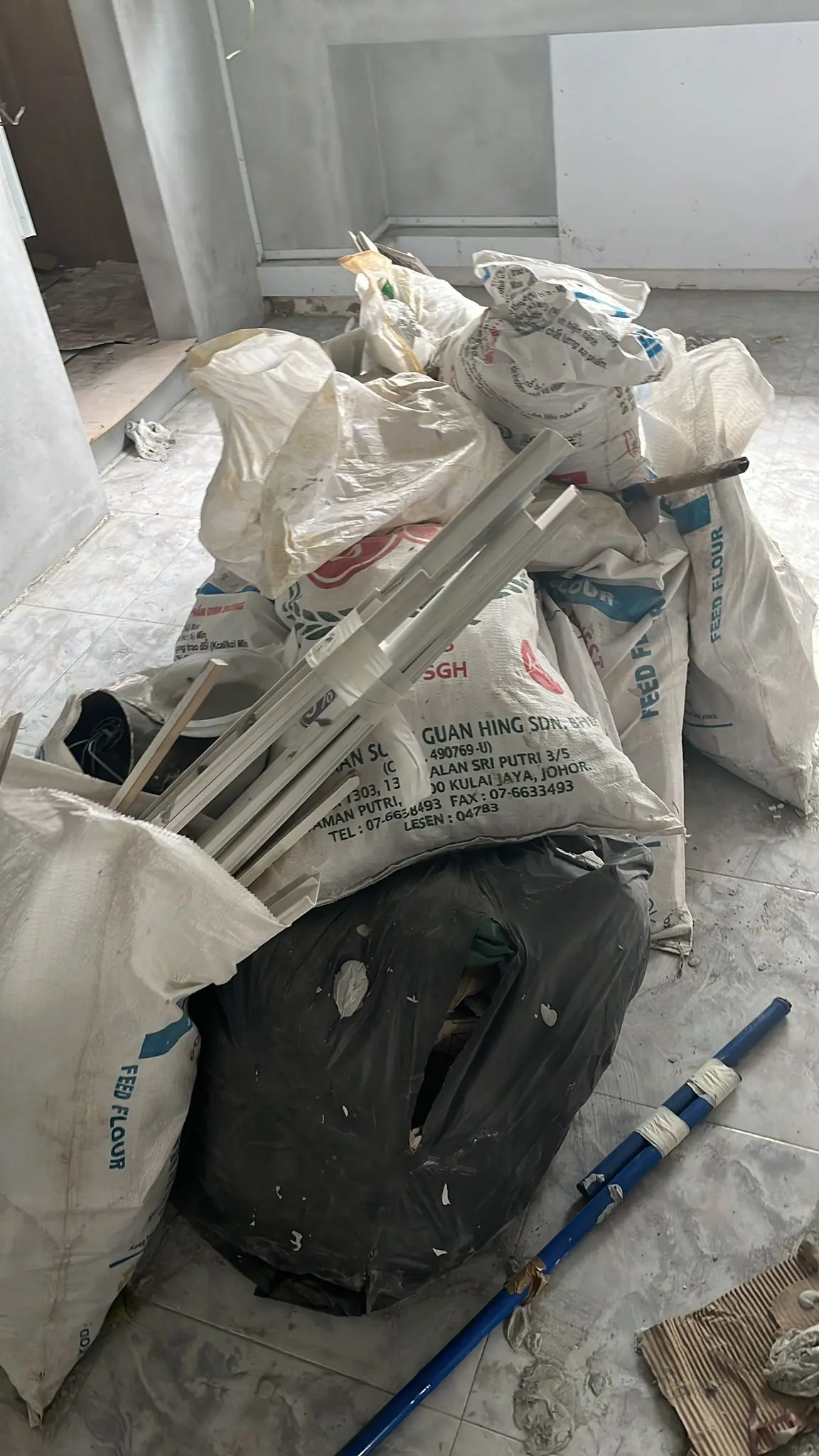
- Bagged debris they couldn't fit in one lorry run — tile fragments, hacked concrete, old waterproofing membrane
- Dust sheets and protective coverings — the plastic sheeting taped over your windows and doors
Some contractors are upfront about this. Many aren't. And by the time you realise, they've moved on to the next job.
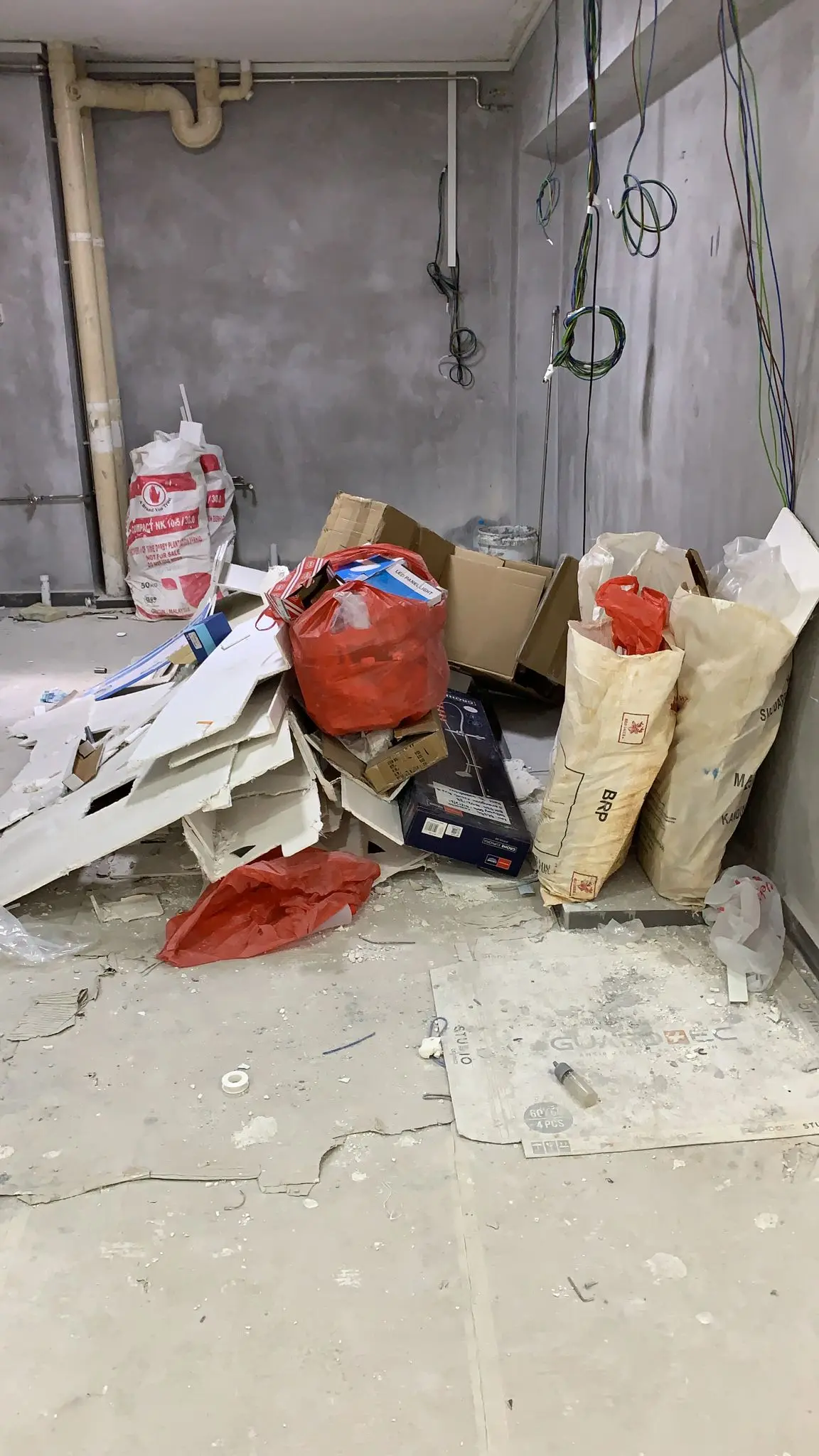
What We Typically Find in Post-Reno Flats
In Jurong West alone, we've cleared post-renovation debris from blocks along Jurong West Street 41, 42, 52, and the older clusters near the market areas. The pattern is remarkably consistent.
The Heavy Stuff (What You Can't Shift Alone)
Old solid-wood wardrobes from the original flat. These aren't IKEA flatpacks — they're dense hardwood or plywood structures that were assembled in situ decades ago. They can't fit through your front door intact. Your contractor hacked them apart but left the carcass pieces stacked in the living room corner.
Concrete rubble in woven bags. Each bag weighs 20–30 kg. There might be six to ten of them tucked in your bomb shelter or utility area. Your contractor's lorry was full on the last run, and "someone will come back for those." Nobody came back.
The Awkward Middle Ground
Cabinet doors still on hinges. Laminate countertop slabs. Bathroom vanity mirrors (intact but removed). Old window grilles. These items are too bulky for your regular rubbish chute but not dramatic enough for your contractor to prioritise.
The Invisible Layer
Cement dust. It gets everywhere — inside electrical points, on top of door frames, inside your new cabinets. A basic contractor sweep doesn't address this. You'll need a deep clean before moving in, and the debris removal needs to happen first so cleaners can actually reach the surfaces.
HDB vs Condo: Different Buildings, Different Headaches
HDB Flats (Jurong West and Beyond)
The logistics challenge in HDB blocks is straightforward but physical. There's no service lift — you're working with the standard passenger lift that every resident uses. Heavy cabinet carcasses and bags of tile rubble need to fit inside that lift, or they're going down the stairs.
For older walk-up blocks (4–5 storeys, no lift at all), every bag of concrete comes down manually. Surcharges apply for stair carry — confirmed at quote stage.
What about the town council? Jurong-Clementi Town Council does offer bulky-item collection, but here's the catch most people miss: they require items to be dismantled first. A whole wardrobe carcass sitting at the void deck won't get picked up. You'd need to break it down into manageable pieces yourself, then schedule a collection slot. For post-reno debris like concrete bags and mixed construction waste, the town council isn't your solution at all — that's not household bulky waste.
Condos and Private Properties
Different challenge. Your MCST likely requires advance booking for the service lift, and there may be designated disposal hours. You'll need to arrange lift access and any required padding with your building management directly — rules differ per condo, and this is the owner's or tenant's responsibility to coordinate ahead of the pickup.
The upside: service lifts in condos are larger, so intact cabinet shells and long countertop pieces can usually go down in one piece without dismantling.
Common Mistakes We've Seen Over 10+ Years
Mistake #1: Assuming "renovation debris disposal" was in your reno contract. Go back and check. Look for line items like "haulage" or "debris removal." If it's not explicitly listed with a quantity (e.g. "2 lorry loads of debris removal included"), it probably wasn't priced in.
Mistake #2: Waiting too long after handover. Your renovation contractor's obligation ends at handover. If you notice leftover debris three weeks later, good luck getting them to come back. We've had customers in Jurong West call us after sitting on bags of rubble for a month because they kept hoping the contractor would return. He didn't.
Mistake #3: Trying to use the rubbish chute for construction waste. Concrete fragments, tile pieces, metal brackets — none of this belongs in your HDB rubbish chute. It damages the chute mechanism and can result in fines from your town council. We've seen it attempted. Don't.
Mistake #4: Underestimating the volume. "It's just a few bags" turns into 15 bags of tiles, two wardrobe shells, a bathroom vanity, packaging from the new kitchen, and three rolls of used dust sheeting. Post-reno waste accumulates in corners and behind doors. Send us photos of everything — including what's hiding in the bomb shelter.
How We Handle the Gap
The process is simple. WhatsApp us photos of what's been left behind — every room, every pile. We'll give you a free quote based on volume and access logistics. Our crew arrives with the right vehicle (van, lorry, or larger truck depending on volume), clears everything from inside the flat down to the loading point, and routes materials responsibly — recyclable metals and paper go through proper recycling channels, reusable items get routed into second-hand channels where possible, and residual waste goes through licensed intermediaries for proper processing.
For Jurong West HDB flats specifically, we know the block layouts, the lift dimensions, and the void deck access points. No guesswork.
Mini-FAQ
Q: My contractor said "disposal included" but left bags of rubble. Can I make them come back? Technically, if your contract states disposal is included, you have grounds to insist. Practically? Most homeowners find it faster and less stressful to engage a dedicated disposal service and move on. The back-and-forth with contractors who've already started their next project rarely ends well.
Q: Can I just leave renovation debris at the void deck for town council collection? No. Construction and renovation waste (concrete, tiles, hacked walls) is not covered under the town council's bulky-item collection scheme. That service is for household items like old furniture — and even then, items must be dismantled first. Leaving reno debris at the void deck risks a fine.
Q: How quickly can you clear post-renovation debris? Subject to availability. We typically work within 24–48 hours of confirmed booking. Urgent requests can sometimes be accommodated — surcharges may apply for after-hours, Sundays, or public holidays. Send photos via WhatsApp and we'll confirm timing.
Ready to Bridge the Gap?
Don't let your contractor's leftovers delay your move-in. Our post-renovation cleanup service clears the rubble, old fittings, and packaging in one visit. Send us photos of what they left behind — we'll quote you fast and clear it faster.
WhatsApp us at 9888 1292 — free photo-based quote, no obligations.