Narrow Corridor Furniture Removal: When Your Sofa Won't Fit Through the Door
By Junk Value Team
Your Sofa Got In. Why Won't It Come Out?
Here's a scenario we see at least twice a week in Marine Parade condos: a homeowner wants to dispose of an L-shaped sectional sofa. They bought it five years ago. The delivery team brought it in — somehow. Now, with a renovation looming or a lease ending, the thing simply will not navigate the corridor back out.
If you'd rather hand the whole thing to a crew, residential clearance flow is what we do — we'll send a clear photo quote first so you know what affects the price before pickup day.
It's not your imagination. It's geometry.
Singapore corridors — particularly in older condo developments along Marine Parade Road and East Coast — were designed to minimum BCA specifications. We're talking 1.2m wide common corridors, 900mm doorframes, and 90-degree turns with zero margin. That sofa went in when the walls were bare plaster and the door hadn't been hung yet. Today, with laminate flooring, built-in shoe cabinets, and a fire-rated front door swinging inward, the clearance has shrunk by centimetres that matter.
Why This Becomes Urgent
Most people discover the problem on moving day. The movers arrive, attempt the pivot, fail, and leave the sofa blocking the corridor while the clock ticks on their hourly rate. Or worse — the condo MCST has allocated a two-hour service lift slot, and half of it is gone before anyone admits the piece won't fit.
In our 10+ years of clearing Singaporean homes, we've learned that the time to think about corridor access is before the removal crew shows up — not during.
Measure First: The 15-Minute Check That Saves Your Day
Before you book any disposal or removal service, grab a tape measure and check three things:
1. The narrowest point in the exit path. This isn't always the front door. It might be the turn from the living room into the foyer, the corridor elbow near the bomb shelter, or the service lift lobby entrance. Measure width and height at every pinch point.
2. The diagonal of the item. A sofa that's 2.4m long and 0.9m deep has a diagonal of roughly 2.56m. That diagonal is what matters when you tilt or pivot. If your corridor turn is tighter than that diagonal, the piece physically cannot rotate through without dismantling.
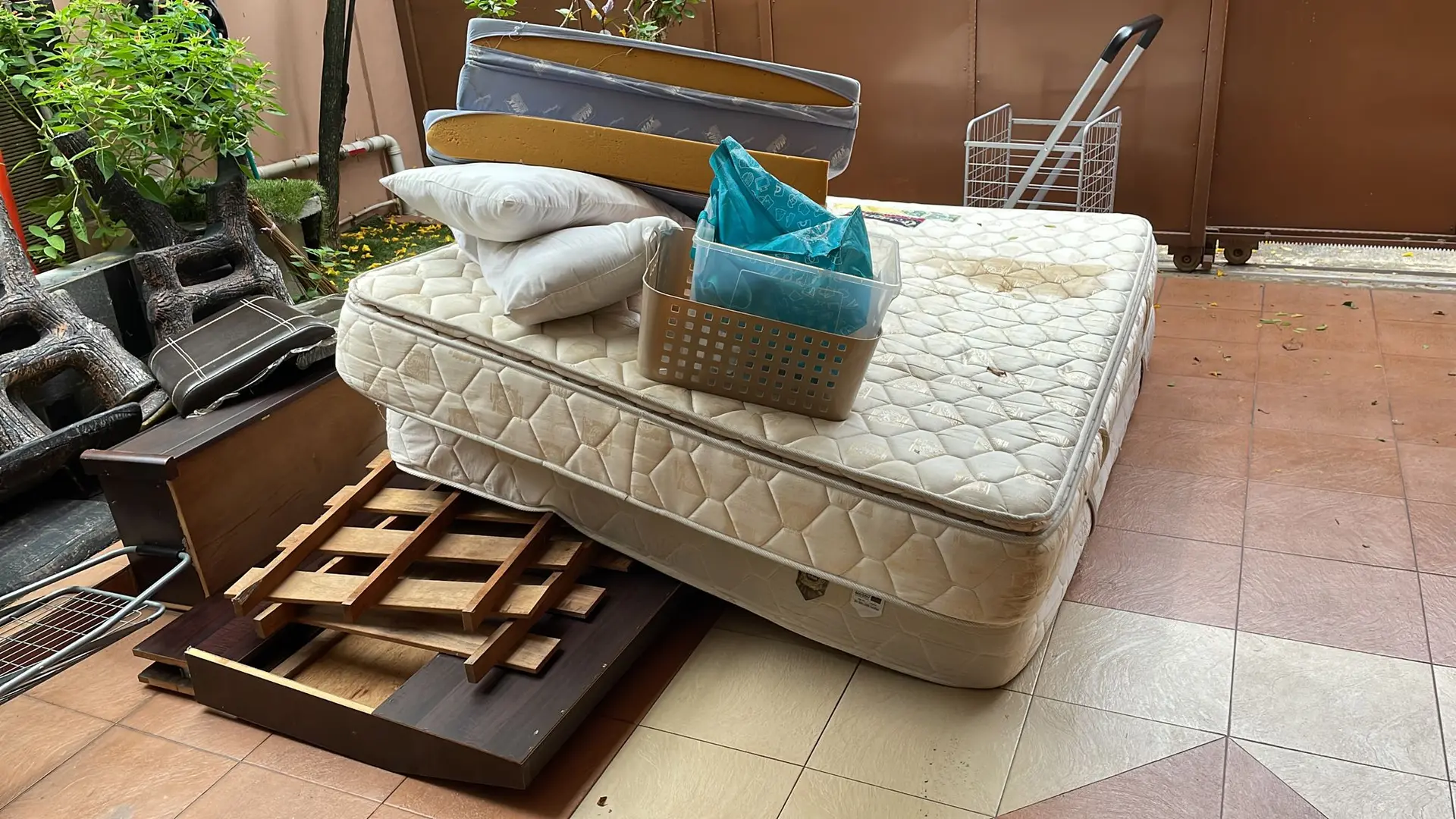
3. The pivot angle. Stand at the tightest turn and imagine swinging the item around it. A straight corridor with a 90-degree turn into the lift lobby is the classic problem. The wider the item's depth, the more corridor width you need to execute that turn. For king-size bed frames (typically 1.93m × 2.03m when assembled), the answer is almost always: it won't pivot. It needs to come apart.
Items That Consistently Cause Problems
Not everything gets stuck. Single armchairs, dining tables with removable legs, and standard queen mattresses (folded or compressed) usually clear most corridors. Here's what doesn't:
- L-shaped sectional sofas — the joined corner section is the killer. Even "modular" designs often have a rigid L-bracket that won't separate without tools.
- King-size bed frames — especially platform beds with solid headboards. The side rails alone are manageable; the headboard-plus-frame assembly is not.
- Oversized wardrobes (wider than 1.5m) — these were often assembled inside the room. They were never designed to exit whole.
- Solid wood dining tables with fixed legs — a 1.8m teak table with non-removable legs and a 0.9m width will jam at any standard corridor turn.
How We Handle Tight-Access Situations
When a customer sends us photos via WhatsApp — showing the item, the corridor, and the doorway — we can usually tell immediately whether partial dismantling is needed. Here's what that looks like in practice:
Partial Dismantling On-Site
For sectional sofas, we separate the modules at the connector points. Some require Allen keys; others need the upholstery staples removed along the base to access hidden bolts. For wardrobes, we remove doors, shelves, and then break down the carcass panel by panel. Solid wood pieces from the 50s and 60s — the kind we regularly clear from older HDB flats — are often joined with dowels and wood glue, requiring careful prying to avoid splintering that could gouge corridor walls.
Protecting the Exit Path
Walls get scratched. Door frames get chipped. Floor tiles crack under dropped weight. We work with moving blankets and cardboard edge guards to protect surfaces during extraction. This matters especially in condos where the MCST will charge for common-area damage.
Service Lift Logistics (Condo-Specific)
For condos and commercial buildings, the service lift is your exit route for bulky items. But here's what many residents don't realise: you need to book the service lift through your building management ahead of time. Rules differ per building — some require 48 hours' notice, others need a refundable deposit. Some MCSTs mandate lift padding before any furniture movement, and that padding is provided and arranged through the building management, not by us.
Sort this out before removal day. We cannot liaise with your MCST on your behalf — that's between you and your management office.
HDB Realities
HDB blocks don't have service lifts. Your furniture exits via the standard passenger lift — which maxes out at roughly 1.5m deep in most older blocks. If the item won't fit in the lift after dismantling, it's going down the stairwell. That's labour-intensive, and surcharges apply for stair carry. For walk-up blocks without any lift, the same applies — floor level and item weight determine the additional effort involved.
Common Mistakes We've Seen Over 10+ Years
Assuming "it came in, so it'll come out." Renovations change clearances. Built-in cabinets, new doors, and tiled feature walls all eat into the space that existed during initial delivery.
Not photographing the path. When you request a quote, send us photos of the item and every turn between it and the building exit. A top-down video walking the route is even better. This lets us quote accurately and bring the right tools.
Waiting until the last day of the lease. Tight timelines mean less flexibility. If dismantling takes longer than expected, or if the service lift is booked out, you're stuck paying penalty rent. Give yourself a buffer.
Mini-FAQ
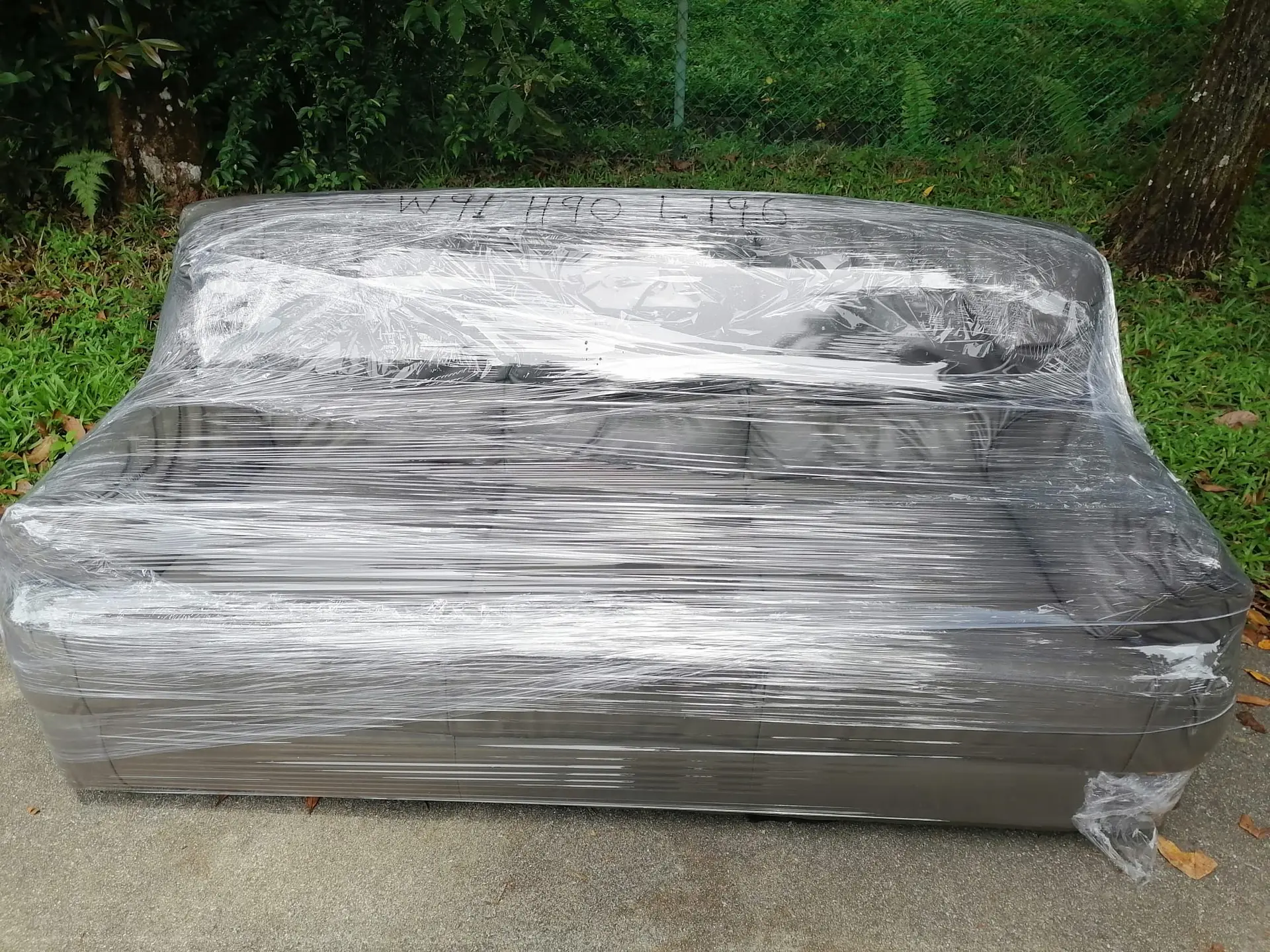
Q: Can you remove a sofa that's too big for my corridor without damaging it? A: If the goal is disposal, we'll dismantle as needed to get it out efficiently. If you want the piece preserved intact for resale or donation, we'll assess whether that's physically possible given your corridor dimensions — but in many cases, partial disassembly is unavoidable.
Q: Do I need to be home during the removal? A: Someone needs to provide access and be contactable. For condos, you'll also need to have arranged service lift access with your management beforehand.
Q: What if my item is stuck and I need it gone urgently? A: Urgent jobs are subject to availability, and additional charges may apply. Send us photos via WhatsApp and we'll let you know what's feasible for your timeline.
Ready to Get That Stuck Furniture Out?
When it's an oversized sectional that won't make the turn, our sofa removal service handles the on-site dismantling and extraction. Send us a few photos — the item, the corridor, and the doorway — and we'll tell you straight whether it needs dismantling and what's involved. No guesswork, no surprises on the day.
WhatsApp us at 9888 1292 for a free photo-based quote. Fast replies. Honest assessment. It's what we do.