HDB Bulky Item Collection Free: How the Town Council Schedule Actually Works
By Junk Value Team
You've got a wardrobe, two mattresses, and a busted office chair blocking your HDB corridor. The town council offers free bulky item collection. Sounds perfect — until you realise you missed last month's window, the next one is six weeks away, and your renovation contractor arrives on Monday.
The free service exists. It works. But it has rules that trip up most residents, and understanding those rules is the difference between a smooth clearance and a pile of junk sitting at your void deck for weeks.
How the Town Council Schedule Works
Each town council in Singapore runs bulky item collection on a fixed cycle — typically quarterly, though some estates operate monthly for high-density blocks. The schedule is set by your specific town council (Tanjong Pagar TC, Pasir Ris-Punggol TC, Holland-Bukit Timah TC, and so on), and it varies not just by estate but sometimes by individual block clusters within the same neighbourhood.
Most small-office clear-outs aren't emergencies. Commercial Clearance is set up for that case: planned, photo-quoted, no surprise charges.
Finding your date means checking your town council's website or calling their hotline directly. Some TCs post schedules on notice boards at void decks. Others publish PDF calendars online that update every quarter. There's no single centralised portal — you need to identify your TC first, then dig into their specific announcements.
A few things that catch residents off guard:
- The collection date is fixed. If you're not ready by that morning, your items stay where they are until the next cycle.
- Most TCs require you to place items at the designated collection point (usually void deck or bin centre area) by a specific time — often early morning, around 7–8am.
- There's no reminder SMS. No doorbell. No second chance that week.
What Qualifies — and What Doesn't
Town councils accept bulky household items: old furniture, mattresses, large appliances. Straightforward enough on paper.
The catch is the dismantling requirement. Your town council will not collect a fully assembled wardrobe. That three-door teak cabinet from the 1980s? You need to break it down yourself before placing it at the collection point. Same goes for bed frames, large shelving units, and anything that won't fit through the standard refuse collection process in one piece.
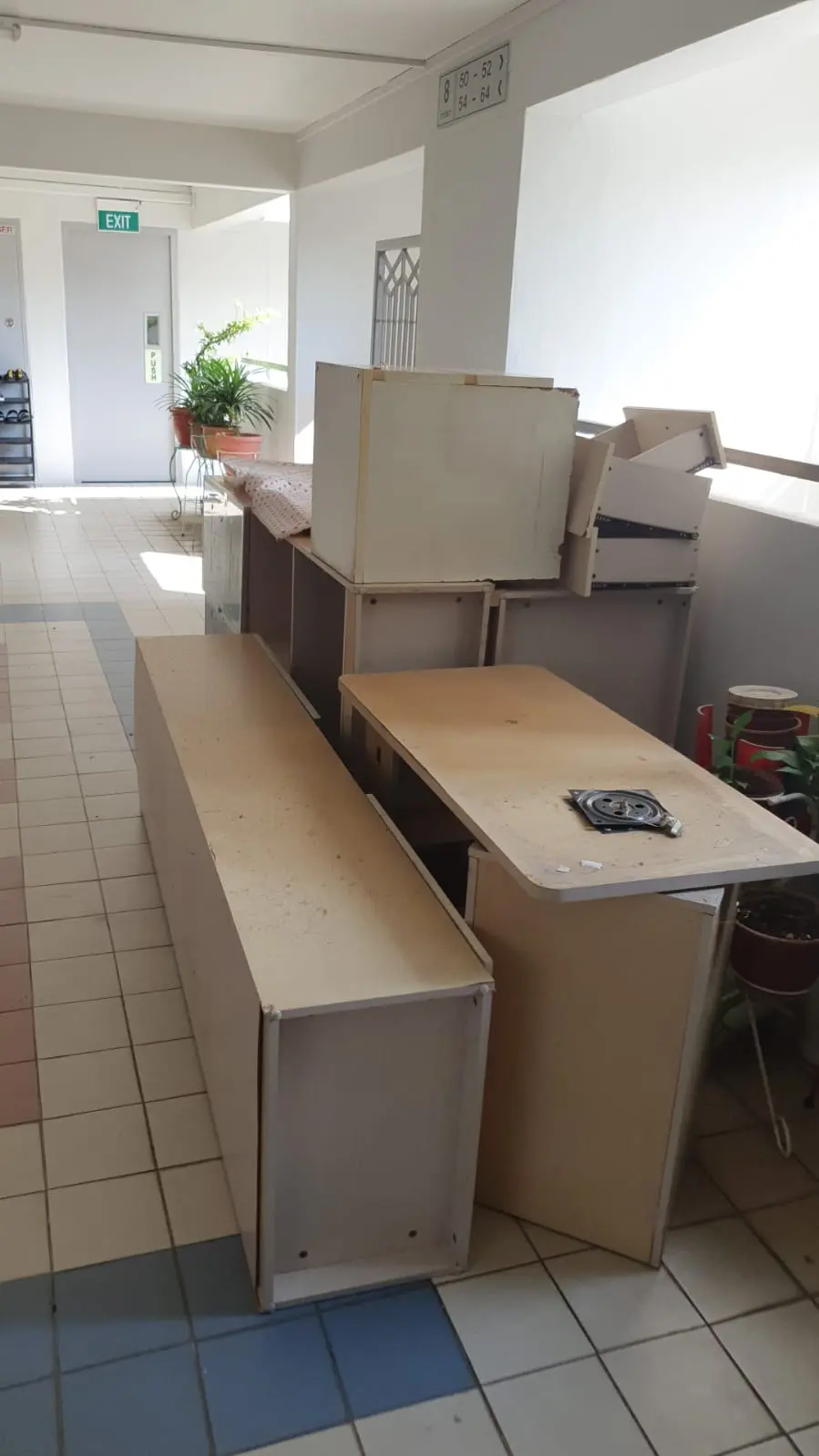
A solid wood wardrobe like the one above is the classic example. Whole, it's far too big for the TC crew to take — and even broken down, getting the panels down a narrow HDB corridor, into a passenger lift, and across to the void deck collection point is a workout most households aren't equipped for. Sofas are the same story: if the pieces are too large for the crew to handle efficiently, they may skip them entirely. When a sofa is the sticking point, we can haul it out for you instead of leaving you to wrestle it downstairs.
Items that typically won't be collected under the free service:
- Renovation debris (concrete, tiles, hacked walls) — this falls under contractor responsibility
- E-waste like old CRT monitors or fridges containing refrigerant — these require specialised disposal routing
- Anything hazardous: paint tins with residual chemicals, gas cylinders, batteries
The Logistics Nobody Warns You About
In our 10+ years clearing Singaporean HDB homes, we've seen the same scenario play out dozens of times. A resident dismantles their wardrobe over a weekend, stacks the panels at the void deck, and waits for collection day. Then it rains. The particleboard swells, disintegrates, and leaves a soggy mess that the TC crew won't touch because it's now considered general waste scattered across the ground.
Or this: a family clears out a deceased relative's flat. Eight pieces of furniture, boxes of belongings, a washing machine. The TC will take bulky items, sure — but not eight at once from a single unit, and not the washing machine without its door removed. The family ends up making three separate trips across three collection cycles, storing dismantled furniture in their own flat between rounds.
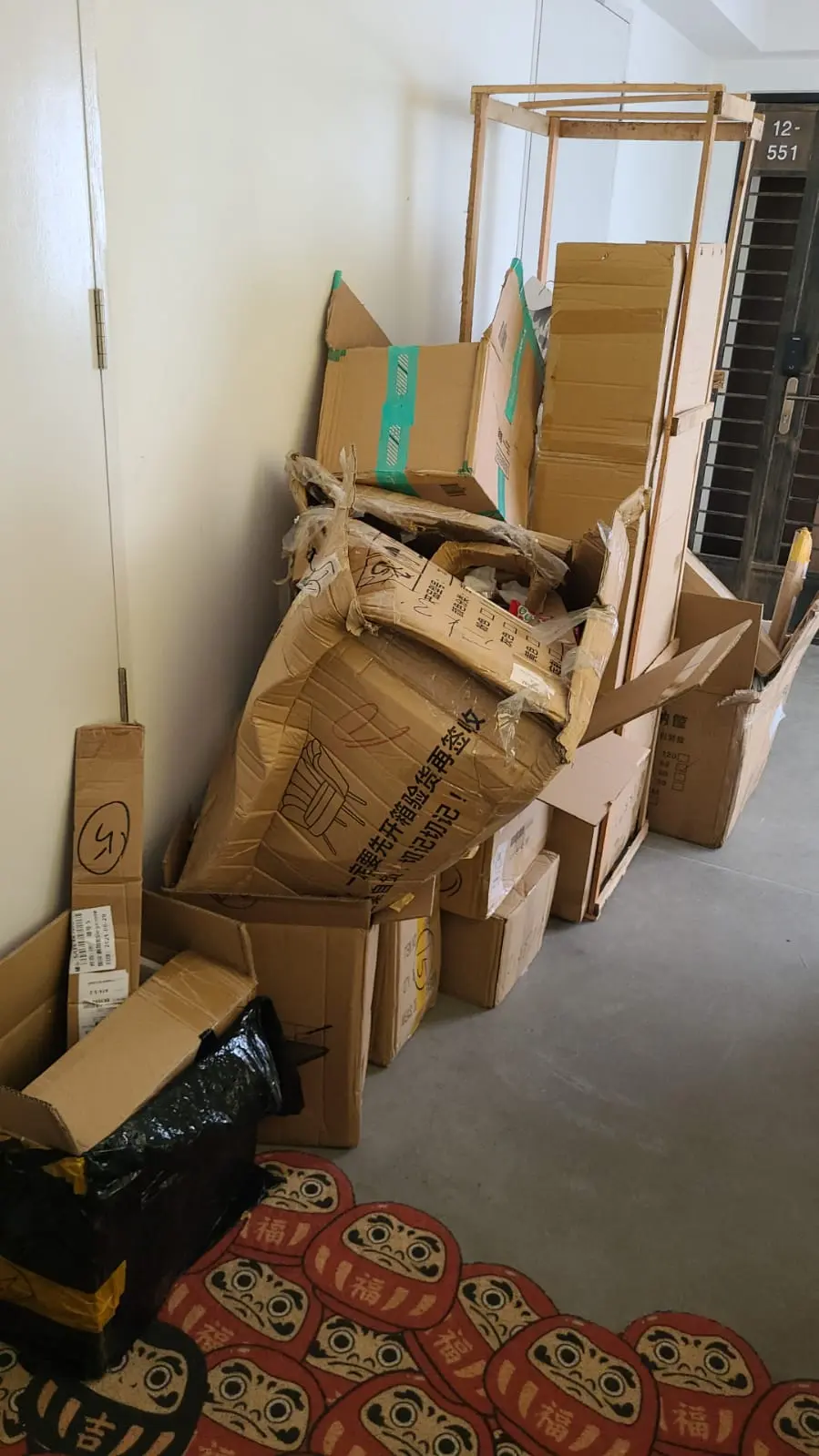
Multi-item scenarios are where the free service becomes genuinely impractical. One mattress placed neatly at the collection point? The TC handles that fine. Five mattresses, a dining set, and a broken treadmill from a full flat clearance? You're looking at multiple collection cycles, self-dismantling, and the physical labour of moving everything downstairs yourself — through a standard passenger lift that fits maybe one mattress at a time if you angle it right.
When the Free Service Is Enough
Be honest with yourself about the scope. The TC collection works well when:
- You have one or two items, already disassembled or small enough to carry
- You can wait for the next scheduled date (sometimes 4–8 weeks away)
- You're physically able to transport items to the void deck collection point yourself
- The items are standard household furniture — no appliances with refrigerant, no e-waste
If all four boxes are ticked, use the free service. It exists for exactly this purpose, and there's no reason to spend money when your town council has you covered.
When It Falls Short
The free service wasn't designed for full-flat clearances, tight renovation timelines, or elderly residents who can't physically dismantle and transport heavy furniture. It also doesn't account for the reality that many older HDB flats — especially walk-up blocks without lifts — make moving bulky items to ground level genuinely dangerous without proper manpower.
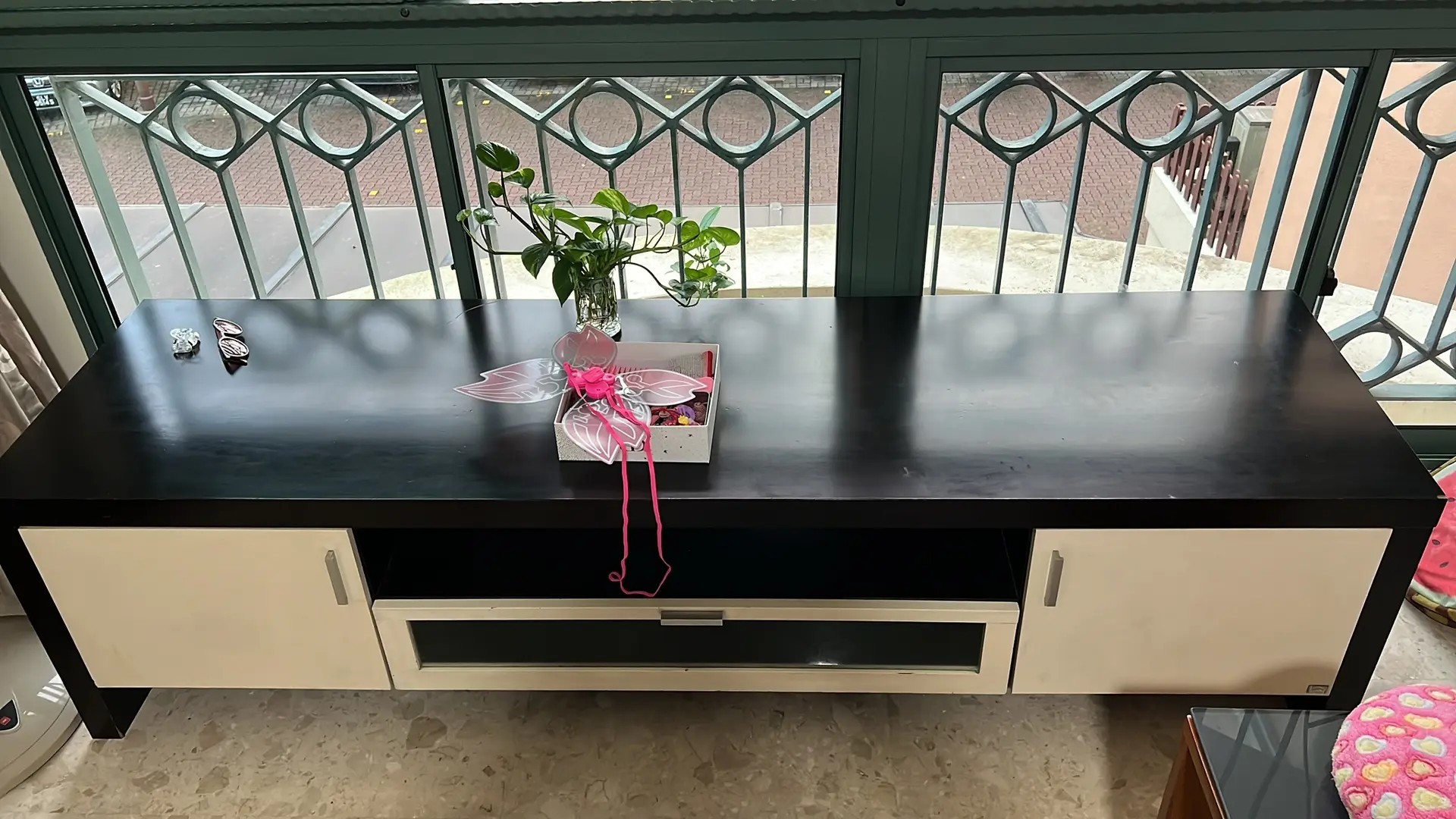
We handle the dismantling, the carrying, the lift logistics, and the responsible disposal routing — including separating reusable items into second-hand channels where possible and directing recyclable materials (metal, wood, paper) away from landfill. For HDB flats, that means working with standard passenger lifts and narrow corridors, timing trips to avoid peak hours when neighbours need the lift for school runs and grocery hauls.
Surcharges may apply for after-hours pickups, Sundays, public holidays, or walk-up buildings without lift access — all confirmed at the quote stage so there are no surprises.
Common Mistakes We See
Assuming the TC collects anytime you put items out. They don't. Items left outside the scheduled window may be treated as illegal dumping, and your town council can issue a fine. We've seen residents receive notices for items they thought were "waiting for collection."
Forgetting that whole items won't be taken. An intact queen-size bed frame left at the void deck will sit there until you dismantle it or arrange alternative disposal. The TC crew isn't equipped with power tools — they're collecting pre-prepared items, not running a demolition service.
Underestimating weight. Solid wood furniture from the 50s, 60s, and 70s — the kind still common in older Ang Mo Kio and Jurong West flats — can weigh 80–120kg per piece. Moving that down a corridor and into a lift without scratching walls or injuring yourself requires at least two people who know what they're doing.
FAQ
How do I find my exact town council collection date? Search your town council's name plus "bulky item collection schedule" online, or call their general hotline. The schedule is estate-specific and sometimes block-specific. Notice boards at your void deck may also display upcoming dates.
What if I miss the collection window? You wait for the next cycle — which could be anywhere from one to three months depending on your TC's frequency. Items left at the collection point outside the scheduled date risk being flagged as illegal dumping.
Can the town council collect items from inside my flat? No. You're responsible for transporting items to the designated ground-level collection point. For upper-floor units, that means navigating corridors and passenger lifts yourself.
If your clearance involves more than a single item, tight timelines, or furniture that needs dismantling before it can move — send us photos on WhatsApp for a free quote. No obligation, no dollar figures on this page, just a straight answer on what the job involves.
WhatsApp us at 9888 1292 — send a few photos of what needs to go, and we'll get back to you with a clear scope and timeline.